A clean yard should not come with a cleanup gamble. Dog waste can sit in grass, gravel, and along fence lines long after it stops being obvious, leaving behind odor and contamination concerns where pets, kids, and guests spend time. A pet safe yard sanitizing service gives dog owners an added layer of care after waste is removed, without turning the yard into an off-limits space.
For busy households, sanitation is not about making a yard smell artificially perfumed. It is about keeping the outdoor space more comfortable to use and making the dirty work someone else’s responsibility. That matters even more in Las Vegas and Henderson, where warm weather means dogs and families use their yards nearly year-round.
What a Pet Safe Yard Sanitizing Service Does
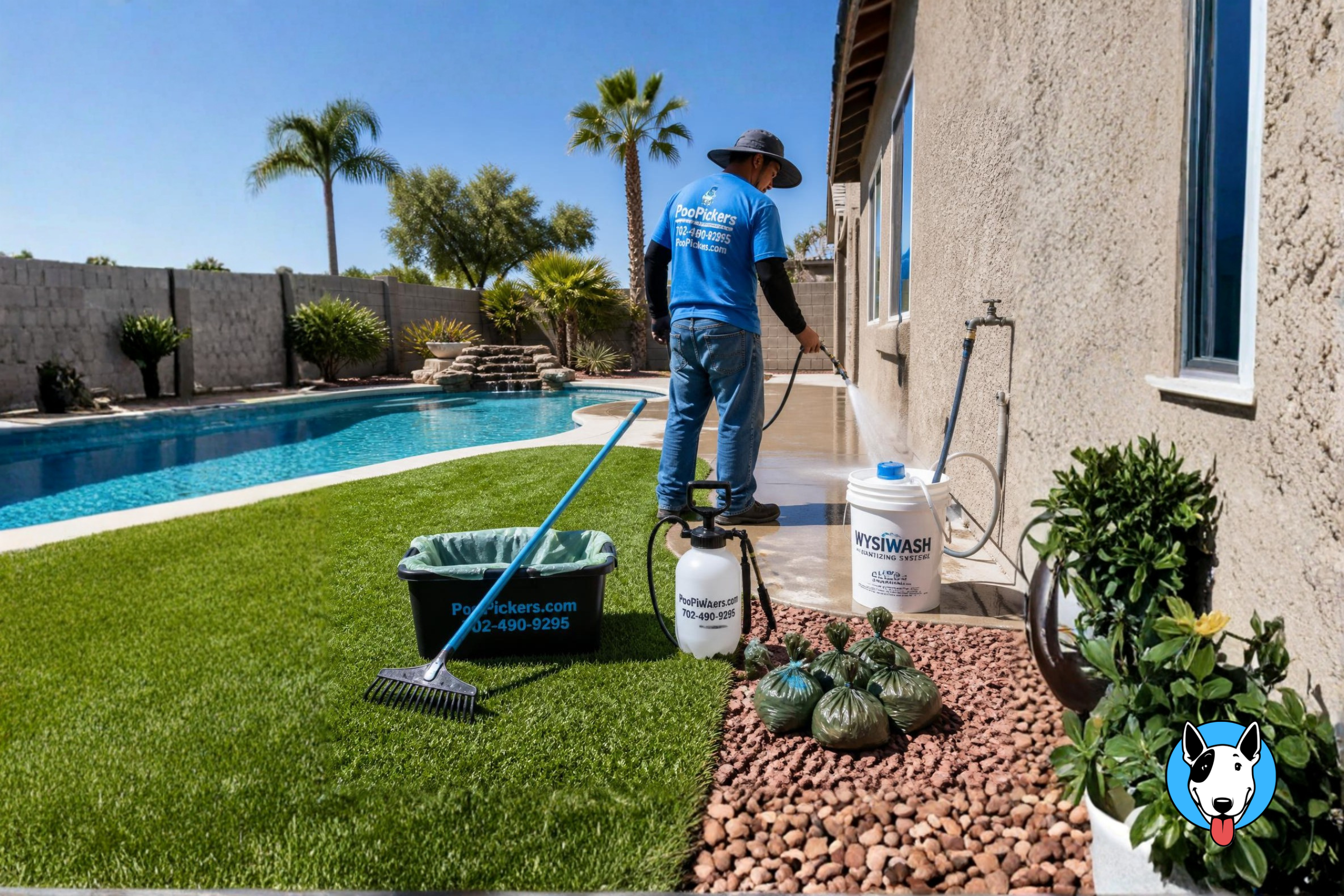
Sanitizing works best as part of a complete pet-waste cleanup, not as a substitute for one. First, visible dog waste needs to be removed from the property. Then, a pet-safe deodorizing or sanitizing treatment can be applied to the areas affected by pet traffic, lingering odor, or repeated bathroom use.
The goal is to reduce the odor and residue associated with dog waste while supporting a cleaner outdoor environment. A responsible service uses products according to their directions, pays attention to the treated surface, and considers where pets walk, roll, and rest. Grass, artificial turf, pavers, gravel, and concrete may each need a different approach.
No yard treatment can promise to erase every health risk or replace regular veterinary care and good handwashing habits. But consistent waste removal and appropriate sanitation can help reduce the conditions that make a yard unpleasant, especially in multi-dog homes or small yards with limited space.
Why Waste Removal Comes First
Spraying around piles of dog waste is not sanitation. It leaves the source of odor and contamination in place. The first job is always a thorough scoop of the yard, including the corners that are easy to miss: behind patio furniture, beside shrubs, along walls, and under play equipment.
Dog waste may contain bacteria and parasites, and it can attract flies and other pests. It can also damage grass when it is repeatedly left in the same area. Regular removal helps prevent buildup before it becomes a bigger yard problem.
That is why a good pet safe yard sanitizing service is built around routine. A one-time cleanup can make a major difference after travel, a busy season, or a missed stretch of pickups. Weekly or bi-weekly service is often a better fit for households that want to keep the yard consistently usable without having to catch up later.
Pet-Safe Does Not Mean One-Size-Fits-All
Pet owners are right to ask what is being used in their yard. “Pet-safe” should mean the treatment is selected and applied with animals in mind, not that every product is harmless in every amount or under every condition.
The safest procedure depends on the product instructions and the surface being treated. In many cases, pets should remain away from treated areas until they are dry. This is a simple precaution, particularly for dogs that lick their paws, chew grass, or have sensitive skin. A professional should be able to explain the process clearly and give straightforward guidance about when the yard is ready for normal use.
There are trade-offs, too. A stronger odor-control approach may be helpful in a high-traffic dog run, but a lightly used backyard may only need routine waste removal and occasional deodorizing. Artificial turf may hold odors differently than natural grass. Gravel can hide waste more easily, while concrete makes residue and odor more noticeable. The right plan reflects how your dogs actually use the space.
Watch the High-Traffic Areas
Most yards have a few repeat locations. Dogs often choose the same side yard, patch of turf, corner by the gate, or area near a tree. These zones deserve extra attention because odors can build up faster there than across the rest of the property.
A technician should also avoid treating a yard like an empty lot. Water bowls, toys, outdoor pet beds, vegetable gardens, and children’s play areas all matter. A careful service works around your home instead of treating every square foot the same way.
What Professional Service Should Look Like
Hiring a service should remove chores, not create new worries. You should know when the technician is coming, what has been completed, and whether your gate was secured before they left. Those details may sound small until you have a dog that can slip through an unlatched gate.
Poo Pickers® builds those checks into the service experience. Uniformed technicians provide arrival and completion notifications, and customers receive a closed-gate photo after service. Equipment is disinfected between yards to help avoid carrying mess from one property to another. The company is licensed and insured, offers flexible scheduling without contracts, and stands behind its work with a satisfaction guarantee.
Those procedures are especially valuable for households that are away at work, managing a busy family schedule, or relying on a service to enter the yard while no one is home. The service should feel accountable from the first notification to the final gate photo.
How Often Should You Sanitize a Dog Yard?
There is no universal schedule because the right frequency depends on dog count, yard size, weather, and how often the outdoor space is used. A single dog in a large yard may only need routine pickup and occasional deodorizing. Two or three dogs using a compact backyard every day will usually need more frequent attention.
Weekly visits are a practical choice for many homes because waste does not sit long enough to become a major odor or pest issue. Bi-weekly service can work for lower-traffic yards, while monthly and one-time cleanups are useful when you need help getting back on track. For a yard that smells noticeably after waste removal, a focused sanitizing treatment may be worth adding.
Summer heat can make odors feel more intense, particularly around artificial turf and shaded spots that do not dry as quickly. On the other hand, over-treating a clean, lightly used yard is unnecessary. The best schedule is the one that keeps your yard comfortable without paying for more service than you need.
Questions to Ask Before Booking
Before choosing a provider, ask whether waste removal happens before sanitizing, how the company handles equipment between properties, and what guidance they provide for pets after treatment. Ask how pricing is determined and whether there is a contract requirement. Clear answers are a sign that the company has a real process, not just a spray bottle and a vague promise.
It is also reasonable to ask about missed spots, gate procedures, and service notifications. A dependable provider should welcome those questions. Your yard is part of your home, and you should not have to wonder whether a visit happened or whether your dog is secure afterward.
For HOAs, apartment communities, parks, and businesses, the same principles apply on a larger scale. Shared pet areas need dependable waste removal, clear maintenance routines, and treatments that support a cleaner experience for every resident and visitor. Consistency matters because one neglected common area can affect the whole property.
A Cleaner Yard Gives You More Reasons to Use It
The best part of professional pet-waste service is not the treatment itself. It is walking outside without scanning the ground, opening the gate for guests without embarrassment, and letting your dog enjoy the yard without yesterday’s mess underfoot.
When regular pickup and pet-conscious sanitation work together, the yard becomes what it should be: a place for morning coffee, fetch, barbecues, and a little more time with the people and pets you brought home to enjoy.