
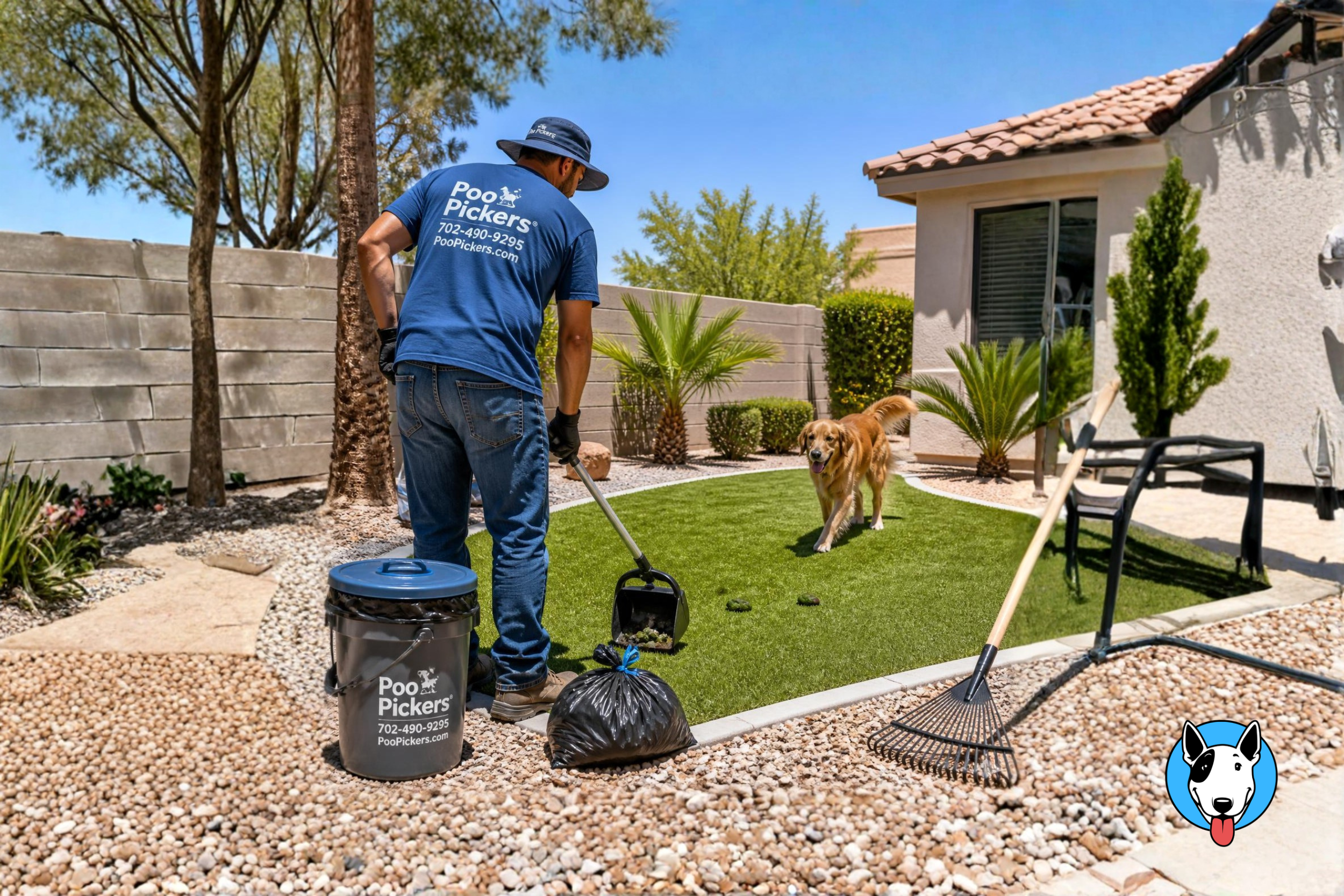
A backyard can go from play space to obstacle course faster than most dog owners expect. A weekly pooper scooper service keeps waste from piling up between busy workdays, school pickups, errands, and weekends when you would rather be outside with your family than walking the yard with a bag and rake.
For dog owners in Las Vegas, Henderson, and nearby neighborhoods, routine cleanup is about more than avoiding an unpleasant chore. It helps keep the lawn usable, reduces odor in warm weather, and gives kids, pets, and guests a cleaner place to enjoy. The right service also gives you confidence that the gate is secured, the work is complete, and the mess is handled consistently.
Why Weekly Yard Cleanup Makes Sense
Dog waste does not disappear into the grass like fertilizer. It can carry bacteria and parasites, attract flies and other pests, and leave unpleasant smells that get stronger under the Las Vegas sun. It can also damage grass, especially in the spots your dog visits most often.
A weekly schedule prevents the small problem from becoming a bigger one. Instead of finding several days of waste before a barbecue or family gathering, your yard receives regular attention before buildup has a chance to take over. That consistency matters even more for homes with multiple dogs, active dogs, or a smaller yard where every area gets used.
Weekly service is often the best fit for households with one or two dogs and a typical residential yard. It creates a reliable baseline: the lawn is checked, waste is removed, and you do not have to remember when you last handled the task. If your dogs create more waste than a weekly visit can reasonably cover, twice-weekly service may be the better choice. If you have one small dog and a large yard, bi-weekly service can sometimes work well. The right frequency depends on dog count, yard use, and how clean you want the space to feel between visits.
What a Weekly Pooper Scooper Service Should Include
Not every pet waste company handles the job the same way. A low price may sound appealing, but a dependable recurring service should address the details that protect your home, pets, and peace of mind.
A professional visit starts with a thorough scan of accessible areas of the yard, including side yards, dog runs, gravel, turf, and spots behind patio furniture or landscaping where waste is easy to miss. The technician should remove the waste rather than simply move it into your trash can unless that arrangement has been clearly agreed upon.
Equipment practices matter, too. The tools used in one yard should be disinfected before moving to the next. This helps reduce the risk of carrying contaminants from another property into yours. Pet-safe deodorizing and sanitizing can add another layer of freshness, particularly around high-use areas where dogs spend the most time.
Communication is part of a well-run service. Arrival and completion notifications let you know when the work is happening, while a closed-gate photo can provide useful proof that your property was left secure. These steps may sound simple, but they answer the questions homeowners naturally have when someone enters a fenced yard while they are away.
Poo Pickers® uses uniformed technicians, disinfected equipment between yards, service notifications, and post-service gate photos because a clean yard should not come with uncertainty about who was there or whether the gate was secured.
A clean yard is not the same as a rushed yard
The goal is not to finish quickly at the expense of quality. A technician who knows where to look and follows a repeatable process can work efficiently while still checking the areas that commonly get missed. This is especially helpful after windy days, when waste can become hidden in decorative rock, along fences, or beneath shrubs.
If a service misses an area, the company’s response matters as much as the initial visit. Look for a satisfaction guarantee and a clear way to report a concern. A trustworthy provider should be willing to make an unsatisfactory cleanup right, not make you feel like you are asking for a favor.
The Everyday Benefits Go Beyond Convenience
Most customers start weekly cleanup because they are tired of doing it themselves. That reason is completely valid. Picking up after a dog is one of those tasks that takes only a few minutes when done daily, yet somehow gets delayed until there is far more work than anyone wants to handle.
The bigger benefit is having an outdoor space that is ready when life happens. Kids can run through the yard without a last-minute inspection. You can let the dog out without worrying about what is underfoot. Guests can gather on the patio, and you can use the grill without spending the first half hour on cleanup duty.
Regular removal also helps with the nuisance factors that make a backyard less enjoyable. Waste odors linger, particularly after heat and irrigation. Flies are drawn to it. Rain or watering can spread residue across the lawn. Removing waste on a routine schedule helps limit those issues before they become noticeable.
For households with puppies, older dogs, or dogs with digestive trouble, weekly visits can provide a helpful reset. It does not replace daily spot cleanup when there is an immediate mess near a doorway or patio, but it stops the rest of the yard from becoming a project. That distinction is worth making: recurring service keeps the property maintained, while a one-time cleanup is best when there is existing buildup that needs to be cleared first.
Choosing the Right Schedule for Your Dogs and Yard
Weekly service is popular because it balances cost and cleanliness, but it is not a one-size-fits-all answer. A small dog in a large, lightly used yard produces a different cleanup need than three large dogs sharing a compact backyard.
Consider a more frequent schedule when you have multiple dogs, young children who play on the grass, frequent outdoor gatherings, or a small yard with limited places to avoid. Twice-weekly visits reduce the time waste sits outdoors and can make the space feel noticeably cleaner throughout the week.
A bi-weekly or monthly schedule may suit a lower-traffic property, but it requires more tolerance for waste between visits. Monthly service is often better for occasional maintenance or properties with very limited dog use, not for an active family backyard. Be honest about how the yard is used. The least expensive option is not always the best value if it still leaves you cleaning up before company comes over.
One-time cleanup is useful after travel, a move, an illness, or a long stretch when yard work fell behind. Starting with a thorough initial cleanup and then moving to a weekly plan gives the recurring technician a clean baseline to maintain.
What to Expect on Service Day
A good service should fit into your week without creating extra work. In most cases, you do not need to be home. Make sure the gate is unlocked and that the technician has safe access to the areas included in the service. If your dog is outside, follow the company’s safety policy. Many homeowners prefer to bring their dog indoors during the visit, even when the dog is friendly, so the technician can complete the work without stress for anyone.
Keep gates, latches, and access instructions current. If there is a new lock, construction in the yard, or a pet with special handling needs, let the company know before the visit. Clear communication prevents missed service and helps protect your pets.
You should also know how billing and cancellation work before signing up. Recurring service commonly uses monthly billing based on dog count and visit frequency. No-contract options are valuable because your needs can change. You may need more frequent service during a busy season, pause while you travel, or adjust after adding another dog to the household.
A Cleaner Yard Gives You Back Your Weekend
The best recurring service feels almost invisible until you realize what is missing: no buildup, no odor greeting you at the patio, no chore waiting at the end of a long day. Your yard stays a place for your dogs and family, not another item on the weekend to-do list.
Choose a weekly schedule that matches your dog count, ask how the company handles gate security and equipment disinfection, and expect clear communication after each visit. When the dirty work is handled reliably, stepping outside becomes the easy part again.