A backyard can look clean from the patio and still smell like dog waste the moment the sun comes up. In Las Vegas, dry heat can intensify odors quickly, especially after waste has been sitting in grass, gravel, artificial turf, or shaded corners. Effective dog poop odor removal in the backyard starts with removing the source, not trying to cover it with a stronger fragrance.
The good news is that most yard odors can be handled with a consistent cleanup routine, the right surface-specific cleaning method, and a little attention to drainage. Here is what actually works when your outdoor space needs to be usable again for dogs, kids, guests, and weekend barbecues.
Why dog poop odor removal in the backyard takes more than spray
Dog waste does not simply disappear into the lawn. As it breaks down, bacteria and organic material remain in the soil, on turf fibers, between pavers, and in low spots where water collects. A deodorizer can improve the smell temporarily, but it cannot solve the problem if old waste, residue, or contaminated standing water is still present.
The odor may be strongest near a favorite potty area, but do not assume that is the only source. Check along fence lines, beneath shrubs, near outdoor trash bins, around artificial turf seams, and at the bottom of sloped areas. A missed pile can be easy to overlook, particularly in a multi-dog yard.
Heat, water, and enclosed spaces can make odors worse
Hot weather speeds up odor development. So can irrigation that repeatedly wets a contaminated area without washing it clean. On artificial turf, urine residue and small pieces of waste can settle into the infill and backing, where they stay warm and smell stronger over time.
Poor airflow also matters. A small side yard, covered run, or area between a house and block wall may hold odors longer than an open lawn. The fix is usually not a more heavily scented product. It is better cleanup, targeted cleaning, and reducing the conditions that let odor linger.
Start with complete, frequent waste pickup
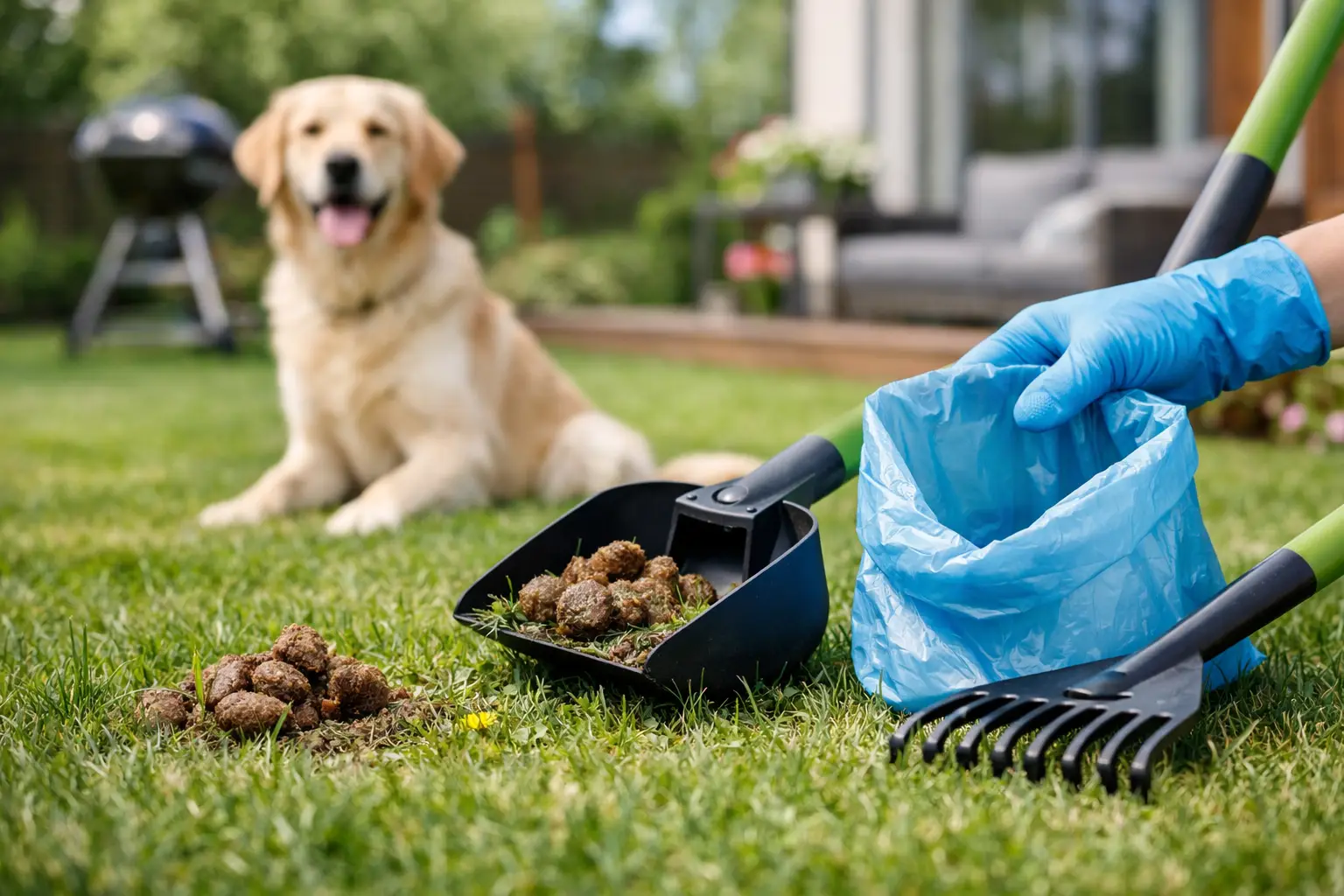
The first step is the least glamorous and the most effective: pick up every pile, every visit. If waste remains in the yard for several days, cleaning products have to work harder and the smell has more time to spread into the surrounding surface.
For one dog, weekly pickup may be enough if the yard is large and the dog uses only part of it. Families with multiple dogs, smaller yards, or frequent outdoor use often need cleanup more often. Bi-weekly or weekly service keeps odor from building between visits and makes the yard easier to maintain.
Do not leave filled waste bags in an uncovered bin near the patio or gate. Use a lidded outdoor container, empty it regularly, and rinse the inside when odors begin to collect. A clean yard can still smell unpleasant if the waste bin is the real issue.
Clean the surface your dog uses
Once solid waste is removed, the best approach depends on what is under your dog’s paws. What works on a natural lawn may not be the right choice for turf, gravel, concrete, or pavers.
Natural grass and soil
On grass, remove waste promptly and lightly rinse the affected spot when needed. Avoid soaking the lawn every day just to chase odors. Too much water can create muddy areas, encourage runoff, and move contamination toward drains or low spots.
If an area has a persistent smell, use a pet-safe enzymatic outdoor cleaner according to the label directions. Enzyme-based products are designed to break down organic residue rather than mask it. Give the product enough contact time to work, and keep pets and children away until the label says the area is safe for normal use.
Grass damage has more than one cause. Dog urine can cause yellow or brown patches, while repeated traffic and concentrated waste can weaken the lawn. If one corner has become a regular bathroom spot, rotating your dog’s potty area can give that section of grass a chance to recover.
Artificial turf, pavers, and concrete
Artificial turf needs a little more attention because residue does not absorb and break down the same way it does in soil. Pick up waste promptly, use a hose to rinse the surface as needed, and apply a turf-safe enzymatic cleaner to areas your dog uses most. A stiff, turf-safe broom can help lift matted fibers and distribute cleaner through the surface.
For pavers and concrete, rinse away visible residue after pickup and use a pet-safe cleaner made for hard outdoor surfaces. Focus on joints, cracks, and edges where small particles collect. Avoid using bleach, ammonia, or harsh disinfectants as a first response. They can be irritating to paws, damage nearby plants, and create unpleasant fumes. Ammonia is an especially poor choice around pet urine because the smell can resemble urine and may encourage repeat marking.
Gravel yards can hold odor when waste settles between rocks. Raking the area after a thorough pickup helps expose trapped debris. If the gravel has been used as a dog run for a long time, a deeper cleaning or partial gravel replacement may be more practical than repeatedly adding fragrance products.
Use deodorizers as support, not a shortcut
A good pet-safe deodorizer is useful after cleanup, particularly in high-use dog areas. Choose a product made for outdoor pet waste odors and follow its dilution and application instructions. More product is not always better. Overapplying can leave residue, create a slippery hard surface, or stress nearby plants.
Be cautious with home remedies. Strong vinegar solutions may affect some surfaces and plants. Powdered lime products can be hazardous if inhaled or touched by pets, and they do not replace waste removal. Products that promise to erase odor instantly without cleaning the area often provide only a short-lived scent cover.
The practical order is simple: pick up waste, rinse or clean the affected surface, apply an appropriate enzymatic product when residue is present, then use deodorizer if the space still needs a freshness boost.
Prevent the smell from returning
A backyard stays fresher when cleanup is routine rather than a rescue project. Put scooping on the same schedule as taking out the trash or mowing the lawn. If busy weeks make that hard to maintain, recurring pet-waste service removes the gap where missed piles become a bigger odor and sanitation problem.
Pay attention to where your dog goes most often. A designated potty zone can protect the rest of the yard, but it needs more frequent pickup and cleaning than the rest of the property. Make it easy to reach with a bag dispenser and covered waste container nearby, but keep the container away from outdoor seating and doors.
Also look at irrigation and drainage. Water should not pool in the dog area or run from that area toward patios, play spaces, or walkways. If a low spot stays damp, correcting the drainage may do more for odor control than any spray bottle.
For households with children or pets that spend a lot of time outdoors, regular cleanup is also a sensible sanitation habit. Dog waste can carry bacteria and parasites, so wash hands after yard work and do not let children play near a known potty area before it has been cleaned.
When a deeper cleanup makes sense
If the odor remains after a complete pickup and surface cleaning, the yard may have months of accumulated residue, heavily soiled turf infill, a neglected waste bin, or an issue unrelated to dog waste. Check for dead rodents, drainage problems, moldy landscape material, or a neighbor’s pet entering the yard.
A one-time professional cleanup can be a practical reset after a busy season, move-in, vacation, or period of missed scooping. For ongoing maintenance, Poo Pickers® provides recurring and one-time yard cleanup with pet-safe deodorizing and sanitizing, so dog owners can keep their outdoor space ready to use without adding another chore to the week.
Common backyard odor questions
How long does dog poop smell last outside?
It depends on temperature, moisture, surface type, and how long the waste sits. In warm conditions, odor can become noticeable within a day. On turf, gravel, and hardscape, residue may smell for much longer if it is not cleaned after pickup.
Can I just hose down dog poop in the yard?
No. Hosing waste into grass, drains, or low spots spreads contamination and leaves organic material behind. Pick it up first, then use water sparingly to rinse the area when appropriate.
Are enzymatic cleaners safe for dogs?
Many are formulated for pet areas, but always read the product label. Use the correct dilution, follow contact-time instructions, and keep pets off the treated area until it is dry or otherwise cleared for use.
A fresher backyard does not require perfume-heavy products or a complicated routine. It requires a clean starting point and a schedule you can actually keep. When waste is removed before it builds up, your yard is more comfortable for the people and pets who use it every day.