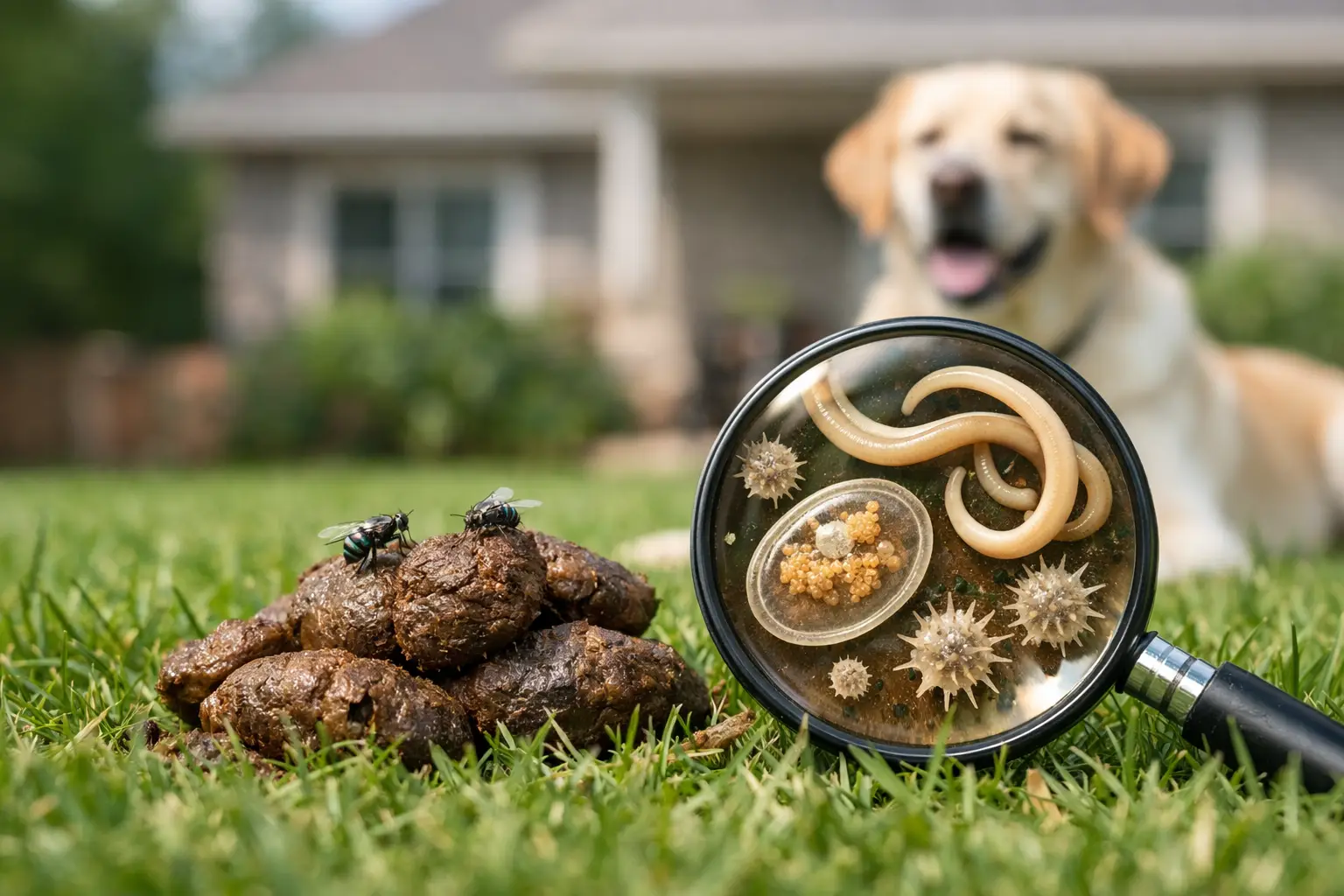
A missed pile in the corner of the yard can be more than an unpleasant surprise underfoot. Can dog poop spread parasites? Yes. Stool from an infected dog can carry parasite eggs, cysts, or organisms that may contaminate soil, grass, paws, and shared outdoor areas. Not every pile contains parasites, but regular pickup is one of the simplest ways to reduce the chance that waste sits long enough to create a bigger problem.
For busy dog owners, that matters because yards are where kids play, pets roll around, guests gather, and bare feet sometimes wander. Prompt removal helps protect the clean, usable outdoor space you want to enjoy.
Can Dog Poop Spread Parasites to People and Pets?
Dog poop can spread parasites when an infected dog’s feces are left on the ground and another animal or person comes into contact with contaminated material. The risk is not always direct. A dog may step near waste, carry microscopic particles on its paws, then lick those paws later. A child might touch soil in a contaminated area and put a hand near their mouth. Another dog may sniff or eat feces at the park.
Some parasite stages become more infectious after they have been in the environment for a period of time. That means a pile that sits for days can be a greater concern than waste picked up promptly. Weather, shade, moisture, the parasite involved, and whether the dog was infected all affect the level of risk.
The practical takeaway is not to panic over every backyard potty break. It is to treat dog waste as waste, not fertilizer. Pick it up consistently, wash hands after yard work, and keep pets on veterinarian-recommended parasite prevention and testing schedules.
Parasites That May Be Found in Dog Waste
A fecal exam from your veterinarian is the only way to know whether a particular dog has certain intestinal parasites. Still, these are some of the concerns veterinarians commonly watch for.
Roundworms
Roundworm eggs can be shed in dog stool and can persist in soil for a long time under the right conditions. Dogs can become infected by ingesting contaminated material, and people can be exposed through accidental ingestion of contaminated soil. Young children, who are more likely to play close to the ground and put hands in their mouths, deserve extra protection.
Hookworms
Hookworm larvae can develop in warm, moist soil after contaminated feces are left behind. They can infect dogs, and certain hookworms may irritate human skin when people walk or sit on contaminated ground with bare skin. A hot Las Vegas day does not make every yard safe by default. Shaded areas, irrigated grass, damp spots near landscaping, and cooler seasons can create more favorable conditions.
Giardia
Giardia is a microscopic parasite that can cause diarrhea in dogs and people. It is often associated with contaminated water, but infected stool can also contribute to environmental contamination. Because Giardia can have multiple sources and testing can be complicated, your veterinarian is the right person to guide treatment and prevention for a dog with persistent digestive symptoms.
Whipworms and Coccidia
Whipworm eggs and coccidia organisms may also be shed in stool. Their effects and ability to persist outdoors vary, but the cleanup rule stays the same: do not give parasites an opportunity to build up in the places your dog visits every day.
How a Yard Becomes Contaminated
Parasites do not need a dramatic event to spread. Repeated deposits in the same part of a yard can gradually increase contamination, especially in a multi-dog household. Dogs investigate the world with their noses and mouths, so a yard with old waste creates repeated exposure opportunities.
Rain or irrigation can move material through low spots in a lawn or along hardscape edges. Shoes, mower wheels, garden tools, and paws can carry contaminated soil from one area to another. In apartment dog runs, HOA common areas, and parks, one missed cleanup can affect many pets before anyone notices it.
This is also why waiting until the yard looks messy is not the best cleanup plan. A yard can look fairly tidy while older residue remains in grass, gravel, or landscaping beds.
Why Regular Dog Poop Pickup Matters in Las Vegas
Desert heat can dry waste quickly, but dry does not mean clean. Some parasite eggs are tough, and irrigation creates pockets of moisture that can help certain organisms survive. Artificial turf, rock landscaping, shaded patios, and small side yards can also hold waste where dogs repeatedly sniff and walk.
Regular cleanup is especially useful in Las Vegas and Henderson homes with several dogs, active kids, frequent backyard gatherings, or limited outdoor space. Removing waste before it breaks down helps reduce odor, flies, lawn damage, and the chance of parasites remaining where your family and pets spend time.
Sanitizing can be a helpful part of an overall yard-care routine, but it is not a substitute for pickup. No surface treatment can replace physically removing fresh waste and keeping dogs on appropriate veterinary care.
A Practical Routine to Reduce Parasite Risk
The most effective routine is simple: pick up waste at least weekly, and more often if you have multiple dogs, young puppies, diarrhea in the household, or a small yard. If your dog has been diagnosed with an intestinal parasite, ask your veterinarian how frequently to clean the yard during treatment. They may recommend more frequent removal and follow-up testing.
Use a dedicated scoop or bag, seal the waste, and dispose of it properly. Wash your hands afterward, even if you wore gloves. Keep children away from areas with visible stool, and discourage dogs from eating feces or drinking from standing water.
If you clean your own yard, avoid using the same tools in a vegetable garden without thoroughly cleaning them first. For professional service, equipment should be disinfected between yards so one property’s waste is not carried to another. That detail matters just as much as showing up on schedule.
Pet prevention matters, too. Routine veterinary exams, fecal testing when recommended, and prescribed parasite prevention reduce the chance your dog is shedding parasites in the first place. Puppies often need more frequent attention because they are more vulnerable to common intestinal parasites.
When to Call Your Veterinarian
A dog can carry parasites without obvious symptoms, but loose stool, vomiting, weight loss, a bloated belly, scooting, coughing, low energy, or visible worms are good reasons to contact your veterinarian. Puppies, senior dogs, and dogs with weakened immune systems should be evaluated promptly when they have digestive symptoms.
Bring a fresh stool sample if your veterinary office requests one. Avoid treating based on guesswork or using medications intended for another pet. Different parasites require different treatment plans, and reinfection can happen if the yard is not cleaned consistently during and after treatment.
Cleaner Shared Spaces Protect More Than One Dog
For HOAs, apartment communities, parks, and pet-friendly businesses, waste stations are useful, but they only work when the area is maintained. Regular inspections and removal keep pet areas more pleasant and reduce the amount of waste that can build up in high-traffic spots.
That is the value of a dependable cleanup schedule. Poo Pickers® removes the daily chore from residential yards and shared spaces with recurring or one-time service, pet-safe sanitizing, and disinfected equipment between properties. The goal is straightforward: fewer piles, less worry, and an outdoor area people and pets can use comfortably.
A clean yard will never replace veterinary care, but it gives parasites fewer chances to linger, spread, and turn a normal dog-owner chore into a preventable headache.