A dog waste station can make a property look pet-friendly on day one. The harder question is what happens after the bags run low, the trash bin fills up, or residents stop using it. When comparing dog waste stations versus service, property managers and dog owners are really deciding between providing a tool and maintaining a clean outdoor environment.
For some properties, a station is enough. For others, it is only the first piece of the plan. The right choice depends on the number of dogs, how often the area is used, who is responsible for upkeep, and how much accountability the property needs.
What a Dog Waste Station Actually Solves
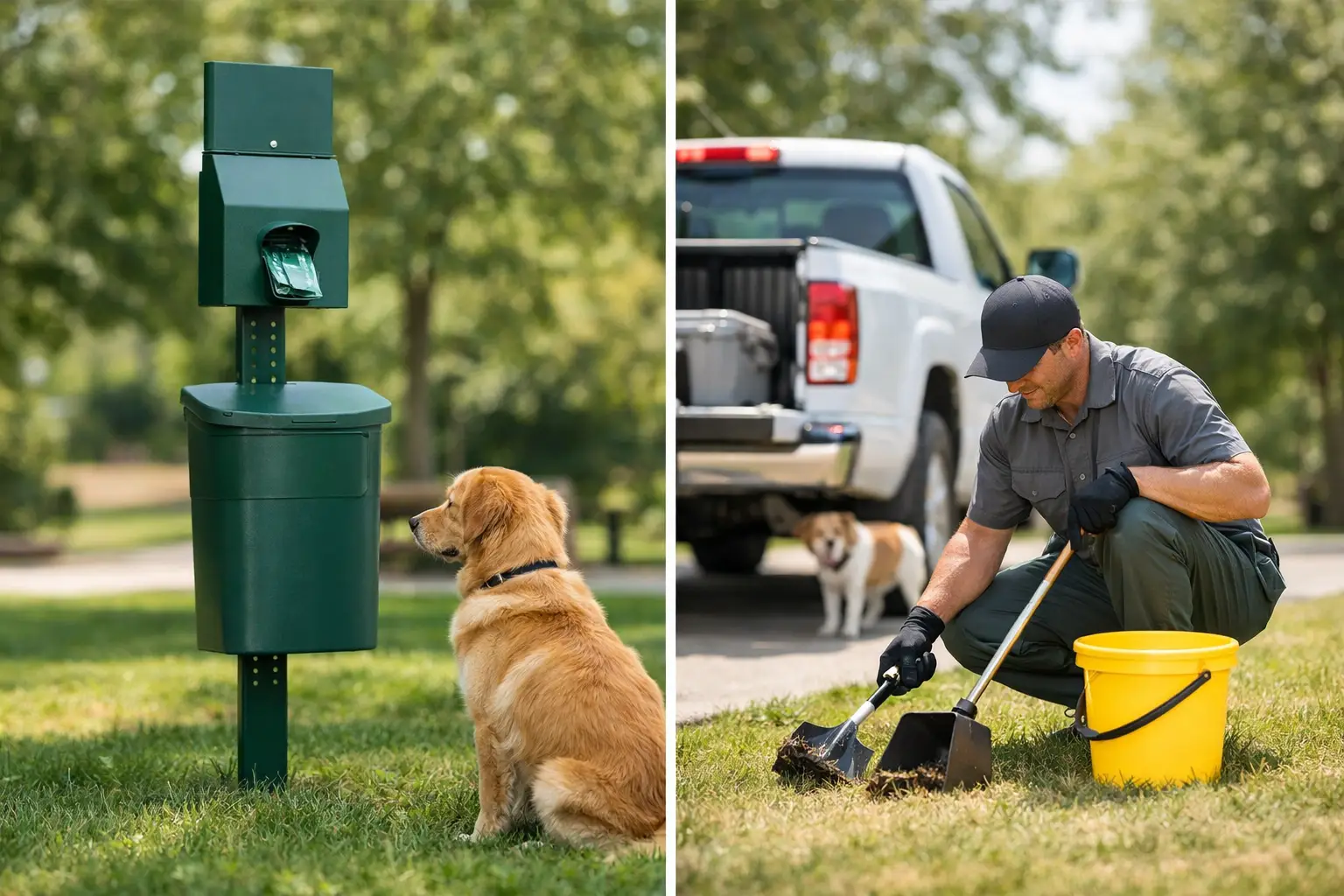
A dog waste station is a visible convenience feature. Most include a bag dispenser, a waste receptacle, and signage reminding owners to clean up after their pets. Placed near walking paths, apartment dog runs, HOA greenbelts, or park entrances, stations remove one common excuse for leaving waste behind: not having a bag.
That convenience matters. A well-located station can encourage better habits, especially in shared spaces where residents walk dogs several times a day. It also signals that a community welcomes pets while taking common-area cleanliness seriously.
But a station does not remove waste on its own. It does not restock bags, empty overflowing bins, pick up waste left beside the path, or sanitize an area after heavy use. Those tasks still need an owner, maintenance employee, vendor, or dedicated pet waste service.
Stations work best when ownership is clear
A station is most effective when someone has a documented responsibility to check it regularly. That includes monitoring bag levels, replacing liners, emptying receptacles before they overflow, cleaning the surrounding area, and responding when a station is damaged.
For a small community with few dogs and an attentive onsite maintenance team, this may be manageable. If staff already make daily rounds, adding a quick station check may fit naturally into the schedule. In that case, the station can be a practical, low-maintenance amenity.
The trouble starts when the job belongs to everyone in theory and no one in practice. Empty dispensers, full cans, and waste near the station can create a worse impression than having no station at all. They tell residents that the property noticed the problem but did not follow through.
What Professional Pet Waste Service Adds
Professional pet waste service is about routine execution. Rather than depending on residents to handle every cleanup and staff to remember each follow-up task, a service provider visits on a set schedule to remove waste from designated areas.
For residential yards, that can mean weekly, bi-weekly, monthly, or one-time cleanup. For HOAs, apartment communities, businesses, and parks, it often means keeping common pet areas, dog runs, and landscaped spaces clean for the people who use them every day.
The value is not just a cleaner appearance. Dog waste can bring odor, attract pests, damage grass, and create an unpleasant or unsafe surface for children, pets, guests, and maintenance crews. Routine removal helps keep outdoor spaces usable instead of turning them into areas people avoid.
A dependable service also creates a schedule people can rely on. At Poo Pickers®, uniformed technicians provide service notifications, disinfect equipment between yards, and document closed gates after service. Details like these matter when a resident or property manager is trusting someone to access private or shared outdoor areas.
Service does not replace responsible pet ownership
A scheduled cleanup service should not be treated as permission to leave waste wherever it lands. In shared communities, residents still need bags and clear expectations for immediate pickup. A dog run can become dirty quickly between service visits if every owner assumes the next crew will handle it.
That is why service and resident cooperation work best together. Service handles consistent, thorough removal. Residents help keep walkways, entrances, and active-use areas clean in the hours and days between visits.
Dog Waste Stations Versus Service: The Real Differences
The biggest difference is simple: a station supports voluntary behavior, while a service completes a recurring task. One can influence cleaner habits. The other delivers a measurable cleanup result.
A station usually has a lower upfront cost, but it carries ongoing needs. Bags, liners, replacement parts, staff time, and disposal all add up. If a property has multiple stations spread across large grounds, those recurring tasks can become easy to overlook.
A service has a recurring fee, but it can reduce the hidden cost of assigning unpleasant cleanup work to maintenance staff. It also gives property managers a clearer standard: the area is serviced on a known schedule, rather than being checked only when someone complains.
There is also a visibility difference. Stations are highly visible when they are installed, but their condition is just as visible when they are neglected. Service is often less noticeable when it is working well, which is exactly the point. Residents simply experience a cleaner lawn, path, or dog area.
When a Station Alone Makes Sense
A station-only approach can be reasonable for a low-traffic setting with a small number of dogs, reliable onsite staff, and a simple area to monitor. It may also work where dog owners are highly engaged and the property already has frequent trash collection.
For example, a small office property with a single landscaped relief area may only need one stocked station and regular attention from the grounds crew. A private homeowner might also place a bag dispenser near a gate to make backyard cleanup easier for family members or guests.
Even then, inspect the setup honestly. If bags are routinely empty or waste still accumulates around the property, the station is not solving the full problem.
When Service Is the Better Choice
Routine service is usually the stronger option for multi-dog households, busy families, large yards, apartment communities, HOAs, parks, and commercial properties with active pet areas. These locations generate enough waste that missed cleanup becomes noticeable fast.
It is especially useful when maintenance teams are stretched thin. Asking staff to patrol lawns for dog waste can pull them away from repairs, landscaping, resident requests, and safety tasks. Outsourcing the work gives them back time while making the cleanup schedule more consistent.
Service also makes sense when outdoor space is part of the property experience. A courtyard, pool-adjacent lawn, playground perimeter, walking path, or community dog park should feel ready to use. Dog waste left in these areas can lead to complaints long before it becomes a formal maintenance issue.
For private yards in Las Vegas and Henderson, regular service can be a straightforward way to keep the backyard ready for barbecues, kids, and pets without adding one more chore to the weekend. Hot weather can make odor build quickly, so consistent removal often feels less like a luxury and more like ordinary yard care.
The Best Answer Is Often Both
For many shared properties, dog waste stations and service are not competing choices. They handle different parts of the same problem. Stations make immediate pickup easier for residents. Service provides the routine cleanup and oversight that keeps common areas from falling behind.
This combination works particularly well at apartments and HOAs. Place stations where people naturally enter, exit, and walk dogs, then schedule service based on the number of pets and the amount of traffic. High-use dog parks may need multiple visits each week, while a quiet greenbelt may need less frequent attention.
Before choosing a schedule, walk the property at different times of day. Look for repeat problem spots, full bins, areas where children play, and corners residents may not notice from the sidewalk. Those details are more useful than choosing a service frequency based on property size alone.
Questions to Ask Before You Decide
Start with accountability. Who checks the station, who empties it, and what happens when that person is out? If the answer is vague, a station-only plan may not hold up.
Then consider volume. One dog using a small relief area is very different from dozens of dogs using a community lawn. Higher volume calls for more frequent service and, often, more than one station.
Finally, think about the standard you want residents and guests to see. A pet-friendly property is not just one that allows dogs. It is one that makes pet ownership easier without asking neighbors to live with odor, mess, or unusable green space.
A clean outdoor area is one of those details people may not mention when it is handled well, but they notice immediately when it is not. Choose the setup that gives your property a dependable plan for both the bag in hand and the mess left behind.