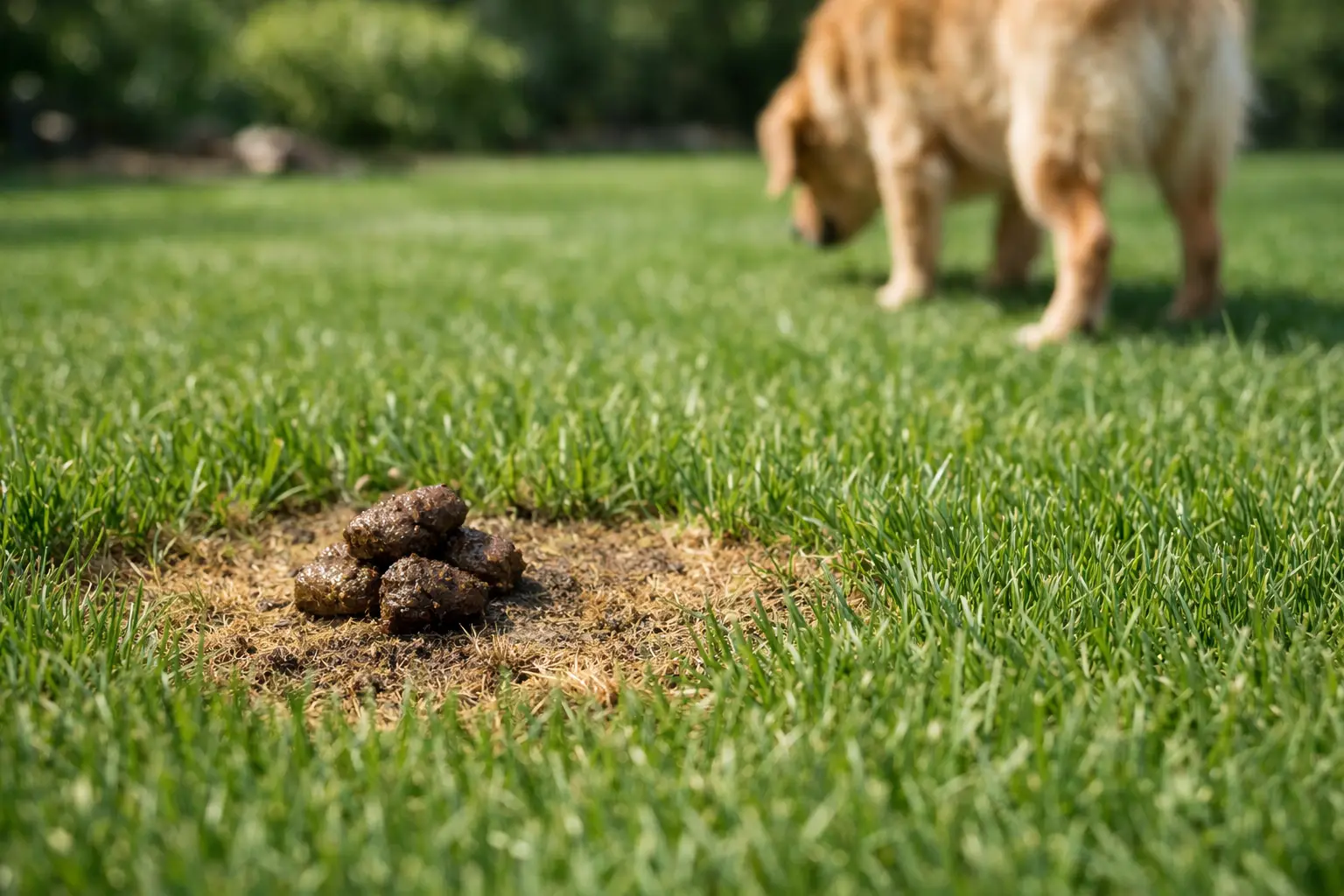
A few piles left behind after a busy week may not seem like a lawn-care emergency. But does dog poop damage grass? Yes. It can leave brown or yellow patches, smother healthy blades, and create a less sanitary yard for the people and pets using it. In Las Vegas, where grass already works hard against heat and dry conditions, regular cleanup can make a noticeable difference.
Dog waste is not fertilizer. That is one of the most common and costly misconceptions homeowners make. While manure from grazing animals is sometimes composted and used carefully in agriculture, dog poop has a different makeup, different risks, and no place sitting on a family lawn.
How Dog Poop Damages Grass
When dog waste sits on grass, it blocks sunlight and airflow from reaching the blades beneath it. The grass may flatten, discolor, and weaken under the pile, especially when waste is left through watering cycles or humid weather. A single pile may create a small spot, but a dog that repeatedly uses the same areas can leave a yard looking patchy fast.
The bigger issue is what happens as the waste breaks down. Dog poop contains concentrated nutrients, bacteria, and organic material that do not feed turf evenly. Instead, the material can stress the grass and alter the small patch of soil below it. That can contribute to yellowing, thinning, and bare areas that are more vulnerable to weeds.
Fresh poop is also unpleasantly sticky and can press down into grass, making it harder to remove completely after it has dried or been watered. The longer it stays, the more likely it is to leave residue behind and the harder the cleanup becomes.
Poop and urine cause different lawn problems
Dog urine is usually the main cause of the classic round, straw-colored lawn burn. Its nitrogen and salt content can be too concentrated for grass, particularly when a dog visits the same spot every day. Sometimes a dark green ring forms around the damaged center because the surrounding grass receives a diluted amount of nitrogen.
Poop damages grass differently. It tends to smother and contaminate the turf rather than create the same immediate chemical burn. Still, the two problems often show up together in a dog’s favorite potty area. Picking up poop promptly will not eliminate urine spots, but it removes one source of lawn stress and makes it easier to see where urine damage is occurring.
Why Leaving Dog Waste Creates More Than Brown Spots
Grass damage is frustrating, but it is not the only reason to keep the yard picked up. Dog feces can carry bacteria and parasites that may remain in soil after the visible pile is gone. Roundworms, hookworms, giardia, and harmful bacteria are among the concerns veterinarians and public-health guidance commonly associate with pet waste.
That matters most in yards where kids play, dogs roll in the grass, or guests walk around in sandals. A clean lawn is simply easier to enjoy. It also reduces the chance of someone stepping in waste, tracking it indoors, or letting another dog investigate something it should not eat.
In warm Southern Nevada conditions, odor can become another problem quickly. Heat accelerates the unpleasant part of leaving waste outdoors, particularly in smaller yards, artificial turf areas, or properties with several dogs. Flies and other pests are more likely to be attracted to a yard with accumulated waste as well.
For HOAs, apartment communities, and pet-friendly businesses, the effect is even more visible. Shared dog areas that are not cleaned consistently can develop odor, sanitation complaints, and worn patches that make the property feel neglected. Routine service protects the space as well as the experience of everyone who uses it.
What to Do When Dog Poop Has Been Sitting on the Lawn
Start by removing the waste as thoroughly as possible. Use a dedicated scooper and bag rather than a garden tool that will later be used around edible plants. If the pile is dry or stuck to the grass, lift it carefully and avoid grinding it into the turf.
After removal, lightly rinse the affected patch if your lawn needs water anyway. There is no need to flood the area. The goal is to wash away any small residue from the grass blades and settle the soil, not to push contamination into a larger area. If the spot is muddy, let it dry before walking on it repeatedly.
Watch the area over the next couple of weeks. Healthy grass may recover once it has light, water, and room to grow. If a section remains thin or bare, rake away dead material and reseed when the season and grass type allow. In Las Vegas, many lawns use warm-season grass, cool-season overseeding, or a mix of turf and desert landscaping, so the best repair timing depends on what is planted.
Avoid adding extra fertilizer just because the grass looks damaged. Too much nitrogen can make a stressed patch worse. If you are unsure whether you are seeing poop damage, urine burn, pests, irrigation trouble, or heat stress, look for the pattern. Damage directly beneath old piles points to waste buildup. Repeated circular spots in the same potty zone are more often related to urine.
The Best Prevention Is a Consistent Cleanup Routine
The simplest lawn-protection plan is also the least complicated: do not let dog waste stay in the yard. For one dog, a quick daily pickup is ideal. For busy households, every other day can still prevent most buildup. Multi-dog homes generally need more frequent attention because several small piles become a bigger cleanup job sooner than expected.
Choose a routine that fits real life, not the routine you wish you had time for. Keep bags and a scooper near the gate, patio, or spot where your dog usually goes out. A covered waste container can help control odor between trash days. If your dog has a preferred potty zone, check that section first rather than hoping you will remember it later.
It also helps to train dogs to use a designated part of the yard when possible. A potty area does not stop urine from affecting grass there, but it keeps wear and cleanup contained instead of spreading it across the whole lawn. Some homeowners use gravel, mulch approved for pets, or artificial turf in those areas. Each option has trade-offs: gravel can get hot in summer, mulch needs refreshing, and turf still requires regular waste removal and sanitizing.
For families juggling work, school, travel, and several dogs, missed pickup days are normal. The trouble starts when missed days become the regular schedule. A recurring pooper scooper service gives the yard a dependable reset without adding another chore to the weekend. Poo Pickers provides routine cleanup with deodorizing and pet-safe sanitizing, so the goal is not just a yard that looks cleaner from the patio, but one that feels ready for everyday use.
A Clean Yard Is Easier to Maintain
Dog poop will not usually destroy an entire lawn overnight. But repeated waste buildup can contribute to damaged turf, odor, pests, and sanitation concerns that are harder to fix than they were to prevent. The exact impact depends on your dog count, lawn type, watering habits, weather, and how quickly piles are removed.
A good yard does not need to be perfect to be useful. It just needs to be a place where your dog can play, your kids can run around, and you can host a barbecue without scanning every step. Keeping pet waste off the grass is one small routine that protects all of that.