A missed dog-waste pickup in a private backyard is frustrating. A missed pickup in an HOA common area becomes everybody’s problem. It can mean unpleasant walks to the mailbox, stained grass near a dog run, resident complaints, and a community space that feels less cared for than it should. Professional pet waste removal for HOAs gives boards and property managers a simple way to keep shared outdoor areas cleaner, safer, and ready for residents to use.
For communities throughout Las Vegas and Henderson, routine removal matters even more than many people realize. Warm weather can make odor travel quickly, while neglected waste can attract flies and make turf, pathways, and pet areas less inviting. The goal is not simply to make the grounds look better. It is to maintain a healthier, more usable community.
Why HOA Pet Waste Problems Grow So Quickly
Dog waste is one of those maintenance issues that can appear small until it is not. One uncollected pile encourages another. If a dog station is empty, a resident is in a hurry, or the designated relief area has not been serviced recently, the problem compounds fast.
HOA boards are then left managing complaints from residents who use the space, dog owners who want a clean place for their pets, and landscaping teams trying to preserve grass and common-area appearance. Regular removal helps prevent that cycle before it becomes an agenda item at every board meeting.
There is a health component, too. Pet waste can carry bacteria and parasites, and rain or irrigation may move contaminants toward drains and landscaped areas. Public-health and environmental guidance consistently advises prompt waste disposal for good reason. A recurring service creates a dependable routine instead of relying solely on residents to handle every pickup perfectly.
What a Dependable HOA Service Should Include
Not all pet waste removal services operate the same way. For an HOA, the right provider needs to be organized enough to work around a shared property, communicate clearly, and deliver visible proof that the job was completed.
A dependable service begins with a walkthrough or clear service plan. The provider should identify the areas that need attention: dog runs, pet stations, grass strips, walking paths, community parks, apartment-style common spaces, and any frequent problem spots. Service frequency should reflect the number of dogs using those spaces, not a one-size-fits-all schedule.
For a lightly used pet area, weekly service may be enough. A busy dog park or apartment community may need multiple visits each week. It depends on resident density, the size of the designated area, seasonal use, and whether the property has recurring compliance issues.
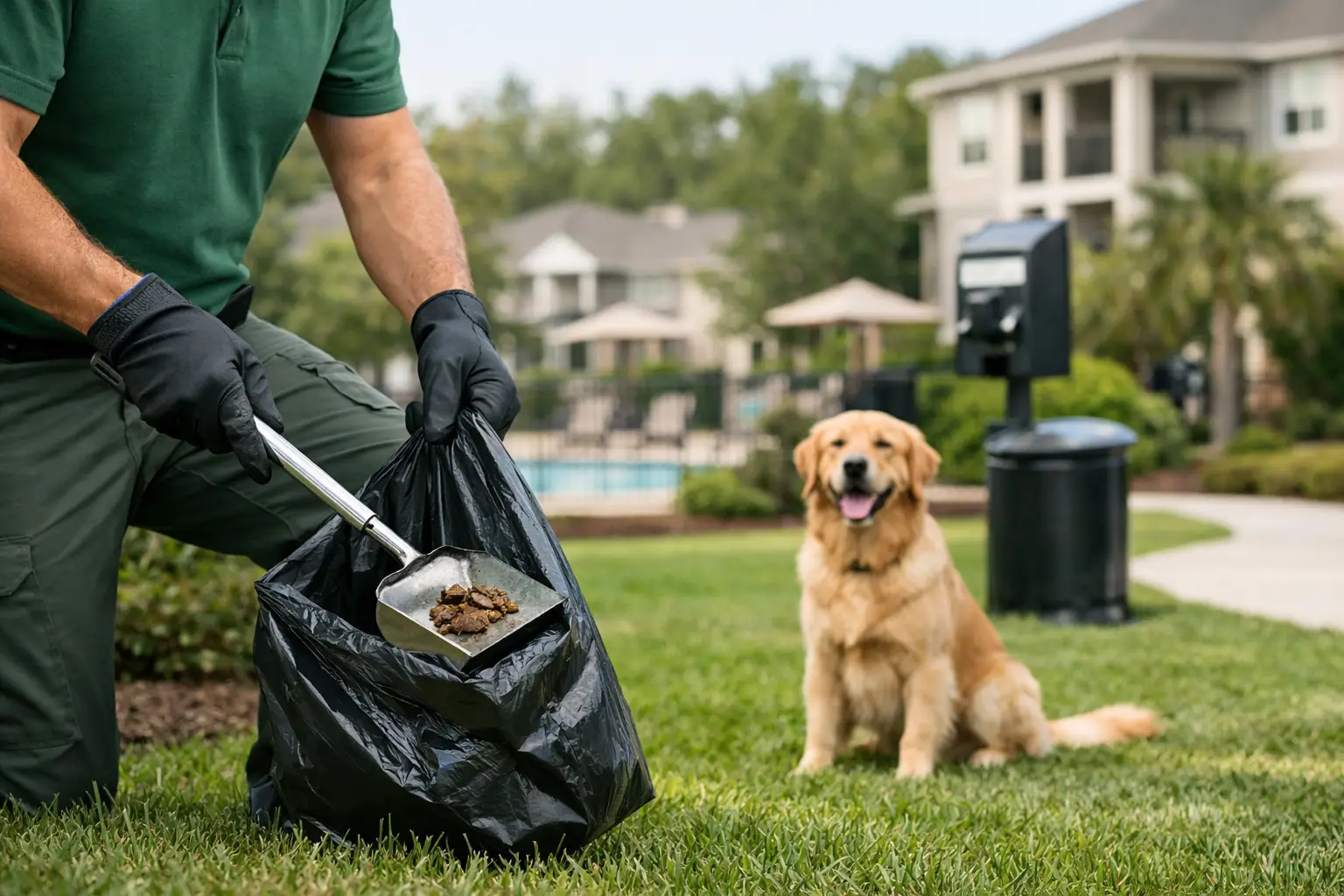
The service itself should include more than a quick scan from the sidewalk. Technicians should thoroughly inspect the scheduled area, remove visible waste, and dispose of it properly. When odor or sanitation is a concern, deodorizing and pet-safe sanitizing can add another layer of care, particularly around dog runs, turf areas, and places where pets regularly gather.
Communication Protects the Board and the Property
Property managers should not have to wonder whether a scheduled visit happened. Arrival and completion notifications provide a useful service record, especially when residents report concerns. Clear communication also makes it easier to coordinate around landscape work, irrigation schedules, events, gate access, and other vendors.
For secured spaces, accountability matters. A company that documents completed service and follows gate-security procedures gives boards more confidence than a provider that simply comes and goes without notice. At Poo Pickers®, uniformed technicians, service notifications, and completion photos help make the work easy to verify.
Pet Waste Removal for HOAs Is Property Care
A well-maintained community is built from the details residents see every day. Freshly trimmed landscaping matters. Clean sidewalks matter. So does a dog area that does not require residents to watch every step.
Routine pet waste removal supports curb appeal, but it also helps preserve the practical value of shared spaces. Families are more likely to use lawns for play. Residents are more comfortable walking their dogs. Guests notice that the community feels cared for. Those outcomes are difficult to measure on a spreadsheet, yet they directly affect resident satisfaction.
There is also a fair-use benefit. Responsible dog owners should not have to deal with the consequences of neighbors who skip pickup. A professional service does not replace community rules or pet-waste stations, but it provides a reliable backstop while boards continue encouraging resident compliance.
That distinction matters. Signs and bag dispensers are helpful, but neither is a maintenance plan on its own. Bags run out. Rules are overlooked. A scheduled cleanup ensures common areas are restored even when residents are not consistent.
How to Set the Right Service Frequency
The best schedule is based on activity, not assumptions. An HOA with a small, quiet pet relief area may be well served by one weekly visit. A large community with a popular dog run may need two or more visits weekly to prevent buildup and odor.
Start by looking at the areas residents use most often. Are there visible waste piles between landscaping visits? Are certain stations constantly empty? Do complaints increase during weekends, warmer months, or after community events? These patterns point to a service gap.
It is also wise to consider the community’s layout. Waste along sidewalks and entrances often creates more complaints than waste in a less-traveled corner of a park. High-visibility areas may need more attention even if the total volume of waste is modest.
A flexible provider can adjust the schedule as the property’s needs change. This is useful for communities adding a dog park, welcoming new residents, changing landscape vendors, or dealing with a temporary increase in complaints. No-contract service can be especially helpful when a board wants room to adapt rather than being locked into a plan that no longer fits.
Questions HOA Boards Should Ask Before Hiring
Price matters, but the lowest quote is not always the lowest-risk choice. Boards should understand exactly what the service includes and how the company handles access, communication, safety, and missed areas.
Ask whether the company is licensed and insured. Confirm which common areas are included in each visit and whether pet stations are serviced or only the ground areas around them. Find out how technicians avoid carrying contamination from one property to another. Equipment disinfection between properties is a practical safeguard that reflects professional standards.
It also helps to ask how a provider responds if a resident notices an issue after service. A clear satisfaction guarantee is more meaningful than vague promises of quality. The company should have a straightforward process for correcting a concern, not leave managers chasing down a response.
Finally, clarify billing and scheduling. Recurring plans with predictable monthly billing make budget planning easier. One-time cleanup options can be useful before an inspection, community event, landscape project, or when an HOA needs to reset a neglected pet area before moving into ongoing service.
Pair Professional Service With Better Resident Habits
Professional cleanup works best alongside clear, respectful resident communication. The message does not need to shame dog owners. It simply needs to explain that prompt pickup keeps common areas clean for children, neighbors, guests, and pets.
Place well-stocked pet-waste stations where people naturally enter and exit dog areas. Keep rules visible without overloading signs with warnings. If a certain location repeatedly becomes a problem, consider whether the station is inconvenient, poorly placed, or empty too often.
Boards can also use service records to spot patterns. If a particular area needs unusually frequent attention, that is useful information for improving station placement, lighting, signage, or patrols. Professional removal handles the immediate mess while the HOA addresses the reason it keeps returning.
A clean community pet area sends a simple message: dogs are welcome here, and neighbors are expected to respect the space. With a reliable schedule, clear communication, and a provider that shows up accountable for the work, that standard is much easier to maintain.