A dog-waste station can look fully stocked on Monday and still leave a community with a mess by Friday. Bags run out, cans overflow, residents take shortcuts, and the same corners of the property become places people avoid. An apartment waste audit gives property managers a clear look at what is happening in shared pet areas so they can correct the problem before it turns into odor complaints, pest issues, damaged landscaping, and unhappy residents.
For Las Vegas Valley apartment communities, this matters even more during hot weather. Waste that sits in sun-baked turf, gravel, or common areas can create stubborn odors quickly. A consistent audit is not about blaming dog owners. It is about making responsible cleanup easier, identifying gaps in service, and keeping the property comfortable for everyone.
What Is an Apartment Waste Audit?
An apartment waste audit is a practical review of pet-waste conditions across a multifamily property. It examines where waste is being left behind, how often receptacles are emptied, whether bag stations are placed where residents actually need them, and whether the current cleanup plan is keeping pace with the number of dogs on site.
The goal is to replace guesswork with a workable maintenance plan. A manager may assume a dog park is the main issue, only to find that the worst buildup is along the route between one building and the parking lot. Another property may have plenty of stations but no regular servicing schedule, which means full cans and empty dispensers undermine the entire setup.
A useful audit also looks beyond visible waste. It considers odor, flies, landscaping damage, resident behavior, access for service technicians, and whether staff are receiving repeat complaints from the same locations.
Why Shared Pet Areas Need a Closer Look
Pet-friendly amenities can help a community appeal to renters, but they need active care. When dog waste is not picked up promptly, residents may stop using lawns, walking paths, and dog areas as intended. Parents do not want children playing near waste. Dog owners do not want their pets stepping in it. Prospective renters notice it during a tour.
There is also a sanitation concern. Dog waste can carry bacteria and parasites, and rain or irrigation can move contaminants into drains and landscaped areas. In a dry climate, the problem is not eliminated by the heat. Waste still sits on the ground, attracts pests, creates odor, and gets tracked onto sidewalks and into homes.
The trade-off is simple: assigning staff to spot-check every area can work at a very small property, but it often becomes inconsistent when maintenance teams are handling repairs, landscaping, turnovers, and resident requests. Larger communities, high-density pet populations, and properties with dog parks usually benefit from a dedicated pet-waste service schedule.
How to Perform an Apartment Waste Audit
Start by walking the property at the times when people and pets are most likely to be outside. Early morning, late afternoon, and evening walks reveal different patterns. Bring a simple property map or use notes on a phone to mark every location where waste, odor, overflowing cans, or low bag supplies appear.
Map the real dog-walking routes
Do not limit the walk to designated pet areas. Check grass strips near building exits, sidewalks leading to parking lots, perimeter fencing, mailboxes, dumpster enclosures, and shaded corners. Residents tend to choose the fastest available route, particularly before work or late at night. If a bag station is far from that route, it may be ignored even if it is visible from the leasing office.
Look for repeated hotspots rather than one-off misses. A single pile may reflect one careless resident. A dozen piles in the same corner usually signals a property-design or service problem: no nearby station, poor lighting, a full receptacle, unclear rules, or no routine cleanup.
Check stations and receptacles like a resident would
A waste station only works when it is easy to find, stocked with bags, and paired with a receptacle that is not overflowing. During the audit, note whether each station is accessible, secure, and positioned before or along a common walking path.
Inspect bag supply levels, dispenser function, signage, and container capacity. If a station runs empty two days after servicing, the property may need more frequent replenishment or an additional station. If bags are available but waste is left nearby, consider whether the receptacle is too small, too far away, or unpleasant to use because it is already full.
Measure the cleanup gap
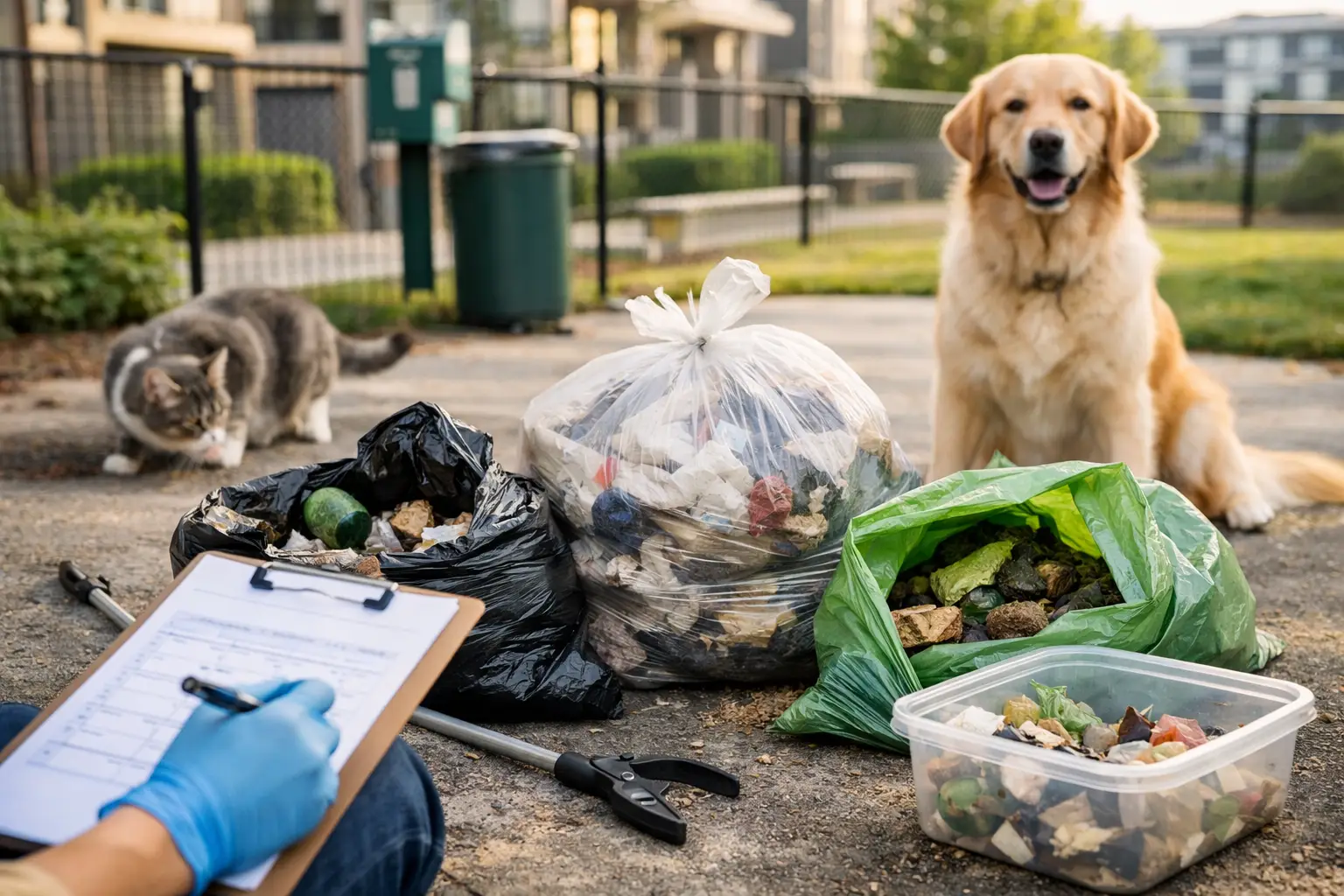
Next, compare what the property needs with what it currently receives. Record the date and time of each audit walk, the number of visible waste piles by zone, the condition of stations, and any related resident complaints. Repeat this for at least one week, and ideally over two to four weeks.
This creates a baseline. A property with two missed piles per week has a different need than a dog-friendly community where multiple piles appear daily. Frequency should match the reality on the ground, not a generic schedule copied from another property.
Talk to the people who see the problem first
Maintenance teams, leasing staff, landscapers, and residents often have useful information that a single walkthrough will miss. Ask where complaints come from, which receptacles fill first, and when messes are most noticeable. Keep the questions practical and avoid turning the process into a hunt for rule breakers.
Resident feedback can also reveal simple barriers. Perhaps a gate to the dog area is difficult to open while holding a leash, or nighttime lighting makes bag stations hard to find. Small operational fixes can improve compliance without adding friction for responsible pet owners.
Turning Audit Results Into a Better Plan
Once you see the patterns, set clear service standards for each area. High-traffic dog runs and main walking routes may need several cleanups per week or even daily attention. Lower-use perimeter areas may need less frequent service, provided they are still checked consistently.
Your plan should answer four basic questions: who services each zone, how often they service it, where collected waste goes, and how the work is verified. Accountability matters. A vague instruction to “keep the dog area clean” is easy to miss during a busy day. A defined route, service frequency, and completion record are much easier to manage.
For communities that outsource the work, ask what the service visit includes. Reliable pet-waste maintenance should cover more than a quick pass through the dog park. It should address shared green spaces and common walking areas, include proper equipment sanitation, and offer a clear way to report or correct a missed area. Poo Pickers provides commercial cleanup for apartment communities with the same dependable approach used for residential yards: trained uniformed technicians, disinfected equipment, and visible service accountability.
Common Fixes That Make the Biggest Difference
An audit does not always lead to a major expense. Often, it points to a few targeted improvements. Moving a bag station closer to a busy exit may solve a recurring hotspot. Increasing receptacle service before weekends can prevent overflow. Adding simple, respectful reminders near problem zones can reinforce the community standard.
When deciding on upgrades, prioritize these four areas:
- Station placement along actual walking routes, not just where equipment is convenient to install.
- Enough bag and container capacity for the number of dogs using the area.
- Cleanup frequency that reflects traffic, weather, and the property’s layout.
- A documented service process, including follow-up when a resident or staff member reports a missed location.
Avoid relying on signs alone. Rules matter, but residents are far more likely to follow them when bags are available, disposal is convenient, and the space already looks cared for. A clean area encourages clean behavior. A neglected area sends the opposite message.
Make the Audit Part of Property Care
A one-time apartment waste audit can reveal immediate issues, but the best results come from repeating it. Review conditions seasonally, after occupancy changes, and whenever the community adds a new pet amenity. Hot months, move-in periods, and landscaping changes can all affect where residents walk dogs and how quickly waste becomes a problem.
Keep the process simple enough that it actually gets used. A short monthly walkthrough, station check, and review of service records can catch issues before they become a leasing-office headache. If the same location keeps failing, treat it as a system problem and adjust the route, station placement, or service schedule.
Clean common areas tell residents that management pays attention to the details that shape daily life. When dog owners have an easy way to do the right thing and the property has a dependable cleanup plan behind it, everyone gets a more usable place to walk, play, and come home to.