A pooper scooper company is coming through your side gate, working around your pets, and walking across your property. So, are pooper scoopers insured? A professional company should be able to answer yes clearly and explain what that protection means for you. Insurance is not a fancy extra. It is part of trusting someone to handle a recurring job at your home or managed property.
Dog waste removal may look straightforward from the curb, but the service involves real responsibility. Gates need to be secured, equipment needs to be handled properly, and technicians need to work carefully around landscaping, children’s play areas, pets, and shared community spaces. The right provider makes those details routine rather than leaving them to chance.
Why insurance matters for dog waste removal
Insurance helps protect both the customer and the service business when an unexpected incident occurs. A technician can be careful, trained, and professional, and accidents can still happen. A gate latch could be damaged, a sprinkler head could be stepped on, or a pet could slip past a gate that was not secured correctly.
For homeowners, insurance is one more layer of confidence when inviting a service provider onto private property. For property managers and HOA boards, it is often a basic vendor requirement. Common areas bring more foot traffic, more dogs, and more potential liability, so documented coverage matters even more.
Being insured also signals that a company treats pet waste removal as a legitimate property-care service. It shows the business has put thought into operating responsibly, not just picking up waste when it is convenient.
What kind of insurance should pooper scoopers carry?
Not every policy covers every situation, and coverage requirements can vary by business, property, and contract. Still, reputable dog waste removal companies commonly carry general liability insurance. This is the coverage customers usually mean when they ask whether a pooper scooper is insured.
General liability insurance
General liability coverage may help if the company is found responsible for accidental third-party property damage or bodily injury related to its work. For example, if a technician accidentally damages something in a yard while performing service, this type of policy may be relevant.
The exact limits, exclusions, and claims process depend on the insurer and policy. That is why a company should never make promises that go beyond its actual coverage. What matters to a customer is that the business has active insurance, can verify it when appropriate, and takes any concern seriously.
Workers’ compensation coverage
If a company has employees, workers’ compensation coverage may also be required or advisable under applicable rules. This coverage is designed for employee work-related injuries. It can be especially relevant when you are hiring a team that visits on a regular schedule rather than a one-time independent operator.
Customers do not need to become insurance experts before scheduling a cleanup. You simply want to know that the business has considered the risks of sending people onto customer properties and has the proper protections in place.
Commercial auto coverage
A company that uses vehicles to travel between homes and commercial sites may carry commercial auto insurance as well. This is generally separate from liability coverage for work performed in your yard. It may matter more for large communities, parks, or properties where service vehicles access private roads or loading areas.
Insured is not the same as licensed or bonded
These terms are often grouped together, but they do not mean the same thing.
A licensed business has completed the registrations or permissions required to operate in its area. Licensing can help show that the business is established and accountable, though requirements vary by location and service type.
An insured business has an active insurance policy intended to address certain covered accidents or claims. Insurance is about financial protection when something goes wrong.
A bonded business has a surety bond, which is a different type of financial guarantee. Bonds are more common in certain industries or contracts and may not be a standard requirement for every residential pet-waste service.
The best question is not whether a company uses every possible credential in its marketing. Ask what protections it carries, whether it is currently licensed and insured, and how it handles a customer concern if one arises.
Are pooper scoopers insured when they work around pets?
Insurance matters, but daily operating procedures matter just as much. The safest companies do not rely on a policy after the fact. They build habits that reduce the chance of a problem in the first place.
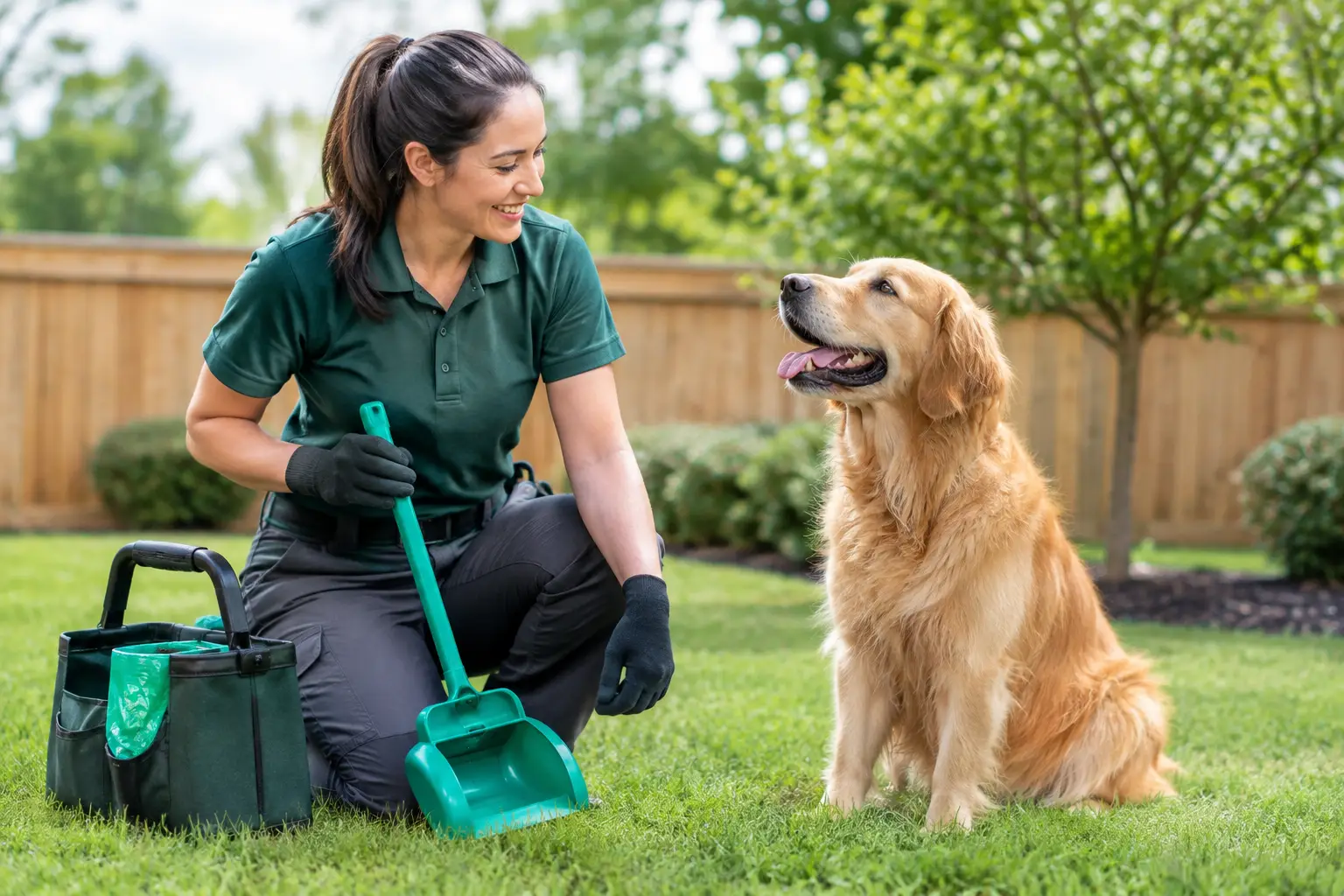
A professional technician should follow your entry instructions, keep gates closed while working, and confirm that the gate is secured before leaving. If your dog is in the yard, the company should have a clear policy for service around pets. Some dogs are friendly and curious. Others become protective when an unfamiliar person enters the yard. A dependable provider will respect that difference.
At Poo Pickers®, technicians are uniformed, customers receive service notifications, and a closed-gate photo is provided after service. Those small details create real accountability. You know when the visit happened, and you have confirmation that the gate was closed when the technician left.
For pets that may be anxious, territorial, or prone to slipping through an open gate, tell the company before the first visit. You may need to keep your dog indoors during the service window, use a separate access point, or make another arrangement. Clear instructions protect your pet better than assumptions ever will.
Questions to ask before hiring a pooper scooper service
You do not need a long interview to find a trustworthy provider. A few direct questions can tell you a great deal about how the company operates.
Ask whether the business is licensed and insured, and whether it can provide proof of coverage if your HOA, apartment community, or property manager requests it. A professional answer should be simple and confident, not evasive.
Ask how the company handles gates. Do technicians have a consistent closing procedure? Do they send a completion notice or a gate photo? This is especially useful for homes with escape-prone dogs and for communities where multiple people access common pet areas.
Ask whether equipment is disinfected between yards. Pet waste can contain bacteria and parasites, and a company should avoid carrying contamination from one property to another. Separate or sanitized tools are a practical sign that the business takes hygiene seriously.
Ask what happens if you are not satisfied with the cleanup. No service team is perfect every minute of every day. The meaningful difference is whether the company responds promptly, makes the issue right, and has a clear satisfaction policy.
Finally, ask about scheduling and cancellation. Recurring dog waste removal should make life easier, not trap you in a confusing agreement. Weekly service is often the best fit for active dogs and multi-dog homes, while bi-weekly, monthly, and one-time cleanups can make sense depending on your yard and household routine.
Insurance supports trust, but service details earn it
A certificate of insurance is reassuring, but it does not pick up a missed pile near the patio, deodorize a high-use dog area, or make sure the side gate is latched. Reliable service comes from the combination of proper coverage and consistent field practices.
Look for a company that communicates before and after visits, uses trained technicians, respects your property, and keeps tools clean. For commercial clients, that also means showing up consistently enough to keep shared spaces welcoming for residents, guests, and their dogs.
In the Las Vegas Valley, where people use patios, pools, and backyards nearly year-round, dog waste can quickly turn an outdoor space into a place nobody wants to enjoy. Routine cleanup helps keep lawns, gravel areas, and common pet zones cleaner and more usable between visits.
The right pooper scooper service should leave you with more than a waste-free yard. It should leave you confident that your home, your gate, and your pets were treated with care. Before handing over access to your property, ask the insurance question – then pay close attention to the everyday systems that prove the company deserves your trust.