A backyard with artificial grass should be the easy part of having dogs. But when waste sits too long, urine dries in the fibers, and dust settles into the infill, that low-maintenance yard can start smelling like a kennel. This artificial turf cleaning guide covers the routine that keeps a dog-friendly yard clean, comfortable, and ready for kids, guests, and everyday play.
Artificial turf does not need mowing or watering like natural grass, but it still needs consistent care. In Las Vegas, intense sun and dry conditions can make urine odor more noticeable, while windblown dust, leaves, and pet hair collect between the blades. A little regular attention prevents a much bigger cleanup later.
Start With Dog Waste Removal
The most effective odor-control product is a prompt poop pickup. Solid waste should be removed before it gets stepped on, pushed into the turf, or broken apart by a hose. Once waste is ground into the fibers and infill, cleaning takes longer and odor is harder to manage.
For one dog, a daily walkthrough is usually enough. Multi-dog yards, active puppies, and shared pet areas may need a check more than once a day. Use a scooper or bag, and avoid dragging waste across the surface. After pickup, dispose of it in a sealed bag rather than rinsing it toward a drain or leaving it in an outdoor trash can for days.
A dependable recurring cleanup service can make a real difference here. When life gets busy, missed pickups are usually the first reason an artificial lawn starts to smell. Poo Pickers® handles the dirty work with routine pet-waste removal, deodorizing, and pet-safe sanitizing so homeowners can use their yards without another chore hanging over them.
Artificial Turf Cleaning Guide: The Weekly Routine
A weekly cleanup keeps the surface looking natural and helps prevent odor before it becomes a problem. Pick a cooler part of the day when possible, especially during a Las Vegas summer. Hot turf can dry cleaning products too quickly and make the area uncomfortable for pets while you work.
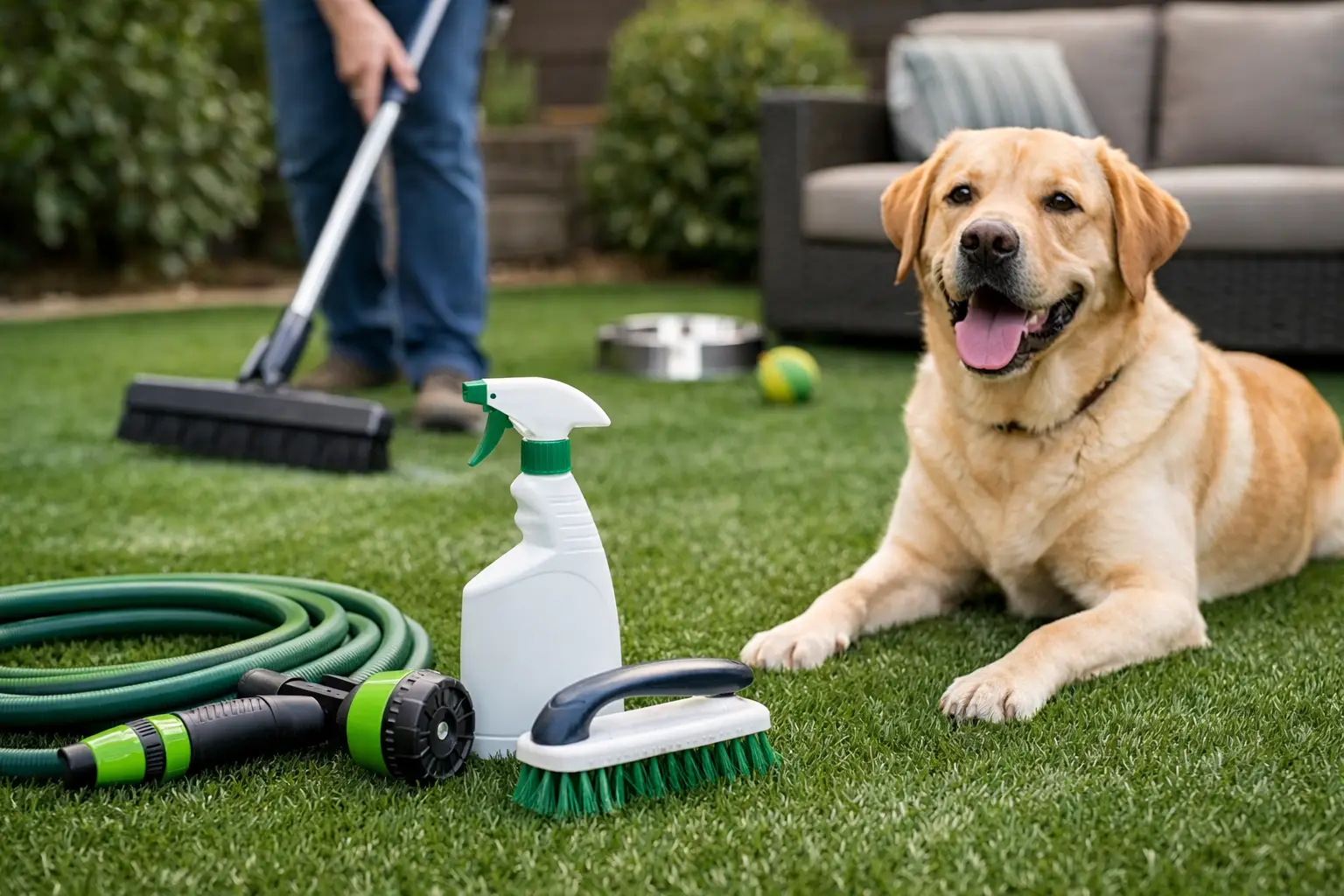
First, remove leaves, twigs, dog toys, and loose debris. A plastic rake, leaf blower on a low setting, or stiff-bristled broom works well. Avoid metal rakes that can pull at fibers or damage seams. Brush against the grain in high-traffic spots to lift flattened blades and redistribute infill.
Next, rinse the turf with a garden hose. You are not trying to soak the whole yard every day. A light, even rinse once or twice a week is often enough for most households, with extra attention around the spots your dog uses most often. If your dog has a favorite corner, rinsing that area more frequently can reduce urine buildup.
Check that water drains properly. Artificial grass should not hold standing water for long after rinsing. Puddles can point to compacted infill, clogged drainage, an installation issue, or debris trapped along an edge. Cleaning products will not solve a drainage problem, so address that concern early.
Treat Urine Odor at the Source
Dog urine odor is usually strongest when urine salts, bacteria, and organic residue build up in the turf and infill. Heat can amplify the smell, which is why a yard may seem fine in the morning but unpleasant by late afternoon.
Start by rinsing the affected area to dilute residue. Then use a pet-safe enzyme cleaner made for artificial grass, following the label directions for dilution and dwell time. Enzymatic products are designed to break down the organic material that causes odor. They are generally more useful than simply covering the smell with fragrance.
It depends on the product and your turf system, so do not assume more cleaner is better. Overapplying a concentrated product can leave residue, waste money, or make the area slick until it is rinsed. Keep pets off the treated spot until the product label says it is safe and the surface is dry.
For a small, occasional odor spot, a rinse and enzyme treatment may be all you need. For a large dog run, several dogs, or long-standing odor, the infill may require a deeper treatment. In those cases, a professional service may be more practical than repeatedly applying household products without reaching the source.
What Not to Use on Artificial Grass
Artificial turf is durable, but harsh chemicals and aggressive tools can shorten its life. Bleach, ammonia, strong acids, and petroleum-based solvents can damage fibers, backing, adhesives, or nearby landscaping. They can also create a safety concern for pets and children.
Avoid using a high-pressure washer unless your turf manufacturer specifically approves it. Excessive pressure can displace infill, loosen seams, and force debris deeper into the surface. Steam cleaning is another method that sounds thorough but can be too hot for synthetic materials.
Be careful with disinfectants as well. A pet-safe sanitizer can be useful after a mess or as part of professional maintenance, but it is not a substitute for picking up waste and rinsing urine areas. Use products intended for turf and pets, and follow the stated contact time. Never mix cleaners together.
Handle Messes Quickly
Vomit, diarrhea, mud, and spilled food need faster attention than routine cleanup. Pick up as much material as possible with paper towels or a scoop, then blot rather than scrub. Rinse the area with water, apply a turf-safe enzyme cleaner if needed, and rinse again according to the product instructions.
For greasy food spills, use a small amount of mild dish soap mixed with water. Test it in an inconspicuous area first, apply gently, and rinse thoroughly. Soap left behind can attract more dust and make turf feel sticky.
If gum, wax, or a sticky substance lands on the grass, use ice to harden it and lift it carefully. Do not scrape hard with a sharp tool. Small damage is easier to avoid than to repair.
Give High-Traffic Areas Extra Attention
Dogs do not distribute wear evenly. Gates, patio doors, shaded resting spots, and the path to the fence usually get the most traffic. These areas can develop flattened fibers, compacted infill, and lingering odor sooner than the rest of the yard.
Brush those spots every week or two to help the fibers stand up. If the turf feels unusually hard or looks thin, the infill may need to be redistributed or topped off. That is not always a DIY job, particularly if the turf is older or the surface no longer drains well. A turf professional can assess whether the problem is infill, drainage, seams, or worn material.
Outdoor furniture can also leave permanent-looking flat areas if it never moves. Shift chairs, planters, and play equipment periodically, then brush the fibers back up. It is a small habit that keeps the yard looking more even.
Keep the Yard Safe for Everyone
Clean turf is about more than appearance. Prompt waste removal reduces the chance that people or pets will track fecal material indoors, and it helps limit the pests attracted to dog waste. Wash hands after handling waste or cleaning products, and keep children away from a fresh cleanup area until it is dry.
If your dog has diarrhea, parasites, or a contagious illness, be especially consistent with waste pickup. Contact your veterinarian for care advice, and clean the affected area using a product appropriate for artificial turf and pets. No cleaning routine can replace veterinary guidance when a pet is sick.
For shared HOA, apartment, park, or business pet areas, scheduled service matters even more. These spaces have heavier use, less individual accountability, and more opportunity for waste to be missed. Regular pickup, deodorizing, and visible maintenance help make the area feel cared for instead of avoided.
A clean artificial lawn does not require a complicated system. Remove waste promptly, rinse the areas your dog uses most, brush high-traffic spots, and treat odor before the next hot afternoon turns a small issue into a yard-wide problem. That steady routine keeps your outdoor space ready for the people and pets who actually live in it.