A backyard can go from family hangout to off-limits fast when dog waste starts piling up. This backyard sanitation planning guide helps you build a routine that protects your lawn, reduces odors and pests, and keeps the space ready for kids, pets, guests, and a quiet evening outside.
The goal is not to make your yard smell like chemicals or turn you into a full-time cleaner. It is to handle waste consistently, use pet-safe products correctly, and prevent small sanitation problems from becoming a bigger, smellier job.
Start Your Backyard Sanitation Planning Guide With a Yard Check
Walk the yard before creating a schedule. Look beyond visible piles. Notice where your dog usually goes, whether waste collects along fences or behind patio furniture, and where water drains after irrigation or rain. These details determine where odor, flies, and lawn damage are most likely to develop.
Pay attention to high-traffic areas too. If children play in one corner, guests use the patio, or your dog runs the same path every day, those areas deserve extra attention. Dog waste can be tracked onto shoes, paws, toys, and outdoor furniture. A clean-looking lawn is helpful, but a sanitation plan should also account for the surfaces people and pets touch.
In Las Vegas and Henderson, heat changes the equation. Hot weather can make odors more noticeable and can dry waste into hard-to-see pieces that still belong in the trash. Wind can also move lightweight debris around the yard. During the hottest months, a once-a-week visual check between scheduled cleanups may be worthwhile, especially in multi-dog homes.
Set a Cleanup Frequency That Matches Your Household
The right pickup schedule depends on dog count, yard size, and how your family uses the space. One dog in a large backyard may be manageable with a weekly cleanup. Two or three dogs, a smaller yard, or frequent outdoor use usually calls for more frequent service.
Waiting until the yard is visibly covered is rarely the best threshold. By that point, waste may already be affecting odor, attracting insects, and making the lawn unpleasant to use. A predictable schedule is easier than relying on motivation after a long workday.
For many households, weekly pickup is a practical baseline. Bi-weekly service can work for a single dog and a low-use yard, while twice-weekly cleanup may be the better fit for multiple dogs, young children, or a busy outdoor living area. Monthly service is generally best viewed as maintenance for very light-use situations, not a substitute for regular pickup in an active household.
A simple plan should also include an exception rule: clean up promptly after your dog has diarrhea, parasites, or an upset stomach. Loose stool is harder to remove completely, may spread farther through grass or gravel, and deserves a more careful follow-up cleaning.
Handle Waste Before You Deodorize
Deodorizer is helpful, but it cannot replace removal. The first step in backyard sanitation is always picking up solid waste and disposing of it in a sealed bag or designated waste container. Leaving waste in one corner of the yard until trash day can create an odor source of its own, particularly in warm weather.
Once the waste is removed, address the areas where dogs repeatedly relieve themselves. Pet-safe sanitizing and deodorizing products can help reduce lingering odor on grass, turf, gravel, concrete, and other outdoor surfaces. Follow product directions closely. More product is not always better, and a product intended for hard surfaces may not be appropriate for every type of lawn or landscaping material.
Avoid using harsh household cleaners where dogs and children play. Bleach and other strong chemicals may damage plants, irritate paws, or create fumes in enclosed patio areas. If you are unsure what is safe for your surface, test a small out-of-the-way area first or choose a product specifically labeled for pet areas.
Water use requires some judgment in Southern Nevada. Hosing down a patio after cleanup can be useful when needed, but repeatedly washing waste residue toward a drain, curb, or shared area is not a sanitation solution. Pick up waste first, spot-clean affected surfaces, and follow local watering restrictions and runoff considerations.
Do not forget tools and touchpoints
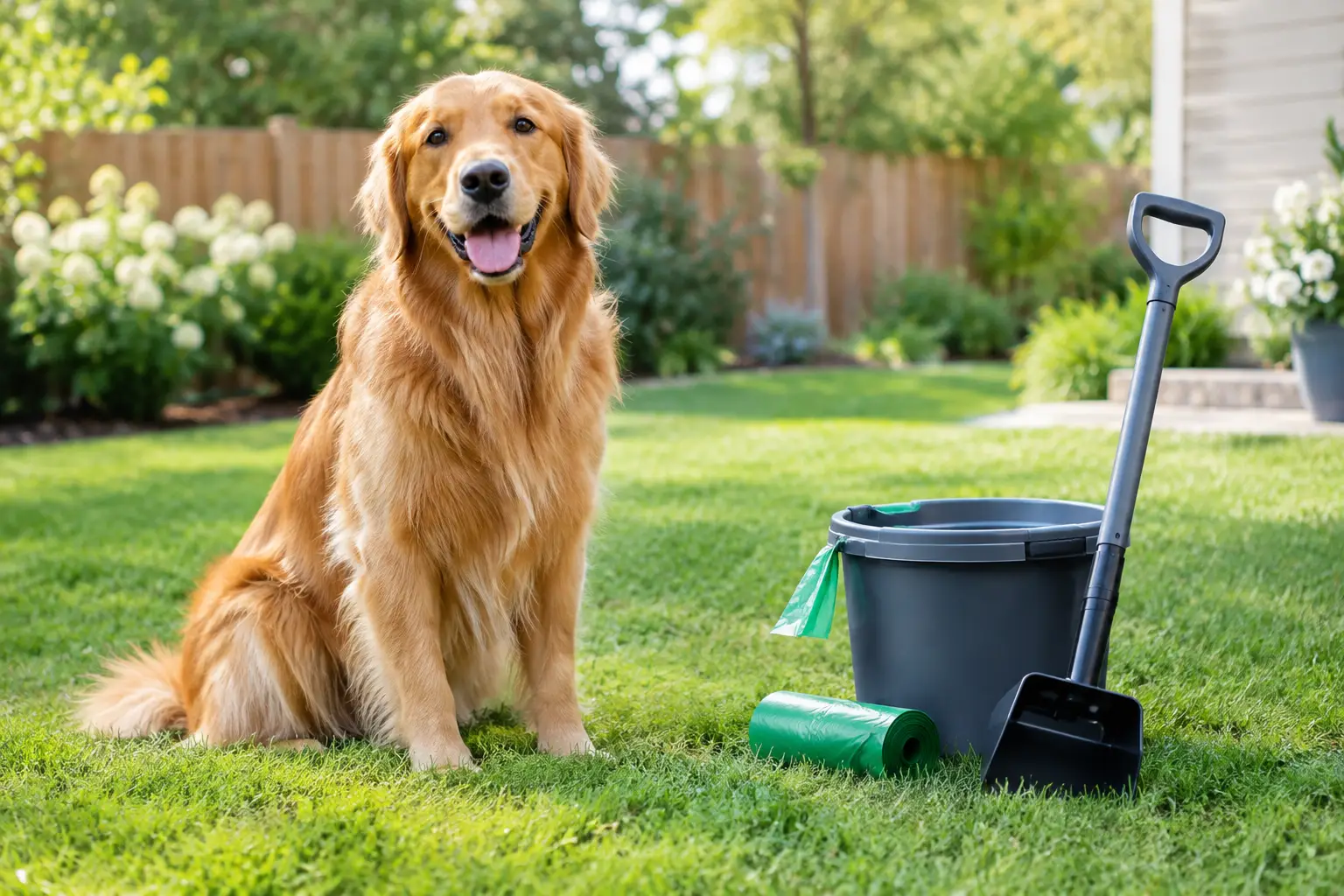
Scoops, rakes, bins, gloves, and the soles of your shoes can spread contamination from one part of the yard to another. Clean and disinfect tools after use, especially if they have touched loose stool. Store them away from children’s toys, grilling supplies, and gardening tools.
If you use a dog waste station or covered outdoor bin, empty it often enough that bags do not bake in the sun. A lid helps with flies and odor, but only if the container is not overfilled. Wipe the lid and handle periodically because those are the surfaces you touch most.
Reduce Odor, Pests, and Grass Damage at the Source
A sanitation plan works best when it includes prevention. Consistent pickup removes the main food source that can attract flies and other pests. Keeping yard edges trimmed and clearing leaf piles or clutter also makes it easier to spot waste before it gets missed.
Urine can create its own lawn challenges, particularly in small patches of grass where a dog goes repeatedly. You do not need to chase your dog around the yard with a hose, but rotating potty areas when possible can spread out the impact. For natural grass, normal and responsible watering practices can help dilute concentrated spots. For artificial turf, periodic rinsing and pet-safe deodorizing may be more useful than adding extra products.
Train your dog to use one designated potty zone if the layout allows it. This approach makes daily checks faster and helps protect the lawn, patio, and play areas. The trade-off is that the chosen zone needs more frequent cleanup and occasional deeper sanitation, since it receives the heaviest use.
Build a Routine People Will Actually Follow
The best plan is one that fits real life. Assign a regular pickup day, keep bags and tools in one easy-to-reach spot, and add a quick yard scan before hosting a barbecue or letting children play outside. If several people share the home, make the responsibility clear instead of assuming someone else handled it.
Still, plenty of dog owners do not want another recurring chore. Travel, long work hours, hot afternoons, injuries, and multi-dog households can turn a simple task into a missed routine. Professional service provides consistency when doing it yourself is no longer realistic.
Poo Pickers can handle recurring or one-time cleanup with flexible scheduling, pet-safe sanitizing, and deodorizing. Uniformed technicians disinfect equipment between yards, provide arrival and completion notifications, and send a closed-gate photo after service. That kind of accountability matters when someone is caring for a space your family and pets use every day.
Review Your Plan as the Seasons Change
Backyard sanitation is not a set-it-and-forget-it task. Review the schedule when you add a dog, move to a smaller yard, start using the patio more often, or notice recurring odor. The right plan may be weekly for most of the year and more frequent during periods of heavy use.
A clean yard is not about perfection. It is about making outdoor time feel easy again. When waste removal, surface care, and a realistic schedule work together, your backyard stays a place where the dog can play and everyone else can relax.