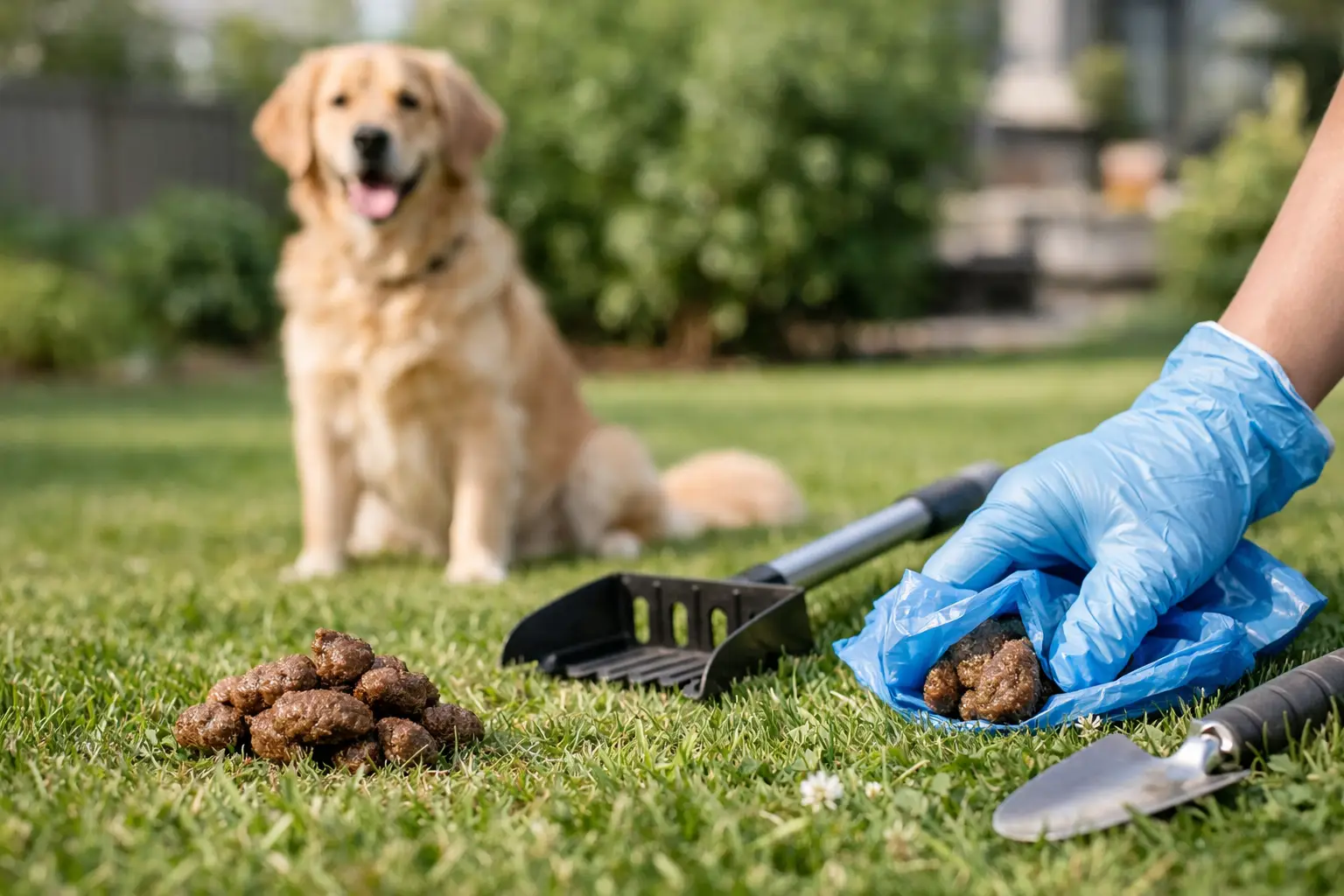
A backyard should be ready when life happens: the kids want to play, friends stop by for a barbecue, or your dog heads outside for a quick break. Dog feces changes that fast. What starts as a small chore can turn a comfortable outdoor space into a source of odor, mess, and worry – especially when cleanup gets pushed from one busy day to the next.
For Las Vegas Valley dog owners, the dry climate can make waste seem less urgent. It is not. Sun may dry dog waste, but it does not make it disappear or make the yard clean. Regular removal is one of the simplest ways to protect your lawn, reduce unpleasant smells, and keep the space safer for people and pets.
Why Dog Feces Is More Than a Yard Nuisance
Nobody mistakes dog poop for a yard feature, but it is easy to underestimate the effect of leaving it behind. A single missed pile is annoying. Repeated buildup can make a yard hard to use and much harder to restore.
Dog waste can contain bacteria and parasites that may be passed through contaminated soil, paws, shoes, and outdoor surfaces. The level of risk depends on factors such as a dog’s health, parasite prevention routine, weather, and how much direct contact people have with the area. Still, prompt pickup is a sensible part of household sanitation, particularly for families with young children, older adults, or pets that spend a lot of time outdoors.
It can also attract flies and other pests. During hot Las Vegas weather, odor can become noticeable quickly, especially near patios, side yards, artificial turf, and shaded areas where families gather. Waiting until the yard is visibly covered is not a cleanup plan – it is usually when the job becomes more unpleasant and time-consuming.
Dog Feces Does Not Help Your Lawn
A common misconception is that dog waste works like fertilizer. Unlike properly processed manure used in some agricultural settings, fresh dog feces is not a reliable lawn treatment. It can leave brown spots, contribute excess nutrients to a concentrated area, and create a mess that gets pressed into grass, gravel, pavers, or turf.
Natural grass may show damaged patches where waste repeatedly sits. Artificial turf has different issues: waste can become trapped in the blades and infill, leaving odor behind even after the visible material is gone. Gravel and desert landscaping are not immune either. Small pieces settle between rocks, where they are easy to miss and difficult to remove later.
Regular pickup gives you a better chance of keeping the yard looking like a place to enjoy, rather than a chore waiting outside the back door. If odors have already built up, deodorizing and pet-safe sanitizing can help address the area after waste is removed. The right approach depends on the surface, the size of the yard, and whether pets or children will be using it right away.
The Real Cost Is Often Time and Avoidance
Most dog owners do not skip cleanup because they do not care. They skip it because the task lands at the end of a long day, in the middle of a packed weekend, or during a stretch of extreme heat. Then one missed pickup becomes several.
Multi-dog households feel this fastest. A weekly cleanup that takes a few minutes with one dog can turn into a larger job when there are two, three, or more dogs using the same yard every day. Add work schedules, school activities, travel, and summer temperatures, and it is understandable why the chore falls behind.
The problem is not only the waste itself. It is the way it changes how you use your own property. People stop going barefoot outside. Kids get told to watch every step. Guests are kept off the lawn. Dogs track mess into the house. A yard that should offer a break from indoor life starts to feel off-limits.
How Often Should You Pick Up Dog Waste?
For most households, daily pickup is the cleanest option. It limits odor, keeps waste from getting stepped on or spread around, and makes each cleanup quick. But daily pickup is not realistic for every schedule.
At a minimum, a yard should be checked several times per week. Households with multiple dogs, small yards, children who play outside, or frequent backyard gatherings often benefit from more frequent attention. After rain, watering, or a monsoon storm, it is worth checking again because softened waste can spread into the lawn or wash toward drains and low spots.
A recurring professional service can make the routine easier to keep. Weekly service is a practical fit for many homes, while twice-weekly visits may make sense for busy multi-dog yards. Bi-weekly, monthly, and one-time cleanups can work in lower-use spaces or when a yard needs to be reset after a missed stretch. There is no single schedule that fits every home; dog count, yard size, and how the space is used all matter.
What Dependable Yard Cleanup Should Look Like
Hiring help should remove a chore, not create a new concern. A professional pet-waste service should be clear about when technicians arrive, how they work around pets and gates, and what happens when the job is complete.
Look for a company that uses disinfected equipment between yards and provides visible confirmation after service. Arrival and completion notifications help you plan around access and pets. A closed-gate photo after the visit provides peace of mind, particularly when nobody is home. Licensed and insured service, uniformed technicians, and a straightforward satisfaction guarantee are also meaningful details – they show that the company treats your property with care.
Poo Pickers® provides recurring and one-time dog waste removal for homes and shared pet areas throughout the Las Vegas Valley. The service is designed for the practical realities of pet ownership: no long-term contracts, flexible scheduling, pet-safe deodorizing and sanitizing, and a team that handles the dirty work so your yard stays usable.
A Cleaner Yard Supports Better Outdoor Time
Routine dog waste removal is not about having a picture-perfect lawn. It is about making ordinary moments easier. You should be able to let the dog out, walk across the yard, set up lawn chairs, or invite friends over without scanning the ground first.
For property managers and HOA boards, that same principle applies to shared dog runs, apartment green spaces, and pet-friendly common areas. Missed waste affects everyone who uses the property. Consistent service helps keep these areas more welcoming and can reduce complaints before they become a larger maintenance issue.
If your yard cleanup has become an always-tomorrow chore, choose a schedule that fits the way your household actually lives. A clean yard is not a luxury for dog owners. It is simply a more comfortable place for the people and pets already calling it home.