A dog run can go from a convenient potty spot to a smelly, hard-to-use part of the yard faster than most pet owners expect. In the Las Vegas heat, urine odor can bake into concrete, turf, and gravel, while missed waste attracts flies and creates an unpleasant space for dogs and people alike. Knowing how to clean dog run areas properly helps protect your lawn, reduce odor, and keep the space more enjoyable between visits from friends, family, and four-legged guests.
The best method depends on the surface under your dog’s paws. A concrete kennel pad needs a different approach than artificial turf, pea gravel, or natural grass. One rule applies to every setup: remove solid waste first, clean regularly, and use pet-safe products exactly as directed.
Start With Waste Removal, Every Time
Cleaning solution cannot do its job through piles of dog waste. Pick up all solid waste before rinsing, scrubbing, or applying deodorizer. Use a scooper or bag, and check edges, corners, shaded spots, and areas behind outdoor furniture where waste is easy to miss.
For a household with one dog, daily pickup is ideal. Multi-dog homes and small runs often need cleanup twice a day, especially during warm weather. Regular removal is the simplest way to control odor, flies, bacteria, parasites, and brown spots in the surrounding lawn.
Wear disposable gloves while cleaning, then wash your hands thoroughly afterward. Keep your cleanup tools dedicated to the dog run rather than using the same rake, brush, or bucket elsewhere in the yard.
Gather the Right Cleaning Supplies
You do not need a cabinet full of harsh chemicals to clean a dog run well. A few reliable supplies will handle most routine jobs:
- Poop bags or a pooper scooper for solid waste
- A hose with an adjustable spray nozzle
- A stiff brush or push broom for hard surfaces
- An enzymatic pet-waste cleaner or pet-safe disinfectant
- Gloves and a separate bucket for the dog-run area
Avoid using bleach, ammonia, or strongly fragranced household cleaners where dogs walk, sniff, or may lick the ground. Ammonia can smell similar to urine, which may encourage repeat marking. Harsh products can also irritate paws, skin, eyes, and respiratory systems if they are not fully rinsed away.
How to Clean a Dog Run on Concrete or Pavers
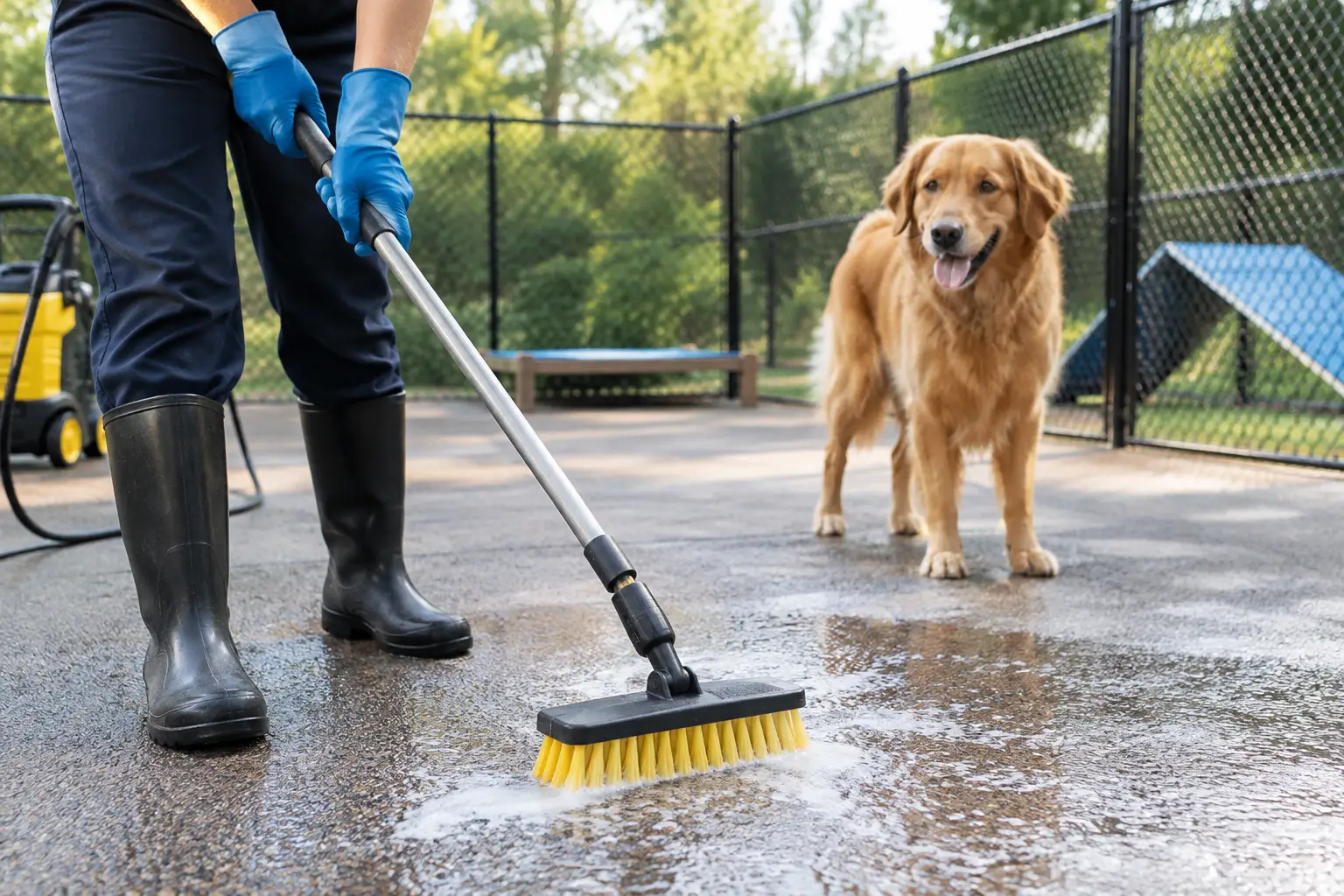
Concrete and pavers are durable, but their pores can hold urine odor when a run is not rinsed often. Once waste is removed, hose down the surface to move loose debris toward an appropriate drain or landscaped area. Do not direct contaminated runoff toward storm drains.
Apply an enzymatic cleaner made for pet urine and waste odors. Enzyme products work by breaking down odor-causing organic material rather than covering it with fragrance. Give the product the full contact time listed on its label. On stubborn spots, scrub with a stiff brush before rinsing.
If you use a pet-safe disinfectant, clean visible dirt first and follow the product directions closely. Disinfectants need a specified dwell time to work, and many must be rinsed before dogs return to the run. More product is not better. Using too much or letting a dog back in too soon can create unnecessary risk.
A light rinse every few days may be enough for a lightly used concrete run. For multiple dogs, daily rinsing and a deeper enzyme treatment once a week usually keeps odor under control. In hot, dry conditions, urine residue dries quickly, so waiting until the run smells bad makes cleanup harder.
Cleaning Artificial Turf Dog Runs
Artificial turf stays green without watering, but it needs regular attention to prevent urine buildup beneath the fibers. Start by picking up waste, then use a hose to rinse the turf thoroughly. Spray in several directions so water reaches the infill and backing rather than only wetting the top blades.
Use a turf-safe enzymatic cleaner designed for pet areas. Apply it evenly, paying extra attention to the favorite potty corners. Let it sit as directed, then rinse if the label requires it. A turf rake or broom can lift flattened fibers and help distribute infill after cleaning.
Do not use a high-pressure washer close to artificial turf. Too much pressure can displace infill, damage seams, or force dirty water into places where it cannot drain well. If odor returns quickly after cleaning, the issue may be drainage, saturated infill, or an area that is too small for the number of dogs using it.
Cleaning Gravel, Dirt, and Mulch Runs
Loose surfaces take more maintenance because urine and small waste particles can settle below the top layer. Pick up waste daily and rake the area regularly to expose damp, compacted sections. Remove visibly soiled gravel, mulch, or dirt when odor persists in one spot.
For pea gravel, a careful hose rinse can help, provided the run drains well. Avoid flooding the area, since standing water can turn a dog run muddy and push contaminated water into unwanted places. If gravel has held odor for a long time, replacing the top layer may be more effective than adding more deodorizer.
Dirt runs benefit from routine raking and occasional replacement of compacted soil. Mulch is usually the least practical choice for frequent dog use because it can hold moisture, trap waste, and be tempting for dogs to chew. If your dog eats mulch or gravel, talk with your veterinarian and consider a safer surface.
Do Not Forget Fences, Gates, Bowls, and Toys
Dogs often mark fence lines, gateposts, and corners. Rinse those areas and wipe down hard, nonporous surfaces with a pet-safe cleaner. Gate latches and handles deserve attention too, especially if children use the run.
Wash water bowls daily with hot, soapy water and refill them with fresh water. Food bowls, toys, raised beds, and rubber mats should be removed during deeper cleaning. Clean and dry them before putting them back. A clean floor does not do much good if the items your dog touches every day are still dirty.
Give the Run Time to Dry Before Dogs Return
After rinsing or applying a cleaning product, keep dogs out of the space until the surface is dry and the product label says it is safe to reenter. This is especially important with concrete, pavers, and turf, where wet cleaner can transfer to paws and then indoors.
Drying time also helps you spot drainage problems. Water should not pool in corners, along the fence, or near the gate. Standing water supports odor, insects, and muddy paw prints. If it happens repeatedly, adjust the grading, add drainage, or talk with a qualified landscape professional about the best fix for your yard.
Set a Schedule That Matches Your Dogs
A quick daily routine prevents the heavy cleanup jobs nobody wants to tackle. Pick up waste, check the water bowl, and give urine-heavy areas a light rinse when needed. Then plan a more thorough surface cleaning every week or two, depending on the number of dogs, the size of the run, and the weather.
If work, family schedules, or a multi-dog household make consistent cleanup difficult, recurring pet-waste service can keep the problem from building up. Poo Pickers provides routine waste removal with pet-safe sanitizing and deodorizing so local dog owners can enjoy a cleaner yard without adding another dirty chore to the week.
A clean dog run is not about making a pet area look perfect. It is about giving your dogs a safer place to play and potty, while keeping your yard ready for the people who live in it, too.