Dog waste does more than create an unpleasant cleanup job. On artificial turf, urine residue, fecal bacteria, and trapped odors can linger in the fibers and infill if they are not handled promptly. Knowing how to disinfect artificial turf helps keep your yard more comfortable for dogs, kids, guests, and anyone enjoying the outdoor space.
The good news is that artificial grass is generally easy to maintain. The key is not to treat every odor with a harsh chemical. Start by removing the source of contamination, rinse correctly, and use a disinfectant only when the situation calls for one. That approach is safer for your pets, your turf, and the people who use the yard.
How to Disinfect Artificial Turf Without Damaging It
Disinfecting works best after cleaning, not instead of cleaning. A disinfectant can reduce certain germs on a surface, but it cannot work properly through a layer of pet waste, mud, or organic residue. Pick up solid waste first, remove visible debris, and address fresh accidents as soon as you can.
Before using any product, check your turf installer’s care instructions. Artificial grass can vary by fiber material, backing, seams, and infill. A product that is fine for one yard may not be the best choice for another, especially if your turf has sand, rubber, or odor-control infill.
1. Remove dog waste and surface debris
Use a pooper scooper, bag, or rake designed for synthetic turf to remove solid waste. Do not grind waste into the fibers or leave it in place while you spray cleaner around it. The physical removal is the most important sanitation step because dog feces may contain bacteria and parasites that no deodorizer can simply cover up.
Also clear leaves, food scraps, and other organic debris. In Las Vegas yards, dry debris can collect quickly around patio edges, under furniture, and along fences. Removing it helps water and cleaning products reach the turf evenly.
2. Rinse the affected area thoroughly
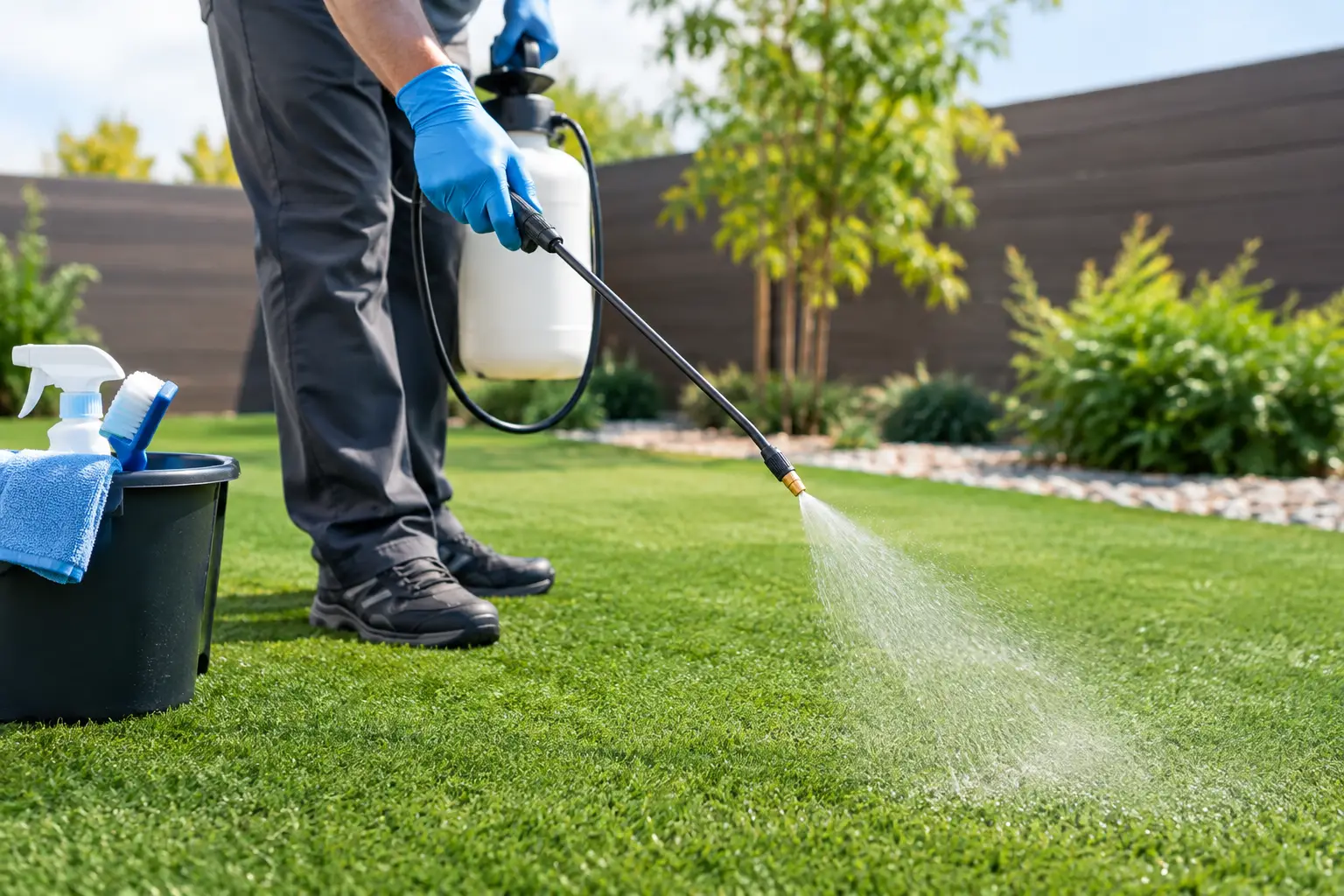
Use a garden hose with a gentle spray setting to rinse urine spots, loose residue, and cleaning solution from the turf. Work from the cleaner area toward the affected area so you are not spreading debris across the entire lawn.
Avoid using a high-pressure washer unless your turf manufacturer specifically approves it. Too much pressure can disturb infill, loosen seams, or damage the backing. A regular hose rinse is usually enough for routine pet use.
In hot, dry weather, a quick rinse a few times a week can also keep urine odors from building up. It is not necessary to soak the entire yard every day. Focus on the spots your dog uses most often, especially if you have multiple dogs.
3. Apply a pet-safe turf cleaner or disinfectant
For routine urine odor, a pet-safe enzymatic turf cleaner is often the right choice. Enzyme-based products are made to break down the organic compounds that cause lingering smells. They are useful when a yard smells fine after rinsing but develops an odor again once the sun warms the turf.
For areas contaminated by feces, vomit, blood, or a sick pet, use a disinfectant labeled for the type of surface and the germs you want to address. Follow the product label exactly, including dilution instructions and contact time. Contact time matters: spraying a product on and immediately rinsing it away may not disinfect as intended.
Choose products that are clearly labeled for pet areas or outdoor synthetic surfaces. Keep pets and children off the treated area until it has been rinsed or has fully dried, according to the label directions.
Do not mix products. Combining cleaners, disinfectants, bleach, ammonia, vinegar, or other household chemicals can create dangerous fumes or damage the turf. More product does not mean a cleaner yard.
4. Brush the fibers and distribute infill
After rinsing or treating a problem area, use a soft-bristle broom or a turf rake to brush the fibers upright. Brush against the natural grain of the grass, using light pressure. This helps prevent matting and allows air to circulate through the turf.
Brushing also redistributes infill, which can matter in the areas where dogs run, dig, or repeatedly relieve themselves. If the turf feels hard, flattened, or noticeably smelly in certain spots, compacted infill may be part of the problem. A deeper professional turf cleaning may be worthwhile when rinsing and enzyme treatment are no longer enough.
5. Let the turf dry before normal use
Give the area time to dry after cleaning. In the Las Vegas Valley, turf may dry quickly in the sun, but shaded areas and heavily rinsed spots can take longer. Keeping pets off the area until it is dry prevents paws from tracking product residue indoors and gives the treatment time to do its job.
Once dry, take a quick smell check. If an odor remains, do not immediately add more disinfectant. Rinse again, inspect for trapped waste, and consider using an enzymatic odor treatment. Persistent odors are often a cleaning or drainage issue rather than a reason to use stronger chemicals.
What to Avoid on Artificial Grass
Artificial turf is durable, but it is not indestructible. Bleach may be appropriate for a very limited, label-approved disinfection situation, but frequent or concentrated use can fade fibers, weaken backing, and irritate paws. It can also harm nearby plants if runoff reaches landscaping.
Avoid cleaners with strong fragrances that only mask odor. They can leave behind residue and may make a pet area less comfortable for sensitive dogs. Steam cleaning and extremely hot water can also be risky because high heat may affect turf fibers or adhesives.
Powdered odor products deserve caution, too. Some can clump in infill, leave dusty residue, or wash into drains after irrigation. If you use any deodorizing product, use only the amount directed and make sure it is suitable for synthetic turf and pets.
How Often Should You Sanitize Pet Turf?
For most homes, solid waste should be removed as soon as possible or on a dependable recurring schedule. High-use areas should be rinsed several times a week, while a full yard rinse may be needed weekly or whenever odor begins to develop.
Disinfect only as needed after fecal contamination, illness, vomiting, or other messes that create a higher sanitation concern. Daily disinfection is rarely necessary for a well-maintained residential yard, and overdoing it can leave chemical residue behind.
The schedule changes with the number of dogs, turf size, weather, and how often your family uses the yard. A small turf run with three dogs needs more frequent attention than a large yard with one dog. Shared pet areas at apartment communities, HOAs, and businesses also need a more structured routine because many animals use the same space.
When Routine Cleaning Is Not Enough
A persistent odor, visible staining, flies, soggy sections, or flattened turf can signal a deeper issue. Waste may be trapped below the fibers, infill may be compacted, or drainage may be poor. Cleaning the surface alone will not fully correct those problems.
Start by increasing waste removal and rinsing the affected area. If the problem continues, consider a professional turf cleaning or ask the installer to inspect drainage and infill. For households that struggle to keep up with frequent waste pickup, a recurring service can make the sanitation routine much easier. Poo Pickers removes pet waste and includes pet-safe deodorizing and sanitizing as part of the cleanup experience, so the yard is not left waiting for the next free weekend.
A clean artificial lawn does not require harsh chemicals or a complicated routine. Remove waste consistently, rinse the places your dog uses most, and reserve disinfectant for the messes that truly need it. That leaves you with a yard that is ready for paws, playtime, and a backyard visit without the unpleasant surprises.