A Las Vegas backyard can smell perfectly fine in the early morning, then turn unpleasant after a hot afternoon. If you are wondering how to stop yard odors without covering them up with heavy fragrance, start with the source: pet waste, urine buildup, and the bacteria that thrive around both. A cleaner yard is not just nicer for barbecues and playtime. It is safer and more usable for your family, guests, and dogs.
How to Stop Yard Odors at the Source
Most yard odor problems are not caused by one missed pile. They build gradually. Waste left in the grass, gravel, rocks, artificial turf, or along fence lines breaks down over time. Heat speeds up the process, while moisture from irrigation can reactivate odor in spots that seemed dry or harmless a day earlier.
Dog urine can add a sharp ammonia smell, especially in small areas where dogs repeatedly mark. On artificial turf, urine and waste residue can settle beneath the surface or in the infill. In natural grass, urine may concentrate near a favorite corner, patio edge, or gate.
That is why air fresheners and scented sprays rarely solve the problem for long. They may make a yard smell better temporarily, but they do not remove the organic material causing the odor. The most dependable approach is regular removal, targeted rinsing, and pet-safe sanitation when needed.
Pick Up Waste Before It Breaks Down
The single most effective way to control dog-related yard odor is to remove solid waste consistently. In a one-dog household, that may mean a quick daily check. With multiple dogs, a busy schedule, or a larger property, waiting until the weekend can allow odor to settle into the yard.
Focus on the places people often miss: behind patio furniture, along walls, under shrubs, near play equipment, and at the edges of gravel landscaping. Dogs do not always use the open center of the lawn, and hidden waste is often what keeps a yard smelling off even after a visible cleanup.
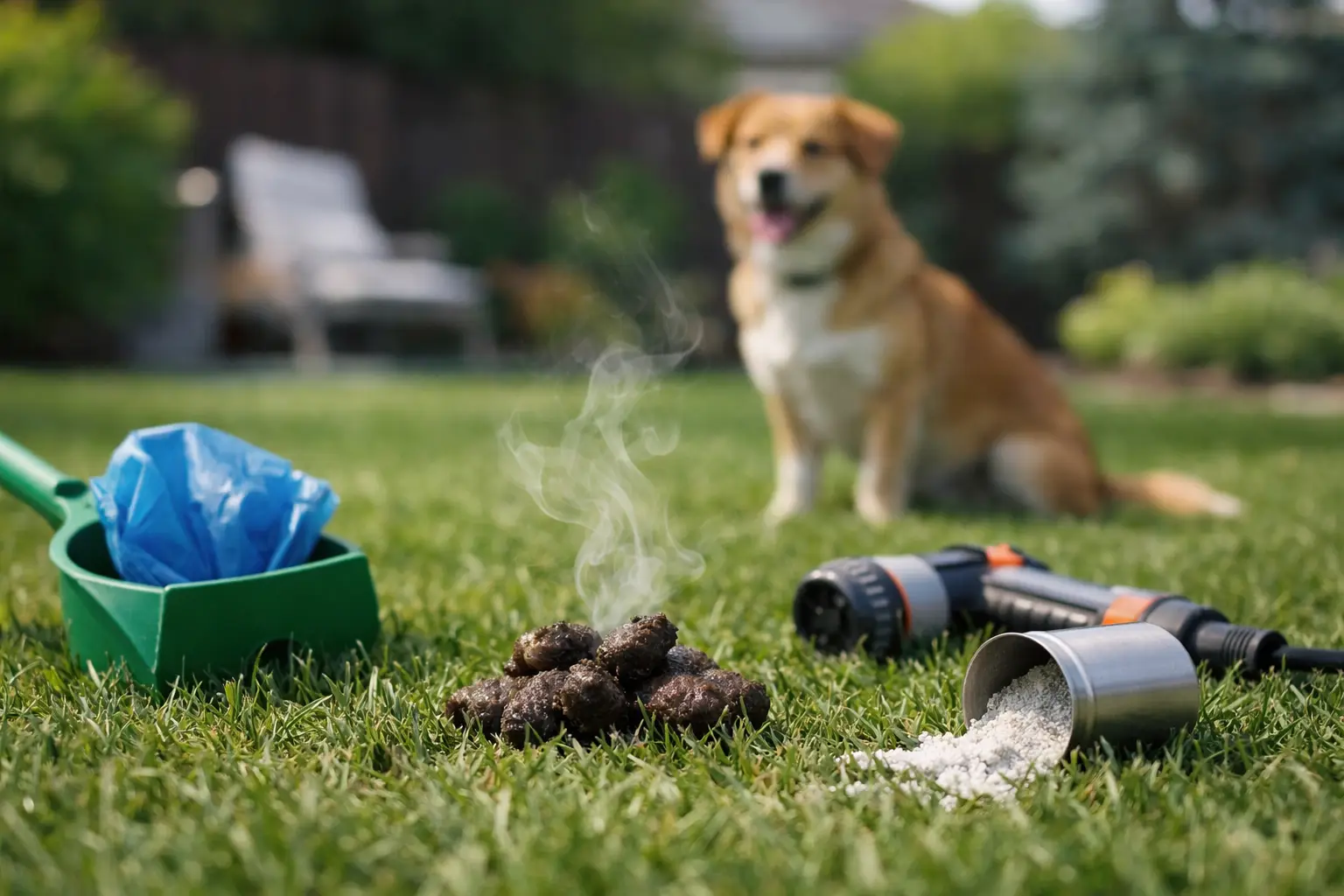
Use a dedicated scoop and disposal container with a secure lid. Bag waste promptly and keep the container away from doors, windows, outdoor seating, and air-conditioning equipment. Wash or disinfect your tools after use so you do not carry residue from one part of the yard to another.
For households that want the yard handled on a reliable schedule, a recurring pet-waste service can remove the guesswork. Poo Pickers® provides scheduled cleanup with deodorizing and pet-safe sanitizing, so the work does not get pushed aside when life gets busy.
Treat Urine Hot Spots Carefully
Urine odor needs a different approach than solid waste. First, identify where your dog regularly urinates. Look for browned grass, a persistent smell near a fence, or a section of turf that smells stronger after watering.
For natural grass and landscaping, lightly rinsing the area with water can dilute residue before it becomes concentrated. Do not flood the spot every day, especially if poor drainage is already an issue. Too much water can create muddy areas, encourage standing water, and make odors worse in a different way.
If your dog uses artificial turf, follow the turf manufacturer’s cleaning guidance. In many cases, that includes removing solid waste promptly, rinsing urine areas, and using a pet-safe enzyme or turf cleaner designed to break down odor-causing residue. Avoid harsh household chemicals, bleach, or products not labeled for pet areas. They can irritate paws, damage turf components, or leave a smell that is just as unpleasant.
Training a dog to use one designated bathroom area can also help. It concentrates the cleaning work into one manageable zone instead of spreading odor throughout the yard. The trade-off is that the designated area needs more frequent attention, particularly during hot weather.
Clean the Surfaces That Hold Odor
A fresh-looking yard can still hold odor in porous surfaces. Gravel, decomposed granite, mulch, pavers, concrete, and turf backing can all trap small amounts of waste and urine residue.
Start by removing waste thoroughly, then hose down hard surfaces as appropriate. A gentle rinse can move residue away from patios and walkways, but be mindful of where runoff goes. You do not want dirty water collecting near a doorway, draining toward a neighbor’s property, or pooling where pets and children play.
For stubborn areas, use a pet-safe odor treatment according to the label directions. Enzyme-based products can be useful because they are intended to break down organic material rather than simply add perfume. They work best after the visible waste is gone. Applying deodorizer over an uncleaned area is like spraying air freshener on a full trash bin: it may help briefly, but the source remains.
Outdoor trash cans and waste stations deserve attention, too. Rinse the container periodically, let it dry, and use a tight-fitting lid. If the bin smells stronger than the yard, it may be too close to the patio or waiting too long between disposal days.
Check Drainage, Irrigation, and Shade
Odor that returns quickly after cleaning may point to a yard condition rather than a cleanup problem alone. Low spots where water collects can hold bacteria and organic debris. Overwatering can keep grass, mulch, and gravel damp longer than necessary. Leaky irrigation heads may create one constantly wet section that becomes a magnet for odor.
Walk the yard after an irrigation cycle. If you see puddles, runoff, or consistently soggy areas, adjust the watering schedule or have the irrigation issue addressed. In the Las Vegas Valley, watering needs can change substantially by season, and a schedule that made sense in summer may be excessive during cooler months.
Shade matters, too. A shaded corner can stay damp even when the rest of the yard dries quickly. That does not mean you need to remove trees or stop using the space. It simply means that shaded, high-use pet areas may need more frequent waste removal and occasional sanitation.
Keep Odor Control Pet-Safe
When a yard smells bad, it is tempting to use the strongest cleaner available. That can create new problems. Dogs walk through treated areas, lick their paws, roll in the grass, and drink from outdoor bowls. Children may also play on the same surfaces.
Choose products specifically labeled for outdoor pet areas and follow the mixing, application, and drying instructions. More product is not automatically better. Never combine cleaners, and keep pets away from the treated section for the amount of time listed on the label.
Be especially cautious with strong disinfectants. Sanitation can be useful after a buildup of waste or when managing a shared pet area, but it should support routine cleanup, not replace it. Physical removal of waste remains the foundation of odor control and helps reduce the bacteria, parasites, and pests that can be associated with neglected pet waste.
Build a Routine That Matches Your Yard
The right schedule depends on dog count, yard size, surface type, and how often you use the space. A single dog on a large lawn may be manageable with frequent home cleanup. A multi-dog household, a turf yard, or a property where children and guests spend time outside usually benefits from more regular service.
Pay attention to your own odor pattern. If the yard smells fine after cleanup but noticeable again within a few days, increase the pickup frequency. If odor is limited to one area, focus cleaning and urine treatment there instead of treating the entire property. This saves water, product, and effort.
For apartment communities, HOAs, parks, and businesses, consistency matters even more. Shared pet areas can develop odor quickly when waste stations overflow or cleanup schedules are irregular. Routine servicing, clearly maintained stations, and prompt removal help keep common spaces welcoming rather than avoided.
A yard should be a place where you can step outside without checking your shoes, worrying about a smell, or apologizing to guests. Keep the source under control, use pet-safe treatments where they actually help, and choose a cleanup routine you can maintain through every busy week.