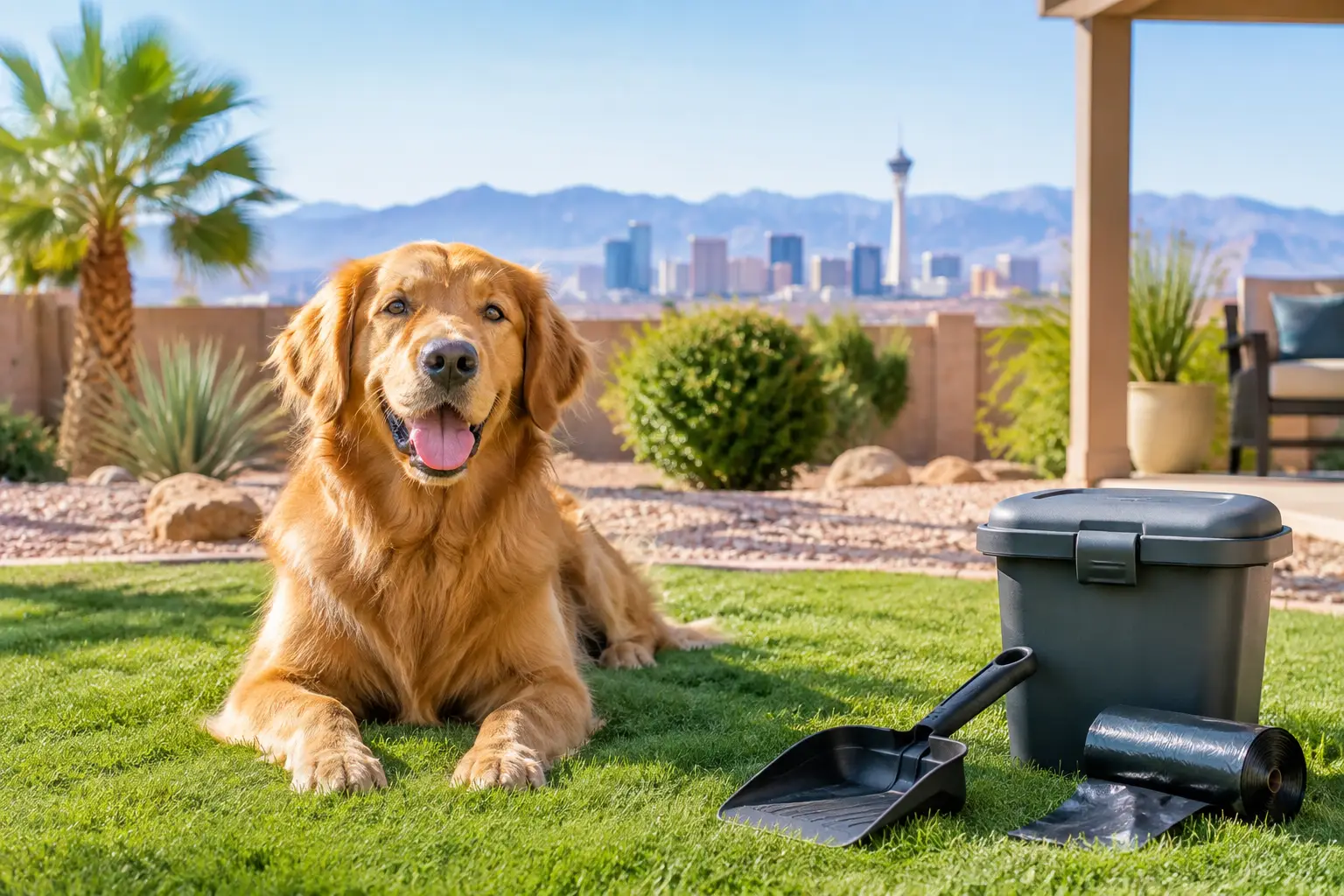
A Las Vegas backyard can go from barbecue-ready to off-limits fast when dog waste builds up. In desert heat, a missed cleanup does not simply disappear. It dries out, breaks apart, gets tracked indoors, attracts flies, and leaves a yard less comfortable for pets, kids, and guests. This Las Vegas backyard waste guide covers what belongs in the trash, what should stay out of your drains and compost, and how to keep cleanup manageable year-round.
Why dog waste needs regular attention in Las Vegas
Dog poop is more than an unpleasant yard chore. It can contain bacteria and parasites that may spread through soil, paws, shoes, and standing water. Young children, older adults, and pets with weaker immune systems deserve extra caution around contaminated areas.
Las Vegas weather adds another layer. Summer heat can make odors more noticeable and can dry waste into small pieces that are harder to spot and remove. During monsoon storms, runoff can move waste across patios, artificial turf, drainage areas, and low spots in the yard. A clean-looking yard is helpful, but a consistently maintained one is better.
There is also the everyday issue of use. When waste is left behind, people stop letting the dog roam freely, kids avoid the grass, and guests watch every step. Regular removal protects the part of your home that is supposed to be easy to enjoy.
The practical Las Vegas backyard waste guide
The simplest rule is to pick up dog waste promptly, place it in a durable bag, seal it, and put it in your regular household trash according to local collection rules. For homes with multiple dogs or a larger yard, using a lined, lidded outdoor container between trash days can help control smell and keep insects out.
In high heat, do not let a full waste container sit in direct sun if you can avoid it. Keep it in a shaded, secure spot away from doors, outdoor dining areas, and places where children play. Empty it regularly. A container that is technically closed but overfilled can still become an odor problem.
Do not flush it down the toilet
It may seem convenient, but dog waste is not automatically safe for a toilet. Pet waste can carry organisms that wastewater systems are not designed to handle in the same way as human waste. Unless your local wastewater authority specifically says otherwise, bagging and placing it in the trash is the more dependable household approach.
Skip the backyard compost pile
Dog waste should not go into a standard home compost pile, especially if the compost may be used near vegetable gardens, fruit trees, or other edible plants. Home composting often does not reach or maintain the temperatures needed to reduce certain pathogens reliably. Keep pet waste separate from leaves, grass clippings, and other green yard material.
Keep waste out of storm drains and washdown water
Never hose dog waste toward the street, gutter, or storm drain. Stormwater runoff can carry contamination beyond your property. Before watering, rinsing patios, or cleaning artificial turf, remove solid waste first. If your yard has a drainage channel or a low corner that collects water during storms, inspect it after heavy rain.
Build a routine that fits your household
The best schedule depends on dog count, yard size, and how often your family uses the space. A single dog in a large yard may be manageable with a few pickups each week. Two or three dogs can create enough waste that daily or every-other-day cleanup makes more sense, particularly in summer.
Do not wait until the yard looks bad. By that point, cleanup takes longer, small pieces are easier to miss, and the odor has already affected the space. Regular visits also make it easier to notice changes in your dog’s stool that could signal a health concern worth discussing with a veterinarian.
For many busy households, the hard part is not knowing what to do. It is doing it consistently after work, school pickups, travel, and everything else that fills a week. A recurring pet-waste service can remove that pressure with weekly, bi-weekly, monthly, or one-time cleanup based on the yard and number of dogs.
Protect grass, gravel, and artificial turf
Dog waste can affect nearly every type of Las Vegas landscaping. On natural grass, repeated waste in the same area can leave stressed or discolored patches. Pick up solids first, then rinse the affected area lightly when appropriate. Avoid overwatering just to deal with a small spot, especially in a desert climate where water conservation matters.
Gravel is easy to maintain until waste gets ground into the rock. A frequent pickup schedule is the best defense. For older messes, remove as much solid material as possible before rinsing sparingly. If odor lingers, use a pet-safe outdoor deodorizing product as directed rather than masking the problem with heavily perfumed chemicals.
Artificial turf needs routine attention, too. Remove waste before it dries, rinse areas as needed, and pay attention to odor around favorite potty spots. Turf can hold smells when urine, waste residue, dust, and heat combine. Pet-safe sanitizing and deodorizing can help, but it works best alongside consistent waste removal, not as a replacement for it.
Treat odor and pests as warning signs
Flies, ants, and persistent odor are usually signs that cleanup is too infrequent, a container is not properly sealed, or residue has been left on a hardscape or turf surface. Start with the source. Remove waste, clean the affected area with pet-safe products, and keep collection containers closed.
Avoid using harsh chemicals where pets walk, dig, or lie down. Products that are strong enough to irritate paws or create unsafe fumes are not a good trade for a fresher-smelling yard. Read labels carefully, follow dilution instructions, and keep pets out of treated areas until the product directions say it is safe.
If flies remain a problem after cleanup, look beyond pet waste. Check standing water, overflowing bins, uncovered food, and damp areas around irrigation equipment. Backyard sanitation works best when the whole area is considered.
Separate pet waste from other backyard debris
Not every backyard cleanup item follows the same disposal rules. Leaves, branches, grass clippings, broken patio furniture, chemicals, batteries, and pet waste should not all go into one container. Keep household hazardous materials and electronic items out of regular trash when local rules require special disposal. Never mix chemicals with pet-waste bags or rinse chemical containers in areas your dog uses.
For routine landscaping debris, follow the collection guidance provided by your local waste hauler or community. HOA communities and apartment properties may have additional rules about container placement, shared bins, and common-area pet stations. Those rules help prevent overflow and keep shared outdoor spaces usable for everyone.
Make professional cleanup easy to trust
If you hire help, look for more than a person with a scoop. You should know when the technician is coming, whether tools are disinfected between yards, and how your gate will be handled. For households with pets, gate security and clear arrival notifications matter just as much as the cleanup itself.
Poo Pickers provides recurring and one-time pet-waste cleanup for Las Vegas Valley yards, with uniformed technicians, service notifications, disinfected equipment between properties, and a closed-gate photo after service. There are no contracts, which is useful when your needs change with travel, a new puppy, or a move.
A backyard does not need to be perfect to be enjoyable. It just needs a cleanup routine that keeps small messes from becoming the reason nobody wants to step outside.