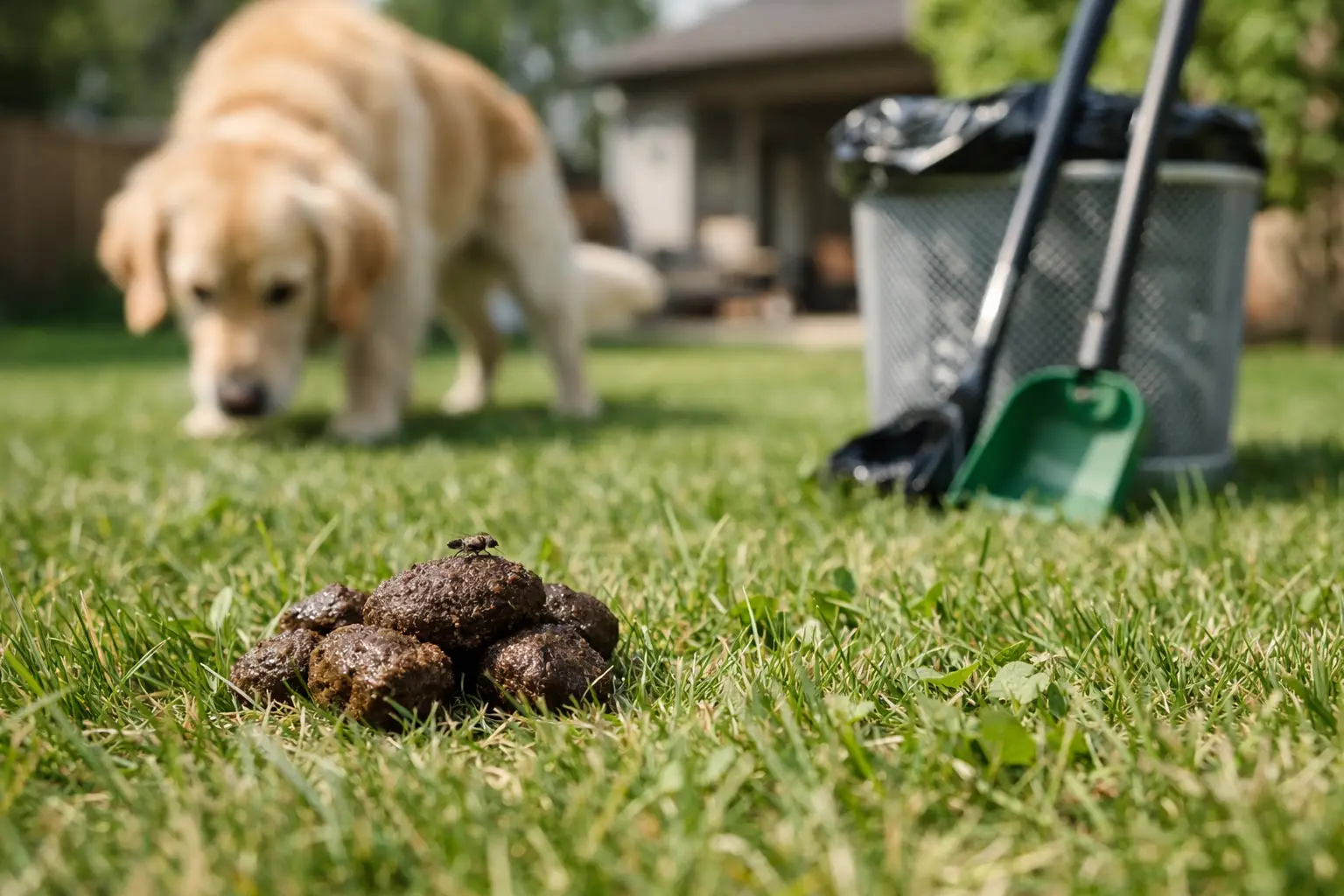
A backyard can go from a place for morning coffee and fetch to an obstacle course surprisingly fast. Pet waste is easy to put off for a day or two, especially when life gets busy. But in a Las Vegas yard, where heat, dry conditions, and outdoor living are part of daily life, leaving dog poop behind can affect far more than how the grass looks.
Routine cleanup protects the way you use your property. It gives kids room to play, makes patios more inviting for guests, helps reduce odor, and removes one more chore from an already full week. For multi-dog homes, the difference between a yard that is picked up regularly and one that is not can be obvious within days.
Why Pet Waste Changes How a Yard Feels
Dog poop does not disappear the way fallen leaves or grass clippings do. Rain may break it apart, but it does not make it harmless. A single pile can be stepped in, tracked indoors, spread across pavers, or carried into a pool area on paws and shoes. When piles build up, dogs can also walk through contaminated spots and bring the mess back into the house.
Then there is the practical issue: nobody relaxes in a yard they have to scan before every step. Families may stop using the lawn for games. Guests may stay on the patio. A homeowner may postpone a barbecue because cleanup has become a bigger job than expected. The yard is still there, but it is no longer working as usable living space.
Regular removal also helps with curb appeal and property care. Dog waste can leave brown or thin patches on grass because it contains concentrated nitrogen. That is particularly frustrating for households working hard to maintain a lawn in desert conditions. Removal will not solve every lawn issue, but it prevents one avoidable source of damage.
The Health Concerns Behind Pet Waste
The unpleasant smell is reason enough for many homeowners to clean up, but the sanitation concern runs deeper. Dog feces can contain bacteria and parasites, including organisms that may be harmful to people and other pets. Public-health guidance from organizations such as the CDC consistently supports prompt pet-waste pickup and careful handwashing after handling it.
Risk is not the same in every yard. A healthy adult may not have the same exposure concerns as a toddler playing close to the ground, an older adult gardening, or a household with a puppy that investigates everything with its nose and mouth. Still, the basic preventive step is the same: remove waste before it has time to spread through the space.
It also helps to separate cleanup from sanitizing. Picking up visible waste is the essential first step. Pet-safe sanitizing and deodorizing can be useful additions in areas where dogs repeatedly eliminate, especially on turf, gravel, pavers, or around a dog run. They are not a substitute for removal, though. A product cannot make a pile of dog poop disappear, and masking odor does not address the source.
Heat Does Not Make Dog Poop Harmless
Las Vegas heat can dry out waste quickly, which sometimes makes it look less urgent. Dry waste may be easier to miss in rocks or along a fence line, but it can still create odor, attract insects, and break apart when disturbed. Wind, irrigation, shoes, paws, and landscaping equipment can move contaminated material beyond the original spot.
Heat can make odors more noticeable, too, particularly in smaller yards with block walls that hold warmth. If your dog favors one shaded corner, the smell may linger there even when the rest of the yard seems fine. Consistent pickup keeps those hot spots from becoming a permanent part of the yard.
Summer also changes how families use their outdoor space. Even when daytime temperatures are high, many Las Vegas households use patios and yards early in the morning, after sunset, and on weekends. A clean yard means you can let the dog out, enjoy the space, or host visitors without making cleanup the first item on the plan.
How Often Should Dog Waste Be Removed?
The right schedule depends on the number of dogs, the size of the yard, and how the space is used. A household with one dog and a large backyard may find weekly service works well. A small yard with two or three dogs can need more attention because waste accumulates in a concentrated area.
Weekly cleanup is usually the best fit for families who want the yard consistently ready for everyday use. Bi-weekly service can work for lower-traffic yards or owners who still do occasional pickup between visits. Monthly service is better suited to light-use properties, not homes where dogs use a compact yard several times a day. One-time cleanups are a practical reset after travel, illness, a busy season, or a move-in.
A simple test is to consider whether you would comfortably walk through the yard in sandals without looking down. If the answer is no, the schedule is probably not frequent enough.
Signs Your Yard Needs a Better Cleanup Routine
A missed cleanup routine often becomes clear before the yard looks completely neglected. Watch for these common signs:
- You notice odor near doors, patios, or outdoor seating.
- Your dog has a favorite area that is becoming difficult to use or clean.
- Children or guests avoid the grass because they are worried about stepping in something.
- Flies, pests, or stained grass patches are becoming more common.
These problems do not mean you have failed as a pet owner. They usually mean the job no longer fits comfortably into your schedule. Dog ownership already includes feeding, walks, training, grooming, appointments, and attention. Yard cleanup is one task that can become easy to skip when everything else demands time.
What Dependable Professional Cleanup Looks Like
Professional pet-waste removal should feel straightforward, not like another service you have to manage closely. A technician should know where to access the yard, complete a thorough sweep, remove collected waste from the property, and leave the gate secure. Clear arrival and completion notifications help homeowners know when service occurred, while a post-service closed-gate photo provides extra reassurance for households with dogs.
Equipment practices matter as well. Tools used in one yard should be disinfected before entering another. This is a sensible precaution for homes with pets and a sign that the company treats sanitation as part of the service, not an afterthought. Licensed and insured service, uniformed technicians, flexible scheduling, and a satisfaction guarantee can also make a routine service feel much easier to trust.
Poo Pickers® offers recurring and one-time options designed around dog count and visit frequency, so homeowners do not have to pay for a schedule that makes no sense for their yard. No-contract service is especially helpful when circumstances change, whether you add a dog, move, travel, or simply need a one-time reset.
A Cleaner Yard Is Easier to Enjoy
A clean yard is not about making pet ownership look perfect. Dogs make messes, and that is normal. The goal is to keep a normal part of life from taking over the place where your family relaxes, plays, and spends time together.
If picking up after your dog has become the chore that always gets moved to tomorrow, choose a routine that keeps it from piling up. A few minutes of prevention, or dependable scheduled help, can keep the backyard ready for the moments you actually want to use it.