Gravel is practical in Las Vegas yards, but it turns a simple cleanup chore into a frustrating scavenger hunt. To remove dog waste from gravel without leaving residue behind, you need a method that lifts the waste first, protects the stone, and handles the odor and sanitation concerns that a regular scooper can miss.
Unlike grass, gravel does not hide a missed spot for long. Waste can dry into small pieces, get pressed between stones, or become a sticky mess after watering or rain. The goal is not just to make the yard look clean. It is to keep the space comfortable for your dogs, kids, guests, and anyone using the patio or backyard.
Why Dog Waste Is Harder to Clean Up From Gravel
Dog waste sits on top of grass, but gravel creates gaps. Soft waste can settle between rocks, while dry waste breaks apart when you try to scoop it. Smaller decorative rock can be especially difficult because it sticks to the waste or gets carried away with it.
There is also the sanitation issue. Dog waste can contain bacteria and parasites, and leaving it in place can attract flies and create persistent odor near patios, walkways, and dog runs. In Southern Nevada, summer heat can make odors more noticeable quickly, even when the waste appears dried out.
The best approach depends on the size of the gravel, how long the waste has been there, and whether it is fresh, dry, or stuck to the ground underneath.
What You Need Before You Start
For most gravel yards, a few basic tools work better than trying to manage the job with a plastic bag alone. Wear disposable or washable gloves, use a long-handled pooper scooper or small rake-and-pan set, and keep sturdy waste bags nearby. A flat-edged hand scraper can help with waste that has dried onto a paver, compacted dirt, or landscape border.
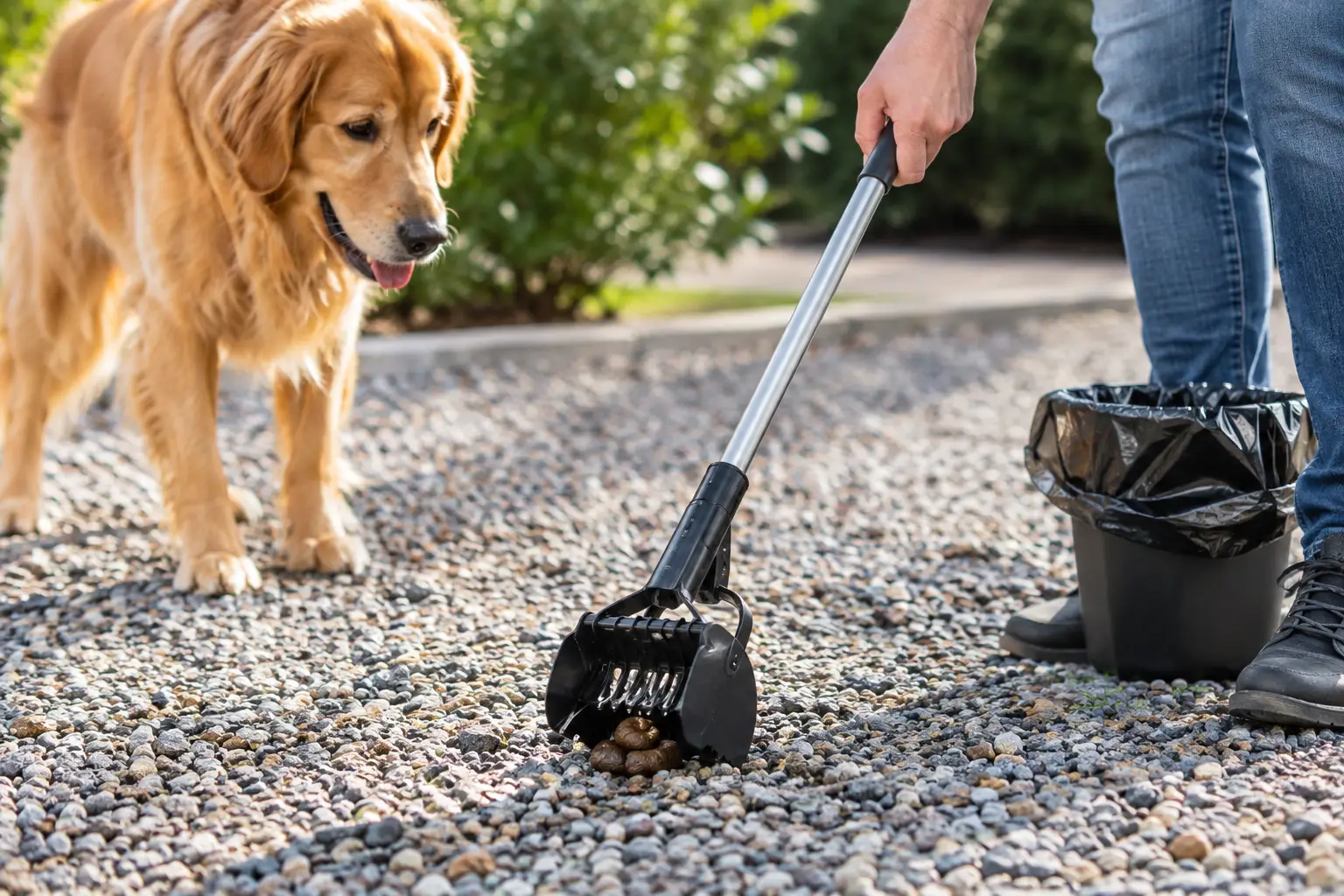
For fresh waste, a scoop with narrow tines is usually the best choice. It can lift the waste while allowing some smaller gravel pieces to fall through. For larger landscape rock, a standard rake-and-pan scoop often works well.
Avoid using a hose as your first response. Water can push waste deeper into the gravel, spread contaminated residue, and create a larger cleanup area. It may be useful later for a targeted rinse of a hard surface, but it is not the way to solve a pile of dog waste in loose rock.
How to Remove Dog Waste From Gravel Step by Step
Start With the Solid Waste
Pick up the largest pieces first, working slowly so you do not crush or scatter them. Position the scooper beneath the waste rather than dragging it across the rocks. If gravel comes up with the waste, shake the scoop gently over the same spot to let loose stones fall back into place.
Bag the waste right away. Leaving collected waste in an open bucket while you continue can bring flies and odors back into an otherwise clean yard.
Handle Dried or Crumbly Waste Carefully
Old waste often looks easy to remove until it breaks into small pieces. Use a narrow-tined rake or a handheld garden tool to pull pieces together gently. A dustpan-style scooper can then collect the material without removing excessive gravel.
Do not aggressively rake a large section of rock. That may spread tiny fragments across a wider area and make it harder to identify where the waste was. Work in small sections and check the gravel from more than one angle, especially around shrubs, fence lines, and shaded corners.
Lift Residue Instead of Washing It Down
If a small amount remains on the gravel, allow the area to dry if it is currently soft or muddy. Once dry, use a scraper or stiff brush reserved only for pet-waste cleanup to loosen the remaining material. Collect what you can, then bag it.
When residue is on a solid surface beside the gravel, such as concrete edging or a paver, clean the visible material first. A small amount of water and a pet-safe outdoor cleaner can be used afterward, following the product directions. Keep runoff away from storm drains and avoid products that are not labeled as safe for pets and outdoor use.
Deodorize the Area When Needed
Picking up the waste removes the main source of odor, but it may not solve odor from repeated use in the same spot. A pet-safe enzyme-based deodorizer can help break down lingering organic residue in gravel areas. Apply only after the solid waste is gone.
Bleach, ammonia, and heavily scented household cleaners are poor choices for pet areas. They can irritate paws, create harsh fumes, and may damage nearby plants. If your dog returns to the same gravel patch every day, consider redirecting them to a designated bathroom area instead of repeatedly treating the whole yard.
Adjust Your Method for the Type of Gravel
Fine gravel, decomposed granite, and pea gravel require the most patience because they cling to fresh waste and are easily displaced. Use a narrow-tined tool, lift gently, and expect to remove a small amount of material along with the waste. Replacing a few scoops of gravel is often better than leaving contaminated residue behind.
Medium and large decorative rock are easier to work with because waste usually sits closer to the surface. A long-handled rake-and-pan scooper can often collect the waste cleanly, although pieces may lodge underneath larger stones. Check beneath the original spot before moving on.
Compacted gravel is a different situation. If waste has been stepped on or baked into the surface, scrape away the visible residue and use a pet-safe cleaner sparingly. In severe cases, removing and replacing a small section of the top material may be the cleanest option.
Prevent the Same Problem Next Week
A gravel yard stays easier to maintain when waste is removed before it dries, breaks apart, or gets stepped on. For one dog, two or three quick checks each week may be enough. Multi-dog households, puppies, and frequently used dog runs usually need more frequent pickup.
It also helps to walk the yard in a simple pattern rather than looking randomly. Start along the fence, move around landscaping, check behind patio furniture, then scan open areas. Dogs often use the same edges and corners, but a complete pattern prevents the overlooked pile that turns into a stubborn cleanup later.
If you have children using the yard, regular cleanup matters even more. A clean gravel area gives families more confidence to use the backyard for play, outdoor meals, and time with guests without worrying about what is hidden between the rocks.
When Professional Cleanup Makes More Sense
DIY cleanup is manageable when you have time and stay on schedule. The trade-off is that gravel makes missed visits more costly. Once waste accumulates, a routine pickup can turn into a long search through rocks, landscaping, and hard-to-reach corners.
A recurring service is especially useful for busy households, multi-dog homes, rentals, and yards with a lot of decorative gravel. At Poo Pickers®, uniformed technicians remove the waste, deodorize and use pet-safe sanitizing products, disinfect equipment between yards, and send service notifications and closed-gate photos after the visit. There are no long-term contracts, so homeowners can choose weekly, bi-weekly, monthly, or one-time cleanup based on what their yard actually needs.
For property managers and HOA boards, consistent cleanup also keeps shared pet areas more usable. A dog-friendly community space only feels welcoming when residents can walk it without watching every step.
A Clean Gravel Yard Should Feel Easy to Use
The most effective way to remove dog waste from gravel is to pick it up early, lift rather than rake, and treat lingering odor only after the solid waste is gone. If the job keeps getting pushed to the weekend, a dependable routine can be the difference between a gravel yard that looks inviting and one everyone avoids. Your outdoor space should be ready when your family, your dogs, or your guests want to enjoy it.