A clean yard should not come with a nagging question while you are at work: Did the gate get closed? For recurring dog waste removal, secure yard access is part of the service, not an afterthought. It protects your pets, your property, and your peace of mind while giving your technician a clear, safe way to complete the cleanup.
For Las Vegas Valley dog owners, that matters even more during hot weather, when a missed gate or a delayed cleanup can quickly turn a simple chore into a stressful problem. A dependable pet-waste service should make access easy without asking you to compromise the security of your home or yard.
What Secure Yard Access Actually Means
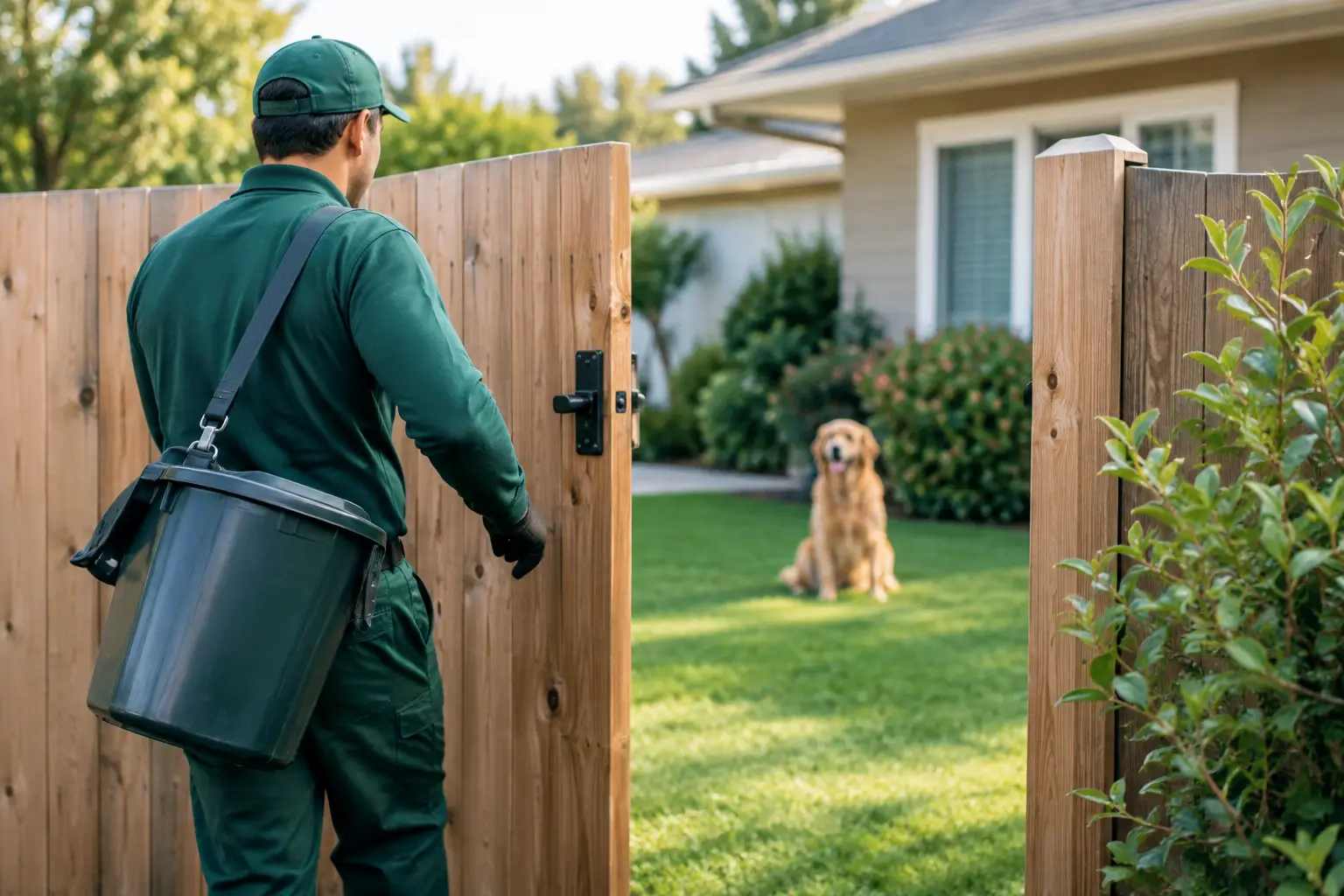
Secure yard access is a simple agreement between the homeowner and the service provider: the technician has the information needed to enter the yard, complete the job, and leave it as secure as they found it. It is not about handing over control of your property. It is about setting clear expectations before the first visit.
That process may involve a side gate, a coded lock, a lockbox, or a gate left accessible during a scheduled service window. The right option depends on your home layout, neighborhood, dogs, and comfort level. What matters is that the instructions are specific, current, and easy for an authorized technician to follow.
A professional company should also have procedures behind the scenes. Uniformed technicians help identify who is entering the property. Arrival and completion notifications keep you informed. A post-service closed-gate photo gives you visible confirmation that the yard was secured when the visit was finished.
Set Up Your Yard for a Safe First Visit
The best access setup is usually the simplest one. Before recurring service begins, take a few minutes to walk through the route a technician will use. Look for anything that could cause confusion or make entry less safe, such as a second latch, a blocked pathway, an unmarked gate, or a code that has recently changed.
Choose one dependable entry point
If possible, designate one gate for service. A side gate is often the most practical choice because it allows access to the yard without requiring anyone to enter the home. Make sure the gate is easy to identify and that the latch works properly from both sides.
If your gate sticks, drags along the ground, or only catches when it is lifted a certain way, mention that in your service notes. Small details can prevent a gate from being left partially open by accident. If a gate requires a special technique to close, the technician needs to know that before the visit, not after.
Provide clear instructions, not assumptions
“Use the side gate” may sound clear, but it can leave room for questions on a property with multiple entrances. Better instructions explain where the gate is located, how it opens, whether there is a lock, and any detail that helps confirm the right yard.
For example, you may note that the gate is on the left side of the house, opens inward, and has a keypad lock. If there is a dog door, pool area, secondary enclosure, or storage area that should remain closed, say so. Clear directions save time and reduce the chance of an avoidable mistake.
Keep your service provider updated whenever codes, locks, gates, or access rules change. A new keypad code is a quick text or account update, but it can prevent a missed cleanup visit.
Check for common gate problems
A secure setup also starts with the condition of the gate itself. Loose hinges, broken latches, gaps under fencing, and worn springs can create escape risks, especially for determined dogs. No pet-waste technician can repair a failing gate during a scheduled cleanup, but identifying the issue early helps you decide whether your pet should be indoors or in a separate secured area during service.
If you use a padlock or combination lock, make sure it is usable in the conditions outside. Desert dust, heat, and weather exposure can make some locks difficult to operate. A lockbox or keypad can be a better fit for many recurring-service customers, though every home is different.
Keep Dogs Safe During the Visit
Most dogs are curious about visitors in their yard. Some are friendly but excitable. Others may be protective, anxious, or uncomfortable around unfamiliar people. The safest plan is usually to keep dogs indoors during the scheduled cleanup window.
This gives the technician room to work efficiently and gives your dogs a calmer experience. It also prevents an enthusiastic dog from slipping through an open gate during entry or exit. Even dogs with excellent recall can get distracted by another animal, a delivery truck, or a sound from the street.
If your dogs need to remain outside, be honest about their behavior and the yard setup. A technician should know about dogs that jump fences, guard gates, react to uniforms, or need a separate area kept closed. A properly secured kennel or divided yard may make service possible, but that depends on whether the arrangement is safe for everyone.
Never assume a technician can simply “work around” a dog you have not introduced them to. Good service is built on communication, not guesswork.
Why Closed-Gate Photos Matter
A closed-gate photo may seem like a small detail, but it answers one of the biggest concerns homeowners have about yard service. When the work is complete, you can see that the gate was shut and secured from the outside.
That record creates accountability without requiring you to be home. It is especially helpful for households with children, escape-prone pets, or busy schedules that make it hard to check the yard immediately after a visit. It also helps if multiple adults share responsibility for the home and want the same confirmation.
Photos are not a replacement for a properly functioning gate or good instructions. They are a useful final check. The strongest approach combines a reliable access plan, trained technicians, service notifications, and visible proof that the gate was closed after cleanup.
Protect Privacy While Making Access Easy
Homeowners sometimes worry that recurring service means giving up too much privacy. It does not have to. You can create secure yard access without sharing more information than necessary.
A side-gate entry, a separate service code, or a lockbox can limit access to the exterior yard only. Avoid using a code that grants access to your home or garage if a gate-specific option is available. If you use a smart lock, consider setting a dedicated code for service and changing it whenever your household preferences change.
It is also reasonable to ask how a company handles access instructions and technician accountability. Licensed and insured providers should be able to explain their procedures clearly. Look for practical signs of professionalism: identifiable uniforms, consistent scheduling communication, disinfected equipment between yards, and a clear process for reporting concerns.
Plan for Real-Life Changes
Reliable service does not mean every week looks exactly the same. A gate may be blocked by a landscaping crew. A family member may be recovering from surgery. You may have guests, construction work, a new puppy, or a dog that needs temporary separation.
When something changes, let your provider know as soon as you can. A short message can prevent a wasted trip and help protect your pets. If access is not available, a professional company should communicate the next step instead of leaving you to wonder whether the yard was serviced.
There are times when skipping a visit is the safest choice. If a dog is loose and distressed, a gate is damaged, or active work crews make the yard unsafe, waiting is better than forcing access. The goal is consistent cleanup, but never at the expense of safety.
A Clean Yard Should Also Feel Secure
Dog waste removal gives your family back a yard that is more pleasant for playtime, barbecues, and everyday life. But the convenience only works when you trust the process from arrival to exit.
Poo Pickers® treats that trust as part of the job. Clear service notifications, uniformed technicians, and post-service closed-gate photos help customers know their yard was cleaned and their gate was secured. Pair those protections with accurate access instructions and a safe plan for your dogs, and your recurring cleanup can stay one less thing to worry about.