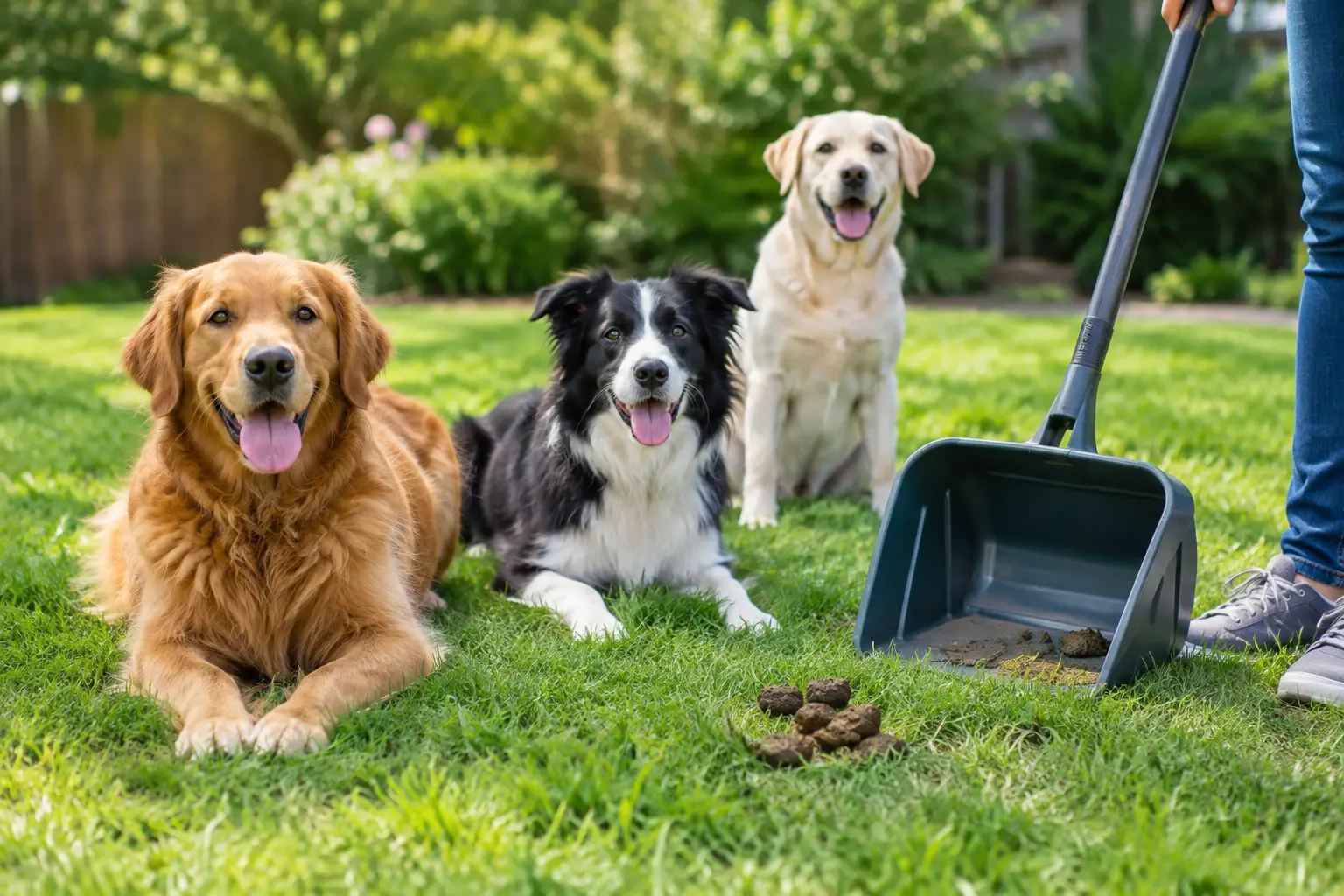
A single dog can leave behind enough mess to derail a relaxing afternoon outside. Add a second, third, or fourth dog, and yard cleanup for multiple dogs can turn into a daily scavenger hunt that nobody wants. The waste builds up faster, odor gets stronger in the Las Vegas heat, and the lawn becomes harder for kids, guests, and pets to enjoy.
The answer is not perfection or spending every evening with a scooper in hand. It is a cleanup routine that matches the number of dogs, the size of your yard, and how your household actually uses the space.
Why Multiple Dogs Change the Cleanup Schedule
More dogs do not just mean more piles. They also mean more chances for waste to be stepped in, spread around the yard, or missed behind furniture, landscaping, and play equipment. A yard that looks mostly clean can still have enough waste to create odor, attract flies, and make outdoor time less pleasant.
Frequency matters because dog waste is not fertilizer. It can contribute to brown spots and damaged grass, particularly where dogs repeatedly use the same areas. It can also contain bacteria and parasites that should not be left where pets, children, or bare feet are likely to be. The longer it stays outside, the more difficult it becomes to find every pile and keep the area sanitary.
For a household with two or more dogs, a once-a-week cleanup is often the practical baseline. Larger dogs, a small yard, frequent backyard play, or a busy household may call for two cleanups a week. The right schedule depends on the real volume of waste, not just the number of dogs on paper.
Build a Yard Cleanup Routine That Sticks
The best routine is one you can maintain during busy workweeks, travel, school events, and everything else that fills a calendar. If everyone in the household assumes someone else will handle it, the yard usually pays the price.
Start by choosing designated bathroom areas when possible. Encouraging dogs to use one side or section of the yard makes cleanup faster and protects the parts of the lawn used for playing, grilling, or relaxing. This may take a little training, especially with a multi-dog pack, but consistency helps. Take dogs to the same area after meals, naps, and play sessions, and praise them when they use it.
Then decide whether you need a daily spot check, a scheduled full cleanup, or both. A daily walk-through can take just a few minutes and is especially useful before children play outside or guests arrive. A more thorough pickup on set days prevents overlooked waste from accumulating along fences, shrubs, and patio edges.
Keep your cleanup tools in one reachable place. A covered waste bin, sturdy bags, a scoop or rake, disposable gloves, and a hose attachment can make the job less frustrating. Do not leave tools exposed where they can become a source of contamination or where curious dogs and children can reach them.
Focus on the Places Waste Hides
When several dogs share a yard, they do not always use the obvious spot. One dog may prefer the shade under a tree, while another heads for the far fence line or behind the storage shed. If you only scan the center of the lawn, you will miss more than you think.
During a full cleanup, work in a repeatable pattern. Start along the perimeter, move through landscaped areas, and finish with open grass and patio borders. Walking the same route each time cuts down on missed spots. It also helps you notice whether a certain area is becoming a high-use zone that needs extra attention.
Artificial turf needs the same level of pickup as natural grass, but it benefits from added care. Waste can settle into turf fibers, and urine odor can linger when temperatures rise. Prompt solid-waste removal, occasional rinsing, and pet-safe odor treatment can help keep turf usable. Avoid relying on fragrance alone, since perfume can mask the problem without addressing what is causing it.
Control Odor Without Taking Chances
A strong smell is usually a sign that waste, urine residue, or both have had time to build up. In Southern Nevada, heat can make that problem noticeable quickly. Regular pickup is the first line of defense, followed by products formulated specifically for pet areas.
Use pet-safe deodorizers and sanitizers according to their directions. A product should be appropriate for surfaces your dogs walk and lie on, including grass, pavers, concrete, and artificial turf. Never assume a household cleaner is safe outdoors around pets simply because it smells clean. Some products can irritate paws, damage grass, or create a hazard if licked.
Rinsing hardscape and turf can help with urine residue, but water alone does not replace waste removal or proper treatment. It is also wise to avoid overwatering natural grass just to manage odor. That can create its own lawn problems. If persistent odor remains after regular cleanup, look closely at turf infill, shaded areas, drainage, and favorite bathroom spots.
Know When DIY Is No Longer Saving Time
Picking up after your own dogs is manageable for many households. The trade-off is time and consistency. When there are multiple dogs, busy schedules, a large yard, or extreme summer weather, a chore that should take ten minutes can keep getting delayed until it becomes a bigger job.
A recurring professional service gives the yard a dependable reset. It can be especially helpful for families who use their backyard often, homeowners preparing for visitors, or anyone who wants to stop debating whose turn it is. A one-time cleanup can also make sense after travel, illness, a move, or a stretch of missed pickups.
With Poo Pickers, residential customers can choose recurring or one-time service based on dog count and the frequency that fits their yard. Uniformed technicians disinfect equipment between yards, send arrival and completion notifications, and provide a closed-gate photo after service. Those details matter when you are trusting someone to enter your private yard while you are at work or away from home.
A Cleaner Yard Is Easier to Use
The real benefit of regular yard cleanup for multiple dogs is not simply having fewer piles to avoid. It is being able to use your outdoor space without checking every step. Kids can play, dogs can stretch out in the shade, and you can host a barbecue without an awkward pre-party cleanup sprint.
A clean yard also makes it easier to spot changes in your dogs’ stool, which can be useful information when monitoring their health. If you notice repeated diarrhea, blood, unusual color, or a sudden change in frequency, contact your veterinarian rather than treating the yard issue as a cleanup problem alone.
Choose a Schedule Before the Yard Gets Overwhelming
For two dogs with a moderate-size yard, weekly service or a reliable weekly home routine is often enough. For three or more dogs, a small yard, or a household where the backyard is used every day, twice-weekly cleanup may be worth it. Monthly service generally works better as a supplement for low-use properties than as the main plan for an active multi-dog home.
There is no prize for waiting until the yard becomes unpleasant. Set a schedule that protects your time, keeps the space ready for everyday life, and gives every member of the household – two-legged and four-legged – a cleaner place to enjoy.