A neglected dog-waste station can turn a well-kept property into a source of resident complaints fast. Bags run out, bins overflow, odors build in the heat, and one missed cleanup can leave a shared lawn or dog run looking uncared for. This commercial dog waste compliance guide helps property managers, HOA boards, apartment operators, and business owners set a routine that protects the property and the people using it.
Commercial pet-waste compliance is not just about placing a sign near a dog station. It is about having a practical system for pickup, disposal, inspection, records, and response when conditions change. The right plan keeps common areas more usable for residents, children, visitors, staff, and dogs.
What Commercial Dog Waste Compliance Really Means
Compliance requirements vary by property type, municipality, lease terms, HOA rules, and waste-disposal provider. A community dog park may have different needs than an apartment courtyard, a retail center lawn, or a private HOA walking trail. Property leaders should confirm the local rules that apply to their site rather than assuming one policy covers every situation.
At a practical level, a compliant program should show that the property is taking reasonable, consistent steps to keep pet waste out of shared spaces and dispose of it properly. That generally means clear pet-owner expectations, enough disposal supplies, routine removal, sanitary handling, and a record of completed service.
The goal is not to create paperwork for its own sake. It is to prevent the common failures that lead to odor, pest activity, stained grass, slip hazards, resident frustration, and avoidable sanitation concerns.
Start With a Property-Specific Assessment
A good plan starts with the areas dogs actually use, not just the areas shown on a site map. Walk the property at different times of day. Notice where residents take shortcuts, where dogs stop along fences, where shade collects people and pets, and where landscaping makes waste difficult to spot.
Look closely at dog runs, relief areas, sidewalks, grass strips, trails, courtyards, pool-adjacent lawns, vacant pads, and entrances. On larger properties, one station at the leasing office is rarely enough. If residents have to walk too far to find a bag or trash can, many will wait until later, and later often becomes never.
For each area, document the following in your operating plan:
- The location and approximate traffic level
- The number of waste stations and trash receptacles needed
- The collection frequency for normal and high-use periods
- The responsible party for inspections, replenishment, and cleanup
- The disposal method approved for the property
- The escalation process for overflowing bins, repeat violations, or damaged equipment
This assessment also helps establish a realistic service schedule. A small office property with occasional dog visitors may need a lighter routine than a 300-unit apartment community with a busy dog park. Frequency should follow actual use, season, and weather conditions.
Account for Las Vegas Heat
In the Las Vegas Valley, heat changes the equation. Waste left on turf or in an unemptied bin can create stronger odors quickly, especially during summer. High temperatures also make pet areas less pleasant for residents and harder for onsite staff to address later in the day.
During hotter months, many commercial properties benefit from more frequent pickup and station checks. A schedule that works in January may not be enough in July. It is usually more cost-effective to adjust service frequency than to deal with repeated resident complaints, emergency cleanups, or damaged turf.
Set Clear Rules Residents Can Follow
A property rule is only useful when people can understand it in a few seconds. Signs should plainly state that pet owners must pick up after dogs, use provided bags, and dispose of waste in designated receptacles. Keep the message respectful, direct, and visible at decision points such as dog-run gates, trail entrances, and relief-area access points.
Lease language, community rules, and welcome packets should match the posted expectations. If the lease says one thing and the signs say another, enforcement becomes harder. Consistency matters when staff need to address repeat issues fairly.
It also helps to explain the reason behind the rule without lecturing. Pet waste can carry bacteria and parasites, attract flies and pests, create odor, and make shared green space unpleasant. Residents are more likely to cooperate when they understand that pickup protects neighbors, maintenance teams, and their own pets.
Build a Service Routine That Can Be Proven
A commercial dog waste program needs accountability. If a resident reports an overflowing station or a dirty dog run, the property should be able to see when that location was last serviced and what was done.
A simple service log can include the date, arrival time, areas cleaned, bag supplies replenished, bin condition, disposal completion, and any unusual findings. Photos can be useful for recurring trouble spots, damaged stations, illegal dumping, or property-rule violations. They are especially valuable when several employees or vendors share responsibility for the site.
The best documentation is easy enough that it actually gets completed. An overly complicated checklist may look thorough but often breaks down during busy weeks. Use a repeatable inspection process that staff or a professional provider can follow every visit.
What a Reliable Visit Should Include
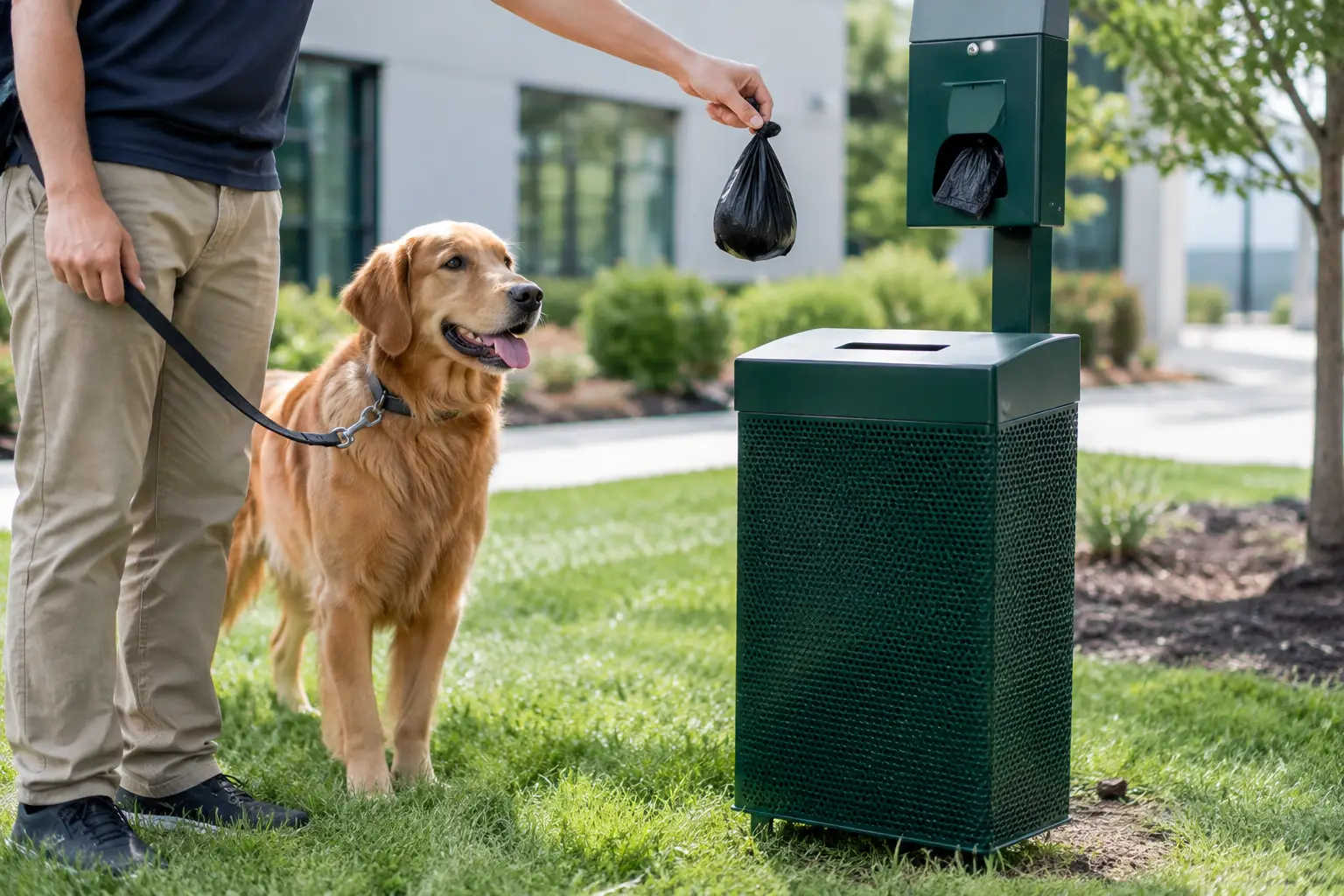
Routine service should go beyond emptying a bin. Shared pet areas need a visual sweep for waste, bag dispensers need to be checked, and receptacles need to be inspected for overflow or damage. The service provider should also use clean equipment and handle collected waste in a way that does not spread contamination from one area to another.
For properties with high pet traffic, deodorizing and pet-safe sanitizing may be appropriate additions, particularly around dog runs, artificial turf, and frequently used relief zones. These services do not replace waste removal. They support a cleaner environment after the waste is removed.
Poo Pickers® provides commercial service with uniformed technicians, notifications, and accountable completion procedures that help managers know the work was handled. For a property team already balancing vendors, maintenance requests, and resident needs, visible proof of service can remove a major point of uncertainty.
Handle Disposal Correctly
Pet waste should be collected in durable bags and placed in the approved waste stream for the property. Do not assume it can be left in open landscaping bins, scattered across outdoor trash cans, or washed into storm drains. Storm drains are for rainwater, not pet waste or cleaning runoff.
Your waste hauler, municipal guidance, and property policies should determine the correct disposal arrangement. If the property uses dedicated pet-waste receptacles, make sure the pickup schedule matches the volume. A clean station with an overflowing can still fails the resident experience.
Staff should also know what to do with non-routine materials. Loose trash, sharps, animal remains, or hazardous items should not be handled as ordinary pet waste. Establish a separate escalation procedure so employees and vendors are not put at unnecessary risk.
Respond to Problems Before They Become Patterns
The most effective compliance plans include a response process. If bag dispensers are repeatedly empty, increase refill checks or add capacity. If one lawn strip is consistently missed by pet owners, move or add a station, improve signage, and consider increasing cleanup frequency. If a resident repeatedly ignores the rules, follow the enforcement process in the lease or HOA policy.
Avoid treating every issue as a resident-behavior problem. Sometimes the property design is the problem. A bin may be too far away, a station may be hidden behind landscaping, or the dog area may be undersized for the number of pets using it. Fixing the setup often improves compliance more than sending another reminder email.
Review the Plan Every Season
Commercial dog waste compliance is not a set-it-and-forget-it task. Review service logs, resident feedback, complaint patterns, supply use, and site conditions at least seasonally. A growing apartment community, new dog park, landscaping renovation, or change in waste service can all require an updated plan.
A clean property tells residents that management pays attention to the details. Keep the rules simple, the stations stocked, the service documented, and the cleanup schedule matched to real use. Then shared outdoor spaces can stay ready for walks, playtime, and everyday life instead of becoming another maintenance headache.