A backyard should be ready when your dog wants a break, your kids want to play, or friends stop by for a barbecue. It is hard to enjoy that space when you are watching every step. Consistent dog waste management turns an unpleasant, easily delayed chore into basic yard care that protects your lawn, your pets, and the people who use the space.
For many Las Vegas dog owners, the issue is not whether they care about a clean yard. It is whether they can keep up with cleanup between work, family schedules, travel, and the daily demands of owning one or more dogs. A dependable routine makes the difference.
Why dog waste management is more than a cosmetic chore
Dog poop does not break down like fertilizer. It can contain bacteria and parasites, and rain or irrigation can move waste and its contaminants through the yard or toward storm drains. Leaving it in place also creates a more immediate problem: odors, flies, stained grass, and a yard no one wants to use barefoot.
The health concerns depend on the dog, the amount of waste, and the environment, but the practical rule is simple: pick it up promptly and wash hands after handling it. Dogs can be exposed when they sniff, lick, or step in contaminated areas. Young children are especially likely to touch the ground and then touch their faces. Routine removal reduces those opportunities without turning your home into a science project.
In Southern Nevada, heat can intensify odor quickly. A small amount of waste may be easy to overlook after one busy day, but several days of buildup in a sunny yard can make the problem far more noticeable. Even yards with artificial turf need attention. Waste can settle into turf fibers, collect around seams, and leave odors behind if it is not removed and the area is not treated appropriately.
What a practical yard routine looks like
The right schedule depends on dog count, yard size, and how your household uses the property. A single small dog in a large yard may be manageable with a weekly cleanup. A multi-dog home, a smaller yard, or a family that spends a lot of time outdoors often benefits from more frequent service.
Daily pickup is ideal when you handle the work yourself, especially in a compact yard or during hot weather. If that is not realistic, set a firm schedule rather than relying on the moment you happen to notice a pile. The longer cleanup is postponed, the more likely it is to be skipped again.
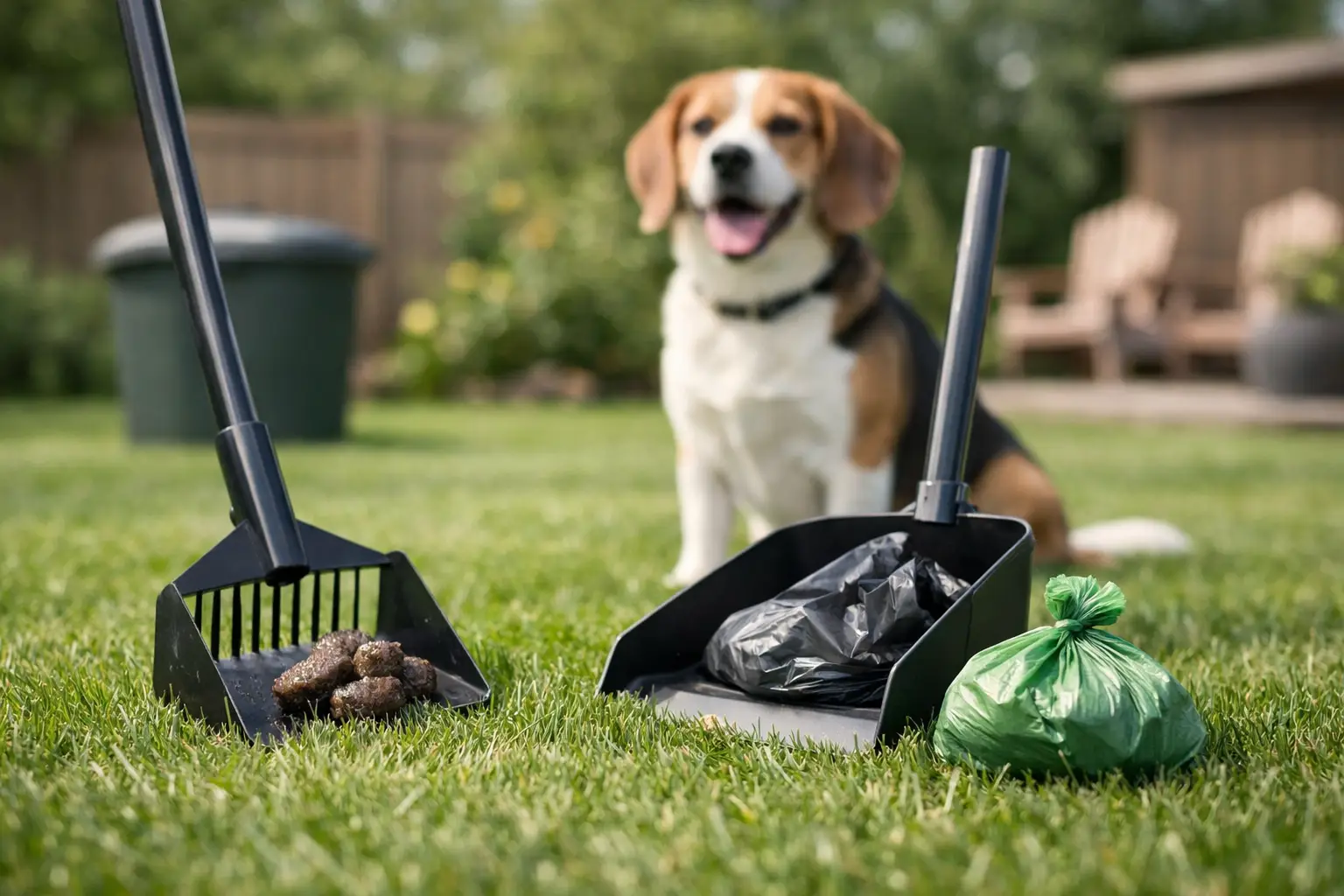
A solid dog waste management routine has three parts: removal, disposal, and cleanup of the cleanup tools. Waste should be bagged and placed in a secure trash container according to local rules. Do not leave tied bags around the side of the house, in an open bin, or near outdoor seating where heat and odor can build up.
Your scoop, rake, bucket, and shoes also matter. Using the same equipment in yard after yard without disinfection can spread contaminants. At home, reserve tools for pet waste only, clean them regularly, and store them away from children, pet food, gardening supplies, and high-touch areas.
Watch for the signs that cleanup is falling behind
Most people do not need a complicated inspection checklist. Your yard is telling you when the current routine is not enough. Consider increasing the cleanup frequency if you notice four recurring issues:
- You hesitate to let children, guests, or pets use the yard.
- Odor returns soon after you pick up visible waste.
- Flies or other pests are gathering around waste areas or trash bins.
- You keep finding old, dried piles during mowing, watering, or playtime.
Grass damage is another common concern. Dog urine is often responsible for brown spots, while waste left on the lawn can smother grass and create patches that look neglected. Removing waste quickly will not solve every lawn issue, but it eliminates one preventable source of mess and stress.
Sanitize thoughtfully without making the yard less safe
Picking up waste is the first priority. Deodorizing and pet-safe sanitizing can be useful additions, particularly around artificial turf, patio edges, dog runs, and favorite bathroom spots. But more product is not always better. Harsh chemicals can irritate paws, damage grass or plants, and create a new problem for curious pets.
Choose products labeled for pet areas, follow the directions, and allow the treated surface to dry when required. For natural grass, focus on removing waste consistently and managing urine-prone areas with appropriate watering practices. Flooding the lawn after every potty break wastes water and is not necessary, particularly in a desert climate.
If odor persists after cleanup, look beyond the obvious piles. Check shaded corners, gravel areas, turf seams, planter edges, and the space behind outdoor furniture. Dogs are creatures of habit, and a single preferred spot can become the source of an ongoing smell.
When professional pickup makes sense
Professional service is not only for homeowners who dislike poop scooping, although that is a perfectly good reason. It can also provide consistency when the household is busy, mobility is limited, travel is frequent, or several dogs share the yard. For property managers and HOA boards, scheduled service helps keep common pet areas usable without expecting residents to solve every issue themselves.
The service model matters. Look for a licensed and insured provider that clearly explains visit frequency, billing, access procedures, and what happens if a gate is left open or a cleanup is missed. Uniformed technicians, arrival and completion notifications, and a closed-gate photo after service are practical trust signals, not extras. They help you know the work was completed while protecting your property.
It is also reasonable to ask how equipment is handled between yards. Disinfecting tools between properties helps reduce the chance of tracking waste-related contaminants from one home to another. If you have a reactive dog, a locked gate, or a specific access request, bring it up before the first visit so there are no surprises.
For a one-time cleanup, be honest about the yard condition and dog count. An initial cleanup after weeks or months of accumulation takes more time than a recurring visit, and pricing should reflect that. Once the yard is reset, weekly, bi-weekly, or monthly service can keep it from returning to the same condition.
Making the service day easy for everyone
A little preparation helps a technician work efficiently and keeps your dog safe. Keep gates unlocked or provide the agreed access method, clear major obstacles from the yard, and bring dogs inside during the visit when possible. If your dog must remain outdoors, tell the provider in advance so they can follow the right safety procedure.
It also helps to communicate changes right away. Let the company know about a new puppy, an additional dog, construction in the yard, a gate code change, or a temporary service hold. Good service depends on clear information as much as it depends on a clean scoop.
Poo Pickers serves Las Vegas Valley households and properties with flexible recurring and one-time cleanup options, pet-safe deodorizing and sanitizing, and no long-term contract requirement. That flexibility matters because the best schedule is the one that fits your actual household, not a one-size-fits-all plan.
A clean yard is not a luxury reserved for weekends when you have extra time. Set a routine you can maintain, adjust it when your dog count or schedule changes, and let your outdoor space be a place where everyone can relax without looking down first.