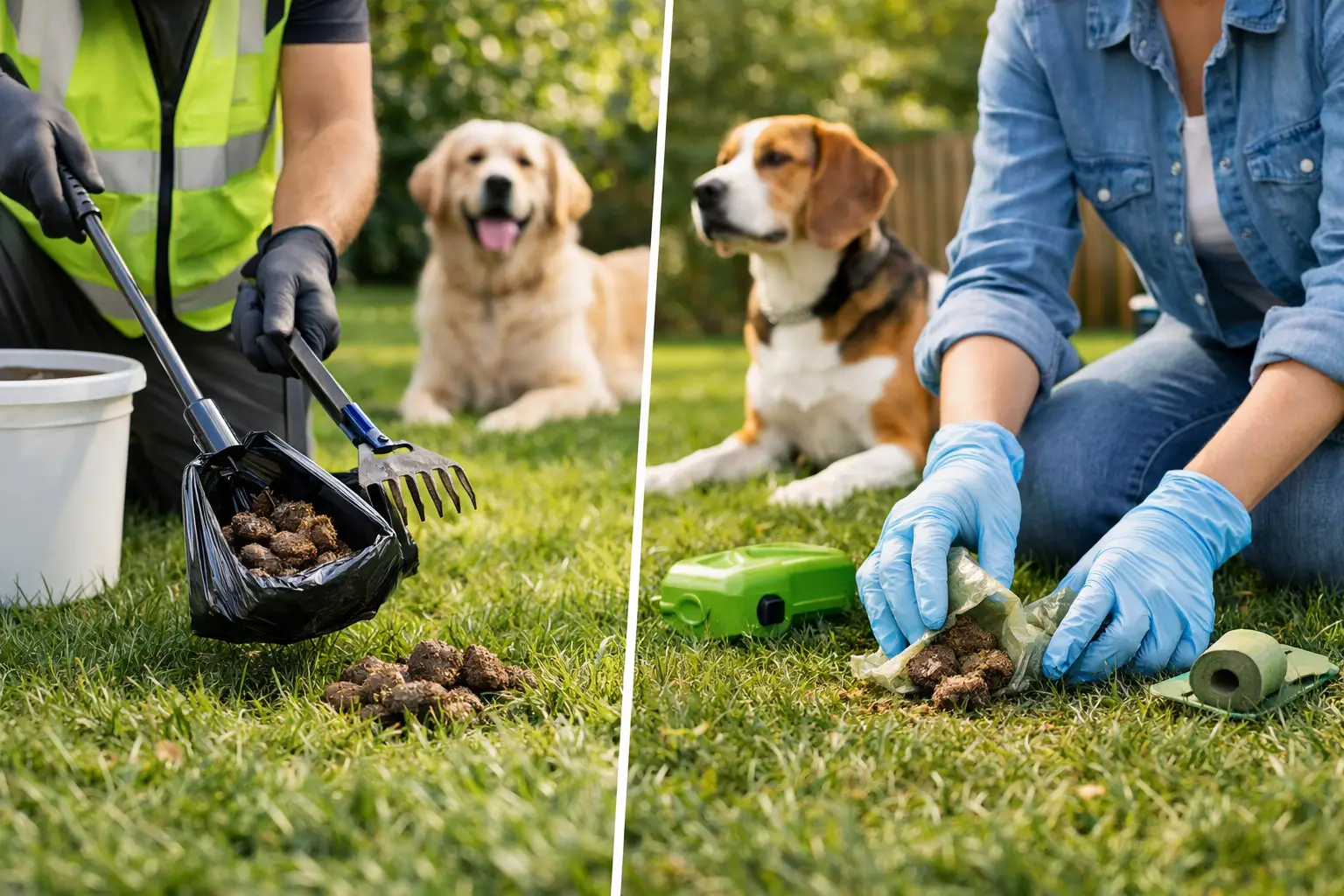
A clean yard sounds simple until it is Saturday morning, the temperature is climbing, the kids want to play outside, and a week’s worth of dog waste is waiting by the patio. The choice between dog waste removal vs self-cleanup is not really about whether you can use a scooper. It is about whether the chore gets done consistently enough to protect your lawn, reduce odors, and keep your outdoor space ready to use.
For some households, self-cleanup works just fine. For others, especially busy families and multi-dog homes, professional service becomes one of those small decisions that makes the entire week easier. Here is an honest look at the trade-offs.
Dog Waste Removal vs Self Cleanup: The Real Difference
The basic difference is accountability. When you handle cleanup yourself, you control the timing, method, and cost. You also carry the full responsibility for remembering it, having supplies on hand, and doing the work when the weather or your schedule is working against you.
A professional dog waste removal service puts the task on a recurring schedule. A technician visits your yard, removes the waste, and leaves the space cleaner and more usable without adding another item to your weekend list. At Poo Pickers®, that also means uniformed technicians, equipment disinfected between yards, pet-safe deodorizing and sanitizing, and a closed-gate photo after service.
Neither option is automatically right for every dog owner. The better choice depends on how many dogs you have, how often your family uses the yard, and whether cleanup remains a dependable habit instead of a job that keeps getting pushed to tomorrow.
The Case for Cleaning Up Yourself
Self-cleanup has one obvious advantage: the direct out-of-pocket cost is low. Buy a scooper, waste bags, and a dedicated trash container, and you can handle the work whenever you choose. For one dog in a small yard, picking up waste every day or two may take only a few minutes.
It can also make sense for owners who are already outside often. If you walk the yard while your dog is playing, or you have a reliable daily routine, there may be little buildup to manage. Immediate pickup is especially useful after rain or when guests are expected.
The catch is that self-cleanup only works when it is truly routine. A single missed week can turn a quick task into a larger, less pleasant project. In Las Vegas heat, waste dries out quickly, gets harder to spot in landscaping, and can leave behind odor and residue even after the visible mess is gone.
There is also the disposal question. Full waste bags sitting in an outdoor trash bin can create odor, attract flies, and make taking out the garbage less appealing. None of these problems are impossible to manage, but they do require steady attention.
When self-cleanup is usually enough
Self-cleanup may be the practical choice if you have one dog, a small outdoor area, and a realistic habit of checking the yard at least several times a week. It also works well when someone in the household does not mind the task and is consistently available to do it.
The key word is consistently. Picking up only when the lawn becomes visibly messy is not the same as routine sanitation.
What Professional Dog Waste Removal Adds
Professional service is built around the problem most homeowners actually face: dog poop pickup is easy to postpone. A recurring weekly, bi-weekly, or monthly visit creates a reliable baseline, so the yard does not depend on who had time after work or who remembered before the barbecue.
That consistency matters in homes with two or more dogs. Waste accumulates faster than most people expect, particularly when dogs use different corners of the yard or when landscaping, gravel, and artificial turf make every pile harder to find. A trained technician works the full yard rather than cleaning only the obvious spots near the door.
Professional cleanup also goes beyond collecting waste. Pet-safe deodorizing and sanitizing can help freshen areas where dogs frequently go, while a regular pickup schedule reduces the buildup that contributes to lingering smells. This is valuable for families with children, outdoor furniture, pools, patios, and active backyard spaces.
Trust matters too. Letting someone into your yard should not feel uncertain. Look for a licensed and insured company that communicates clearly about arrival and completion, uses clean equipment, and documents that the gate is secured when the work is finished. Those details turn a simple service into dependable property care.
Health, Pests, and Lawn Care Are Part of the Decision
Dog waste is more than an unpleasant sight. It can carry bacteria and parasites, and the CDC advises pet owners to promptly remove dog feces from yards and public spaces. The risk is not a reason to panic, but it is a good reason to avoid treating waste as harmless fertilizer.
Leaving waste behind can expose people and pets to organisms that may be present in feces. Young children are particularly likely to touch grass, dirt, toys, and patio surfaces before washing their hands. Dogs can also step in contaminated areas and track material toward doors, walkways, and indoor floors.
Waste can attract flies and other pests, especially during warm months. Odor is another practical concern. Even a yard that looks mostly clean may smell less inviting when old waste has baked into turf, gravel, or soil.
Then there is the lawn itself. Concentrated dog urine is usually the bigger cause of yellow or brown grass spots, but accumulated waste can smother small sections of turf and make regular yard maintenance harder. Removal helps keep your yard easier to inspect, mow, water, and enjoy. It does not replace good lawn care, but it removes one preventable source of mess and stress.
Comparing the True Cost of Each Option
Self-cleanup is cheaper if you look only at service fees. But the full cost includes supplies, disposal bags, odor products, replacement scoopers, and your time. The financial difference may be meaningful for some households, while others decide the time savings is worth far more than the monthly service price.
Think about the task honestly. If cleanup takes 15 minutes twice a week, that is roughly two hours a month before disposal, rinsing tools, or dealing with a missed week. With multiple dogs or a larger yard, the time can climb quickly.
Professional service costs more in dollars, but it buys consistency, a cleaner yard, and one less chore to negotiate at home. Recurring plans are often priced based on dog count and visit frequency, so a household can choose a schedule that matches actual need rather than paying for more visits than necessary. One-time cleanup can be useful after travel, illness, a busy season, or moving into a home where the yard needs a fresh start.
No-contract scheduling is worth considering as well. A good service should make it easy to adjust, pause, or cancel if your needs change. Flexibility matters because dog ownership and household routines are not always predictable.
How Often Should a Yard Be Cleaned?
Daily pickup is ideal when you are handling waste yourself, particularly in small yards or homes with children and multiple dogs. It keeps the task small and gives waste less time to create odor or get stepped on.
For professional service, weekly visits are a common fit for active households and multi-dog yards. Bi-weekly service may work for one dog with supplemental pickup between visits. Monthly service is generally best for light-use yards or owners who still do some cleanup on their own.
A one-time cleanup is not a replacement for a routine, but it can be a useful reset. It is also a sensible option before hosting a gathering, listing a home for sale, returning from vacation, or preparing a rental property for new residents.
A note for HOAs and shared pet areas
The same comparison applies to commercial and community spaces, but the stakes are higher. Parks, apartment dog runs, HOA common areas, and business properties need a defined cleaning schedule because no single resident owns the responsibility. Regular service supports cleaner grounds, fewer complaints, and a better experience for everyone using the space.
Choosing the Option You Will Actually Keep Up With
The best choice is not the one that sounds most economical on paper. It is the one that keeps your yard clean every week, including the weeks when work runs late, the family is sick, or the summer heat makes outdoor chores miserable.
If you have a simple routine and stick to it, self-cleanup can be perfectly effective. If you are tired of missed pickups, lingering odor, and losing usable yard time to a chore nobody wants, professional dog waste removal is a practical way to protect the space your family and pets share. A clean backyard gives you one less thing to manage and one more reason to step outside.