
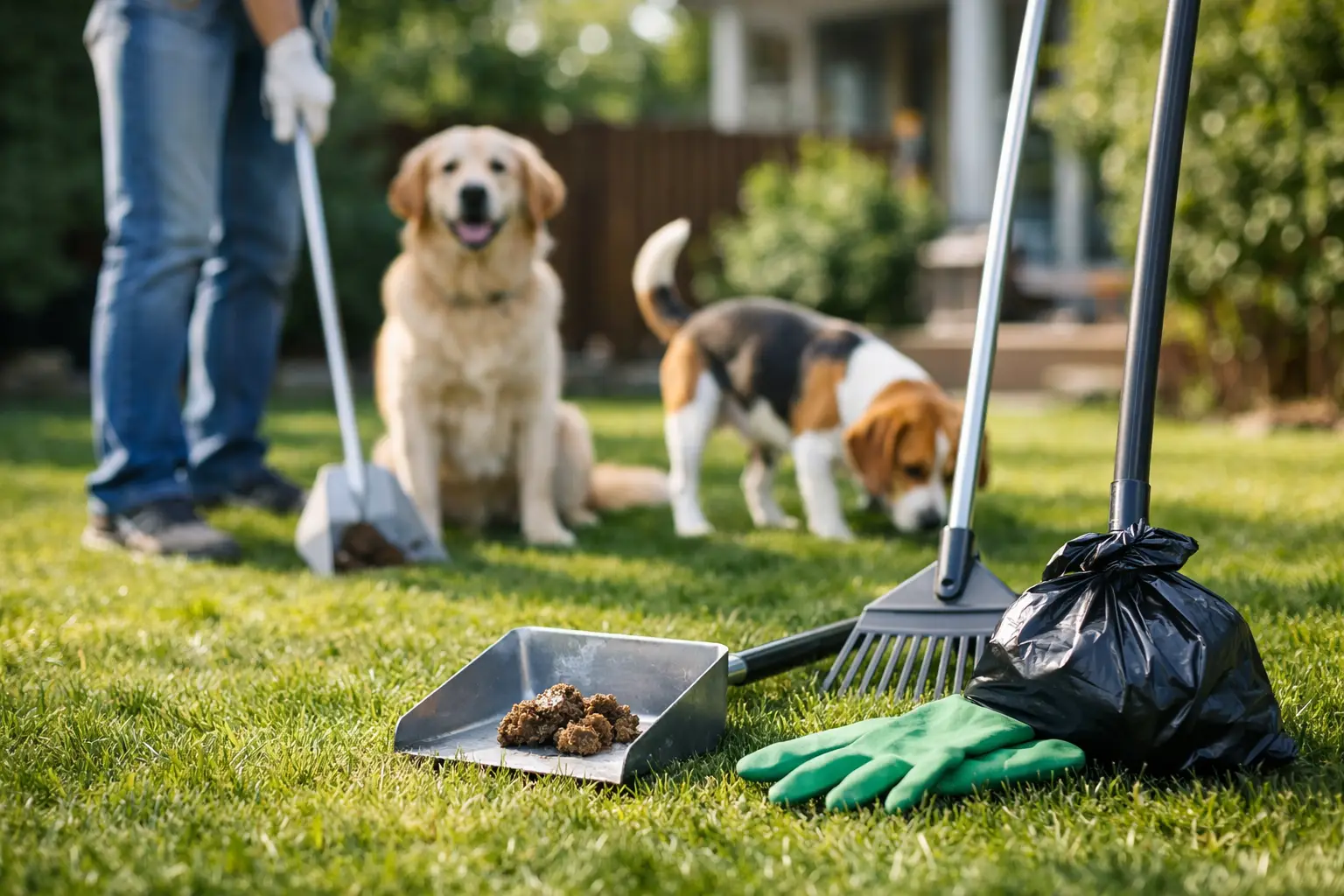
A clean yard can slip down the priority list fast. One busy week, a school event, a work trip, or a stretch of Las Vegas heat is all it takes for dog waste to build up where your kids play, your dog runs, and your guests gather. Knowing how to choose yard cleanup frequency gives you a realistic routine instead of a chore that keeps getting postponed.
For most dog-owning households, the right schedule comes down to four things: how many dogs use the yard, how often the yard is used, how quickly waste accumulates, and how much cleanup you realistically want to handle yourself. A weekly plan is a strong fit for many homes, but it is not the only answer.
Start With Your Dog Count
Dog count is the clearest place to begin because every additional dog adds waste and makes a missed cleanup more noticeable. A single dog with regular outdoor access may leave a manageable amount over a week. Two or three dogs can turn the same yard into a cleanup job much sooner, especially when they tend to use the same few areas.
For one dog, weekly service is usually a practical baseline for keeping the lawn usable and odors under control. Bi-weekly cleanup can work for a small household with a larger yard and a dog that spends limited time outside, but it requires a little more tolerance for seeing waste between visits.
For two dogs, weekly cleanup is often the sweet spot. It prevents the yard from becoming a minefield while keeping waste from sitting long enough to affect the way your outdoor space looks and smells. Multi-dog households commonly benefit from weekly service, and some need more frequent attention if the yard is small, heavily used, or shared with children.
Match Cleanup Frequency to How You Use the Yard
A yard that is only used for quick potty breaks has different needs than one that hosts weekend barbecues, kids’ playtime, pool days, and daily fetch sessions. The more your family uses the space, the less room there is for a “we will get to it later” approach.
If children play on the grass, regular removal matters for more than appearance. Dog waste can carry bacteria and parasites, and it is easy for kids to step in it, touch contaminated grass, and track it indoors. Picking up waste promptly helps keep the yard more comfortable for everyday family use.
Think about your normal week. Do you avoid walking barefoot outside because you are not sure what is in the grass? Do guests need a warning before they let their kids or dogs into the yard? Are you regularly checking shoes before coming back inside? Those are good signs that the current schedule is not frequent enough.
A weekly cleanup schedule usually keeps an active household in good shape. If your yard is a major part of family life, consider whether a midweek personal pickup or a more frequent professional option would make the space feel truly ready to use.
Las Vegas Heat Changes the Equation
In the Las Vegas Valley, heat does not make dog waste disappear. It dries it out, intensifies odor in certain conditions, and can bake it into gravel, artificial turf, pavers, or patches of lawn. Wind can also move dry material into areas where you do not expect it.
Summer is a good time to reassess your schedule. Dogs may spend less time outdoors during peak heat, but waste left in a hot yard can still make patio time unpleasant, attract flies, and create a mess around shaded spots where pets rest. If your dog prefers one shaded corner or the area near the back door, that concentrated use can call for more frequent attention than the yard’s overall size suggests.
Artificial turf deserves special consideration. It is convenient and popular in Southern Nevada, but waste can linger on the surface and odor can build when the turf gets hot. Routine pickup, deodorizing, and pet-safe sanitizing help keep a turf yard more inviting for pets and people.
How to Choose Yard Cleanup Frequency by Schedule
Your ideal schedule needs to work on your busiest week, not just your best one. A plan that depends on you remembering to scoop every other evening may look good on paper, but it is not a dependable system if work, travel, or family obligations routinely get in the way.
Weekly cleanup is the best fit for many households because it creates a consistent reset. The yard does not have time to become overwhelming, and you do not have to spend part of your weekend hunting through grass, rocks, or landscaping beds.
Bi-weekly service can be a reasonable choice when you have one dog, a larger yard, and low outdoor activity. It may also work for homeowners who do light touch-up pickups between visits. The trade-off is simple: more waste will be visible before each service, and odor or pest concerns can develop faster during warm weather.
Monthly cleanup is generally best for occasional maintenance, vacant properties, or homes where the dog rarely uses the yard. For an everyday dog household, a month is a long time for waste to sit outside. A monthly visit may require a bigger initial cleanup and may not deliver the clean-yard feeling most families want.
One-time cleanup is helpful after a vacation, a move, an illness, a property showing, or a season when yard chores fell behind. There is no shame in starting with a reset. Once the yard is clean, it is much easier to choose a recurring frequency that keeps it that way.
Watch for Signs Your Current Plan Is Too Infrequent
You do not need a complicated formula to tell when your schedule is falling short. Your yard is already giving you useful feedback. If you notice any of the following, it may be time to move to a more frequent plan:
- You are avoiding the lawn, patio, or dog run because of odor or visible waste.
- Your dog has limited clean space for play, especially in a small yard.
- Children, guests, or delivery workers are stepping around waste.
- Flies are more noticeable around the yard or trash area.
- You keep postponing cleanup until it becomes a large, unpleasant job.
- Waste is collecting around turf seams, landscaping, pool areas, or walkways.
The goal is not perfection every minute of every day. It is a yard that feels usable, clean, and easy to enjoy without a last-minute cleanup before company arrives.
Consider Your Yard Size and Layout
A large yard can handle a little more time between cleanups than a compact patio yard, but size is only part of the picture. Dogs do not usually spread waste evenly across an entire property. Most choose familiar potty zones near a gate, wall, tree, or patch of gravel.
A smaller yard with one dog may need weekly service because nearly every outdoor area is shared space. Meanwhile, a larger lot with a dog that uses a dedicated back corner may be fine on a bi-weekly schedule, provided the rest of the household is comfortable with it.
Landscaping also affects the job. Waste is easier to miss in dense shrubs, decorative rock, tall grass, and behind outdoor furniture. If your yard has lots of hiding places, consistent professional service can prevent old waste from being discovered only when you are preparing for guests or working in the garden.
Make Reliability Part of the Decision
Frequency only helps if the service is dependable. When comparing options, look beyond the calendar. Ask whether technicians notify you when they are on the way and when the job is complete, whether gates are secured after service, and whether equipment is disinfected between yards.
Those details matter because pet waste cleanup involves your home, your pets, and your outdoor living space. Poo Pickers® provides recurring weekly, bi-weekly, and monthly options, along with one-time cleanups, so homeowners can choose a plan without being locked into a contract. Uniformed technicians, completion notifications, and closed-gate photos provide clear accountability after each visit.
The best frequency is one that keeps your yard comfortable without creating another task for you to manage. Start with how your dogs and family actually use the space, then adjust if the yard still feels like something you have to work around. A clean outdoor area should be ready when your dog wants to play and when you want to enjoy being home.