A backyard can go from the place your dog loves most to a place nobody wants to use after a few missed cleanups. In Las Vegas, dry heat can bake waste into the grass, rocks, and pavers fast, while a busy week turns one or two piles into a frustrating weekend chore. Knowing how to manage dog waste is less about finding the perfect tool and more about building a routine that protects your pets, your lawn, and the people who share your outdoor space.
Start With a Cleanup Schedule You Can Keep
The best dog waste routine is the one that happens consistently. For one dog in a small yard, picking up every few days may be manageable. For multiple dogs, young puppies, or a yard used by kids and guests, daily or every-other-day cleanup is usually the better standard.
Waiting until the yard looks messy is where the problem starts. Waste can be easy to miss in grass, gravel, or along the edges of a fence. By the time it is noticeable, odors may be stronger, flies may be more active, and your dog may have already tracked contamination closer to the patio or into the house.
Choose a schedule based on dog count, yard use, and your household’s actual availability. A family that is rarely home during daylight may do better with a weekly service than with a cleanup plan that repeatedly gets pushed to Sunday evening.
Pick Up Waste Before It Becomes a Yard Problem
Dog waste is not fertilizer. Unlike manure from plant-eating animals, it is concentrated with proteins and can contain bacteria and parasites. Left on the lawn, it can contribute to brown or thin patches and make bare areas harder to enjoy.
Prompt removal also helps limit odor. This matters in smaller yards, shared walls, and outdoor living areas where you want to grill, let the kids play, or simply sit outside without being reminded of the chore waiting in the corner.
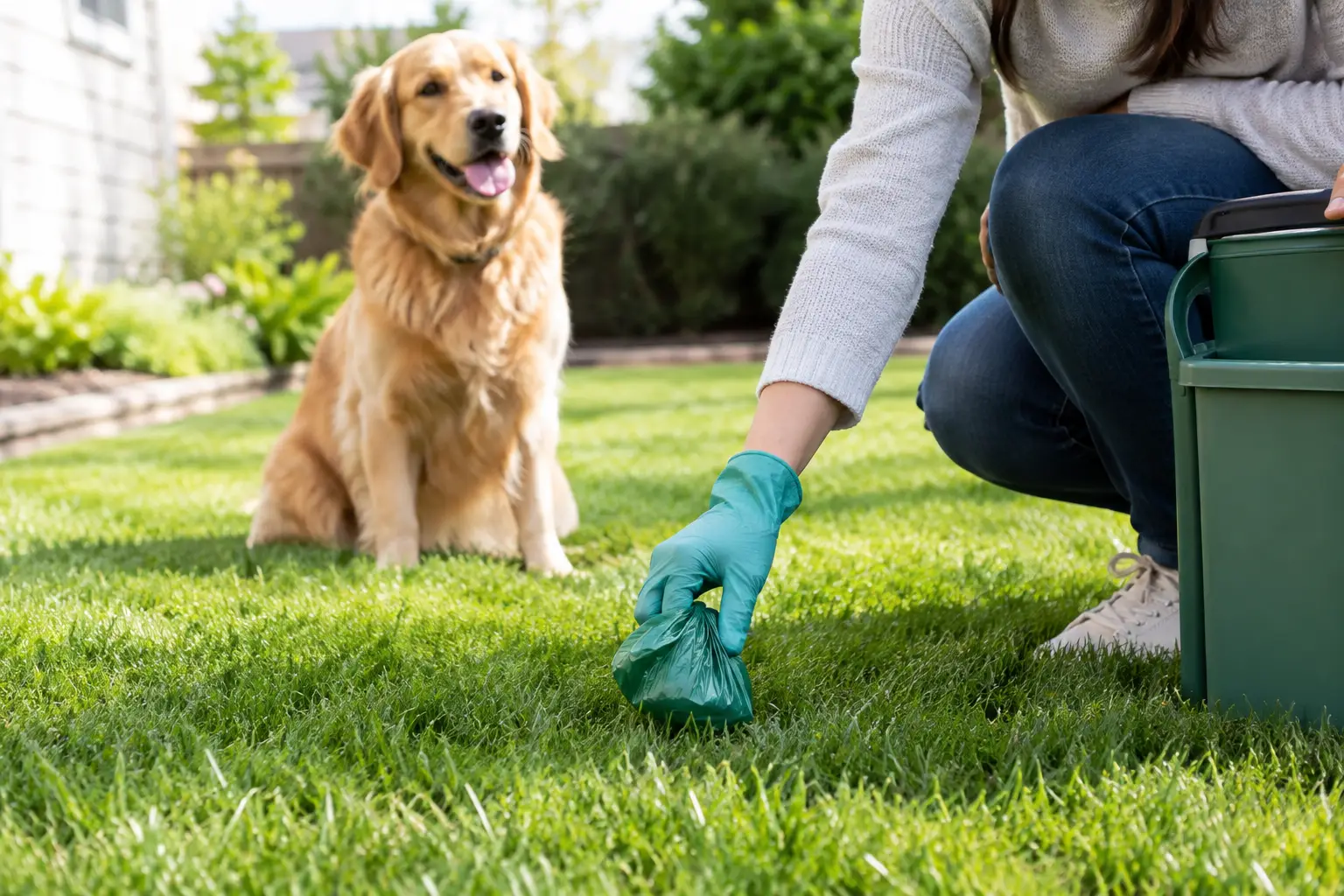
Use a dedicated scoop and collection container rather than a household tool you also use for gardening. A rake, shovel, or bin used across tasks can transfer contaminants where they do not belong. Keep your cleanup equipment in one easy-to-reach spot, preferably near the gate or garage, so there is less excuse to put the task off.
Dispose of It the Right Way
For most households, bagging dog waste and placing it in the regular trash is the practical option. Use durable waste bags, close them securely, and put them in a lidded outdoor garbage can. A lid helps reduce odor and discourages flies and other pests.
Do not leave filled bags beside the fence, on the patio, or in an open bucket for days. In desert heat, even bagged waste can create a strong smell quickly. It is also wise to check local rules before using any pet-waste station, shared dumpster, or community trash receptacle.
Composting dog waste in a backyard compost pile is generally not a good fit for most homeowners. Typical home compost systems may not reach or maintain the conditions needed to manage harmful organisms safely. Keep pet waste out of compost used around vegetables, herbs, or ornamental beds.
Clean the Areas Dogs Use Most
Picking up solids is the first job, but it is not the only part of managing a clean yard. Dogs tend to revisit the same spots, especially fence lines, gravel runs, artificial turf, and shaded corners. Those areas deserve extra attention.
After pickup, rinse hard surfaces as needed and use a pet-safe outdoor deodorizer or sanitizer according to its directions. Avoid using harsh household chemicals where pets walk, sniff, or lick. A product that smells strongly perfumed is not automatically the right choice for an animal-friendly yard.
Artificial turf can be especially convenient, but it still needs care. Remove waste promptly, rinse urine-prone areas when appropriate, and use a turf-safe treatment to control lingering odor. For natural grass, avoid overwatering in an attempt to wash the problem away. Too much water can create runoff and may damage your lawn in other ways.
Protect Kids, Pets, and Guests
A clean yard is about more than appearances. Dogs investigate the ground with their noses and mouths, and children often play closer to the ground than adults realize. Regular removal lowers the chance of contact with waste and helps keep outdoor spaces more comfortable for everyone.
Wash hands after cleanup, even if you used a scoop or bag. Keep children away from the cleanup area until you are finished, and do not allow dogs to hover around the collection container. If your dog has diarrhea, visible parasites, or a sudden change in stool, clean the area promptly and contact your veterinarian for advice.
It also helps to keep up with routine veterinary care. Parasite prevention and regular checkups support a cleaner yard, but they do not replace pickup. Even a healthy-looking dog can leave waste that does not belong on the lawn or patio.
Make the Routine Easier on Busy Weeks
The biggest challenge is rarely knowing what to do. It is finding time to do it when work runs late, the weather is unpleasant, or the weekend is already full. Reduce the friction by keeping bags near the door, placing a reminder on your phone, and doing a quick scan before mowing, watering, or letting guests into the yard.
For many households, that is enough. For multi-dog homes or anyone tired of falling behind, recurring professional service can be the simpler answer. A dependable technician can keep the yard on a weekly, bi-weekly, monthly, or one-time schedule, which means the cleanup does not depend on who has a free hour.
When choosing a service, look beyond the basic promise of poop pickup. You should know when the technician arrives, how equipment is handled between yards, and whether your gate is secured after service. Details such as uniformed staff, disinfected equipment, completion notifications, and a closed-gate photo provide real peace of mind when someone is working on your property.
Poo Pickers® provides recurring and one-time pet-waste removal for homes and shared properties throughout the Las Vegas Valley, with pet-safe deodorizing and sanitizing as part of the cleanup experience. Flexible scheduling and no contracts can make it easier to get help without adding another complicated commitment to your household.
How to Manage Dog Waste in Shared Spaces
For HOAs, apartment communities, parks, and businesses, dog waste management needs a little more structure. One missed pile in a private yard is frustrating. Repeated missed piles in a common area can affect dozens of residents, visitors, and pets.
Place waste stations where dogs naturally enter, exit, and relieve themselves. Empty containers before they overflow, restock bags consistently, and clean the surrounding area on a regular schedule. Signs can be useful reminders, but they work best when the property makes responsible pickup easy.
Property managers should also think about visibility. A station hidden behind landscaping or placed far from walking routes is less likely to be used. Regular professional cleanup helps address the waste that gets missed, especially around dog runs, sidewalk edges, and landscaped common areas.
Watch for Signs Your Plan Needs to Change
If you notice recurring odor, flies, brown grass, stepped-in messes, or piles appearing faster than you can remove them, your current plan is not frequent enough. That is not a failure. It simply means your dog count, routine, or yard use has changed.
Increase the pickup frequency, move your tools to a more convenient location, or bring in help before the problem grows. A yard should be a place where your dog can run, your family can relax, and visitors can walk without watching every step. Set a schedule that makes that feel normal again, then let the routine do the work.