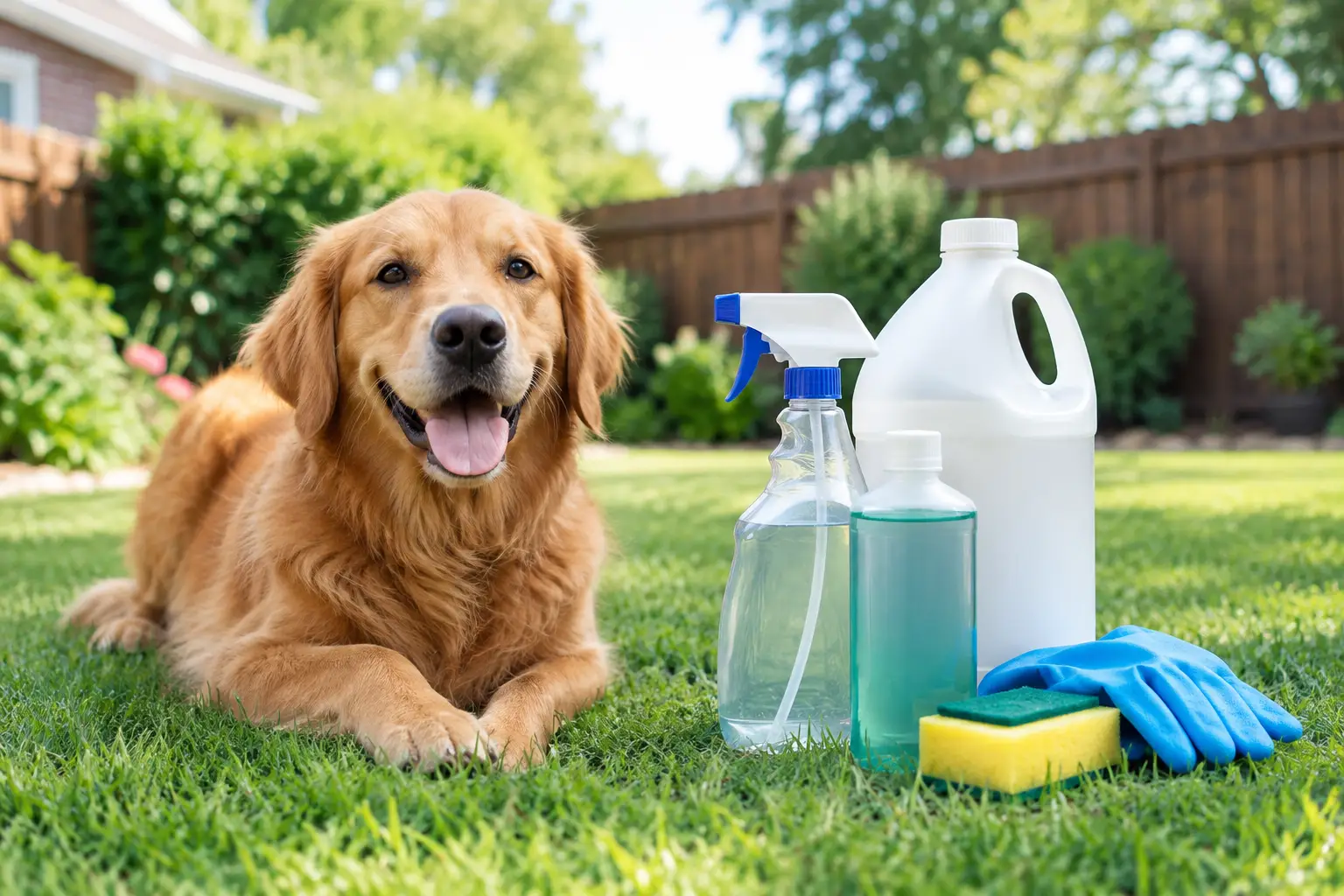
Dog waste cleanup solves one major yard problem, but the product used afterward matters just as much. If you are asking which disinfectants are pet safe, the honest answer is not a single brand or ingredient. A product can kill germs effectively and still be a poor choice for a dog that walks through it, licks a damp patio, or rolls in the grass minutes later.
For homes with dogs, a safer approach means using the right product for the surface, following the label exactly, and keeping pets away until the treated area is fully dry. It also means knowing when a disinfectant is unnecessary. Clean, regularly scooped outdoor areas need targeted sanitation, not a chemical fog over the entire yard.
What “Pet Safe” Actually Means
“Pet safe” does not mean a disinfectant is safe to drink, lick, inhale, or apply directly to an animal. It generally means the product can be used around pets when it is diluted and applied as directed, then allowed to dry or otherwise cleared according to the label.
That distinction matters. Dogs investigate the world with their noses and mouths. A residue that seems insignificant to a person can irritate paws, skin, eyes, or airways, especially for puppies, senior dogs, small dogs, and pets with allergies or respiratory concerns.
Look for products that clearly state where they can be used and whether they are intended for pet environments. The label should provide dilution instructions, a required contact time, and directions for reentry. If a label is vague about pets, surfaces, or rinsing, choose a different option.
Which Disinfectants Are Pet Safe When Used Correctly?
Some active ingredients are commonly used in homes and pet-care settings, but each has limits. The safest choice depends on whether you are treating a hard surface, an indoor accident area, a kennel, an artificial-turf pet run, or a high-traffic patio.
Hypochlorous acid solutions
Properly formulated hypochlorous acid disinfectants are often a practical option for pet areas because they can be effective against many germs while being relatively low-odor and less harsh than traditional bleach products. These products are commonly used in settings where people and animals are present.
Still, “hypochlorous acid” on the ingredient list is not a free pass to spray everything while your dog is nearby. Use it only on label-approved surfaces, allow the full contact time, and keep pets off the area until it is dry. Store it properly as well, since some formulations lose effectiveness over time or with improper storage.
Hydrogen peroxide-based disinfectants
Accelerated hydrogen peroxide and other appropriately formulated hydrogen peroxide disinfectants can be useful on sealed hard surfaces. They often break down into less concerning byproducts after use, which makes them appealing for patios, crates, bowls, and other washable areas.
Concentration matters. Household peroxide in a brown bottle is not automatically the same as a registered disinfectant, and stronger products can irritate skin or damage surfaces. Never assume a homemade mix has disinfecting performance or pet-safe instructions. Use a product made for the job and follow its label.
Diluted bleach for specific hard-surface jobs
Bleach can disinfect, but it is not usually the first choice for routine pet-yard maintenance. Its fumes can be irritating, it can discolor surfaces and fabrics, and it can damage plants or grass when used carelessly. Bleach should never be mixed with ammonia, acids, vinegar, or other cleaners.
For a tough, nonporous hard-surface situation where the label calls for bleach, remove pets first, ventilate the area, use the correct dilution, and rinse if the instructions require it. Keep dogs away until the surface is completely dry and the odor has cleared. Bleach is best treated as a targeted tool, not an everyday lawn sanitizer.
Pet-environment disinfectants with clear label directions
Many products are specifically formulated for veterinary clinics, kennels, grooming facilities, and homes with pets. These may use different active ingredients, including quaternary ammonium compounds or other registered disinfectants. They can be effective, but they require extra attention to instructions.
Quaternary ammonium compounds, often called quats, may be appropriate for certain sealed surfaces, but they should not be treated as harmless. Residue can be a problem if a dog licks the area or walks on it before drying. Cats can be especially sensitive to some cleaning chemicals, so homes with both cats and dogs should be particularly cautious. Use only as directed, avoid overspray, and do not use these products on food bowls, toys, or surfaces that will contact food unless the label specifically allows it.
Products to Use Carefully or Avoid in Pet Areas
A strong scent does not equal a cleaner yard. In fact, heavily fragranced products can be a warning sign for dogs with sensitive noses. Avoid using pine-oil cleaners, phenolic disinfectants, and essential-oil-heavy cleaners in pet spaces unless the product is specifically labeled for that use and you can follow every safety direction.
Ammonia-based cleaners are another poor choice around pet urine and waste areas. The smell can resemble urine to animals, and the fumes can be unpleasant or irritating. Mixing household products is never a good workaround. Chemical combinations can create dangerous gases or unpredictable residues.
Do not apply disinfectants directly to soil, grass, mulch, or plants unless the label specifically says it is safe for those uses. Outdoor heat in Las Vegas can make chemical odors feel stronger and can stress turf already dealing with sun and dry conditions. More product is not better for your lawn or your dog.
Clean First, Then Disinfect Only Where It Helps
Disinfectants work poorly when they are sprayed over visible dirt, organic material, or dog waste. The practical order is simple: remove waste, clean the surface, then disinfect a hard surface only when there is a reason to do so.
For a patio or artificial-turf pet area, pick up solid waste first and rinse away remaining debris. Clean the surface with a pet-appropriate cleaner if needed. Then apply a suitable disinfectant at the labeled dilution and leave it wet for the required contact time. Wiping it away too soon can make the product far less effective.
For natural grass, routine waste removal is usually the most useful sanitation step. Dog poop should not be left behind to break down because it can carry bacteria and parasites, attract pests, create odor, and leave unpleasant surprises for paws and shoes. Rather than saturating grass with disinfectant, focus on frequent pickup, sensible rinsing when appropriate, and spot treatment of washable hard surfaces nearby.
A Simple Pet-Safe Cleaning Routine
For most dog-owning households, the safest routine is also the easiest to maintain. Pick up waste consistently, especially in multi-dog yards. Rinse hard surfaces that collect residue, such as concrete runs or patio corners. Disinfect those surfaces only when there has been diarrhea, illness, heavy buildup, or frequent shared-pet traffic.
Keep your dog inside or in another part of the property while you clean. Read the product label before mixing or spraying anything, and pay attention to the reentry instructions. Once the surface is dry and any required rinse step is complete, your dog can return to the area.
If your dog has persistent diarrhea, visible parasites, skin irritation, coughing, or unusual behavior after exposure to a cleaning product, contact your veterinarian. Cleaning products are not a substitute for veterinary care, and they should never be used to treat an animal directly unless a veterinarian tells you to do so.
When Professional Yard Care Makes a Difference
A yard stays more usable when pet waste never has time to build up. That is especially true for busy households, homes with several dogs, and properties where children, guests, or service workers share the outdoor space.
Poo Pickers® removes the waste first, which is the foundation of a cleaner yard, and includes pet-safe sanitizing and deodorizing as part of the cleanup experience. Our technicians disinfect equipment between yards, so the tools used on one property are not carried into the next without proper cleaning.
The best disinfectant is one used thoughtfully on the right surface. Keep poop picked up, choose products with clear pet-area directions, give them time to work, and let every treated surface dry before your dog gets back to doing what dogs do best – enjoying the yard.